
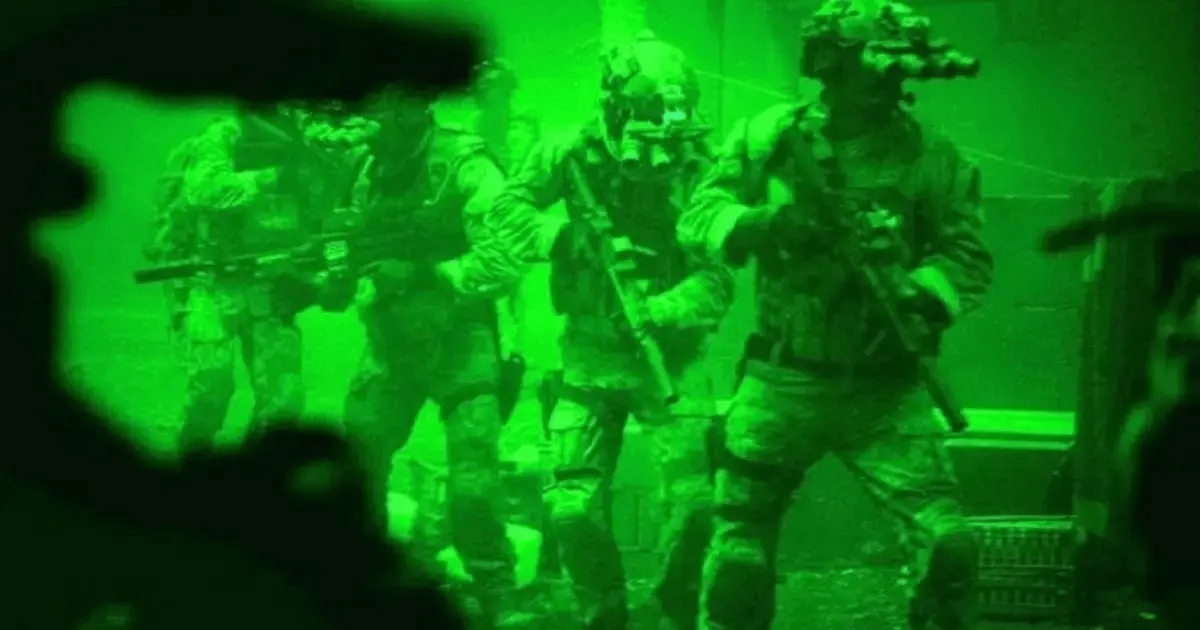
In the late hours of May 1, 2011, a quiet garrison town in Abbottabad became the stage for one of the most consequential covert operations in modern military history. Known as Operation Neptune Spear, the mission ended a nearly decade-long manhunt for Osama bin Laden—the architect of the September 11 attacks—and reshaped the global fight against terrorism.
A Decade-Long Hunt
In the aftermath of 9/11, the United States launched an unprecedented global intelligence and military campaign to dismantle al-Qaeda. While many senior leaders were captured or killed, bin Laden remained elusive, becoming a symbol of both the network’s resilience and America’s unfinished mission.
The breakthrough came not from satellite imagery or intercepted communications, but from painstaking human intelligence work led by the Central Intelligence Agency. Analysts identified a trusted courier who operated in secrecy and avoided electronic trails. Following him led to an unusual compound in Abbottabad—large, walled, and conspicuously disconnected from modern communication networks.
Though no direct proof placed bin Laden inside, the circumstantial evidence was compelling enough to prompt action.
The Decision
The choice confronting Barack Obama was fraught with risk. Airstrikes could destroy the compound but eliminate the chance of confirming bin Laden’s presence. A joint operation with Pakistan risked leaks. Ultimately, Obama authorized a unilateral raid by the most elite special operations unit in the U.S. military: United States Naval Special Warfare Development Group.
The mission would require precision, secrecy, and the ability to adapt under extreme uncertainty.
Into the Compound
Shortly after midnight local time, two modified stealth helicopters crossed into Pakistani airspace from Afghanistan. Carrying members of SEAL Team 6, the aircraft approached the compound under the cover of darkness.
Almost immediately, the mission encountered a complication: one helicopter lost lift due to unexpected air conditions within the compound’s high walls and made a hard landing. Despite the setback, the team pressed on, shifting seamlessly to contingency plans.
What followed was a rapid, methodical clearance of the compound’s buildings. Moving floor by floor, the operators encountered and neutralized resistance. On the third level of the main structure, they found their target.
Bin Laden was shot and killed during the assault.
The entire operation lasted approximately 40 minutes.
Confirmation and Closure
After securing the site, U.S. forces collected materials for intelligence exploitation—computers, documents, and digital media that would later yield valuable insights into al-Qaeda’s operations.
Bin Laden’s identity was confirmed through multiple methods, including DNA analysis. Within hours, his remains were transported to the USS Carl Vinson (CVN-70), where he was buried at sea in accordance with Islamic practices.
Later that day, President Obama addressed the nation, announcing that justice had been done.
Strategic and Political Impact
Operation Neptune Spear represented a major symbolic and operational blow to al-Qaeda. It demonstrated the United States’ capacity to project power with precision and to integrate intelligence and special operations at the highest level.
However, the raid also exposed tensions in U.S.–Pakistan relations. Conducted without prior notification to Pakistani authorities, it raised difficult questions about sovereignty, intelligence gaps, and trust between allies.
Lessons and Legacy
More than a tactical success, Neptune Spear is now studied as a model of modern warfare:
Intelligence Fusion: The operation showcased seamless coordination between analysts and operators.
Special Operations Excellence: It highlighted the adaptability and discipline of elite forces under pressure.
Leadership Under Uncertainty: The decision-making process underscored the risks inherent in acting on incomplete intelligence.
For many, the mission brought a measure of closure to the trauma of 9/11. Yet it also marked a transition—from a singular focus on one individual to a broader, more complex fight against decentralized extremist networks.
Conclusion
Operation Neptune Spear stands as a defining moment of the 21st century. It was not merely a raid, but the culmination of years of intelligence work, strategic patience, and national resolve.
In less than an hour, a mission carried out in silence altered the course of history—and closed one of the most consequential chapters in America’s war against terrorism.
 Station HYPO
1 May 2026 at 08:28
Adm McCraven is speaking at our library here in Coro ado tonight. What a coincidence.
LikeLiked by 1 person