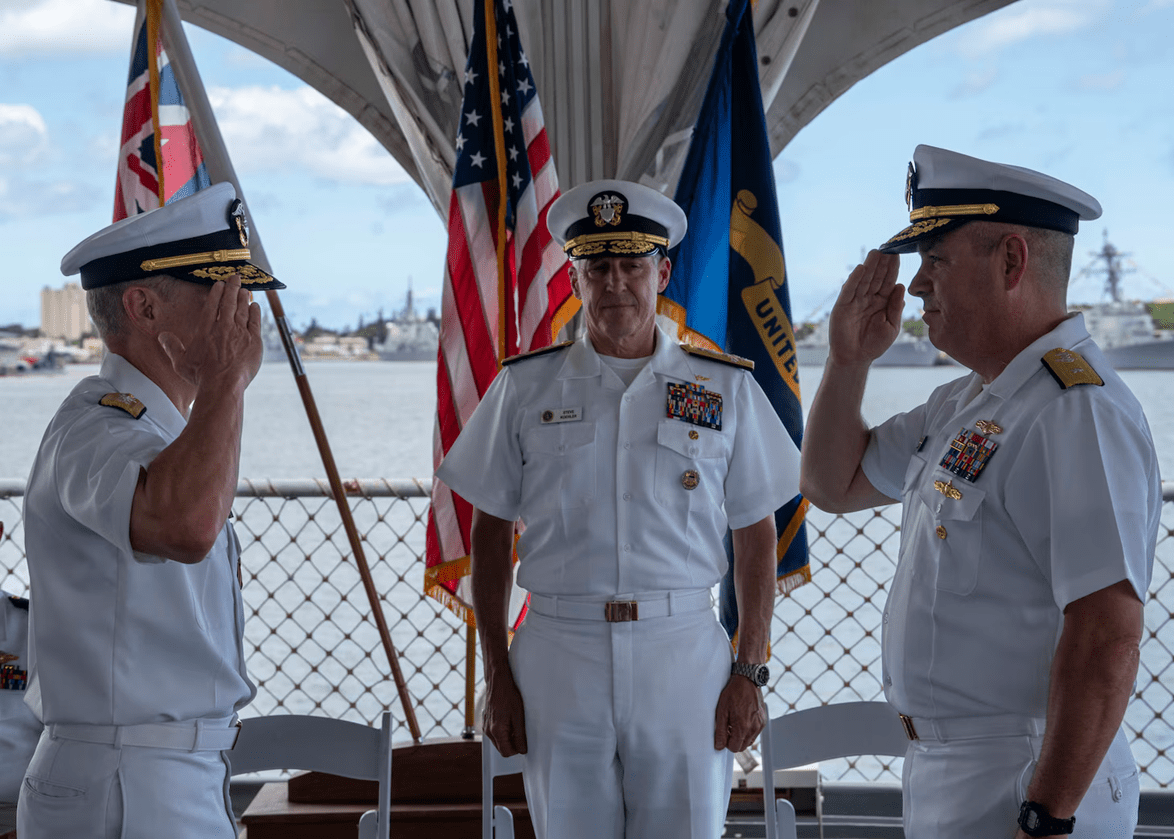
Military service is time spent serving by an individual or group in the armed forces, such as the Army, Navy, Marine Corps, Coast Guard, Air Force, or Space Force whether as a chosen job (volunteer) or because of an involuntary draft (conscription). Service requires an immense understanding and sacrifice, by the members, but more precisely by the family to endure the countless deployments, combat tours, and long hours. I always held the belief that “the military is a great place to start; the duration of your service is a personal choice”. My entire nuclear family (me, my wife, and our four children) not only understood the sacrifice, but embraced the expense and chose military service, particularly the U.S. Navy, as a selected occupation and profession.
Continue reading “Honoring Boswyck Offord, Sr. and His Navy Family – SERVICE – the Family Business”SIGINT Data Processing and Exploitation
Just as solid-state electronic technology changed the capabilities of SIGINT satellites dramatically, the computer revolution that began in the 1950s, and that is still underway, changed the capabilities of computer processing, almost day to day. The capability to process SIGINT information was especially powerful and quick to develop, because the SIGINT satellites collected electrical signals that, with proper coding, were in a form that computers could work on directly. From 1960 to 1975 the multiplying effect of improved satellite collectors and improved computer processors would provide a many-fold increase in operational capabilities. Developing the processing methodology was the key.
Continue reading “Early History of the National Reconnaissance Office (5 of 5)”The Navy’s center of gravity is evolving toward the information domain—not because it replaces ships or aircraft, but because it has become the decisive enabler of lethality, survivability, and decision advantage at sea.
Continue reading “Congratulations to ENS Kevin H. Nguyen, Cryptologic Warfare Officer, Winner of U.S. Naval Academy Class of 2026 Capstone Essay Contest – Category: Information Warfare”Imaging and Signals Intelligence Space Systems
The major effort within the US satellite reconnaissance program in the 1960s and 1970s featured overhead visual imaging systems, which produced information not obtainable any other way. (CORONA, GAMBIT, and HEXAGON, the early filmbased satellite systems, have already been well documented.) But there were important intelligence questions that could not be answered with pictures alone. The first question involved determining the location and characteristics of Soviet radars that could detect American strategic bombers. The second involved the performance capabilities of Soviet missiles—ICBMs and ABM systems. These two problems led the list of reasons favoring SIGINT satellites that could listen to and record the signals of Soviet radars, radio communications, and telemetry systems.
Continue reading “Early History of the National Reconnaissance Office (4 of 5)”General Alfred M Gray, USMC
Born June 22, 1928 – March 20, 2024
The history of the Cryptologic Technician community is filled with stories of dedication, sacrifice, and service in defense of the nation. Among those stories is that of Cryptologic Technician Interpretive Second Class (CTI2) Chad M. Kueser, whose courage and resilience embody the finest traditions of military service.
Continue reading “CTI2 Chad M. Kueser (Ret.): A Warrior’s Sacrifice and Unyielding Determination”