
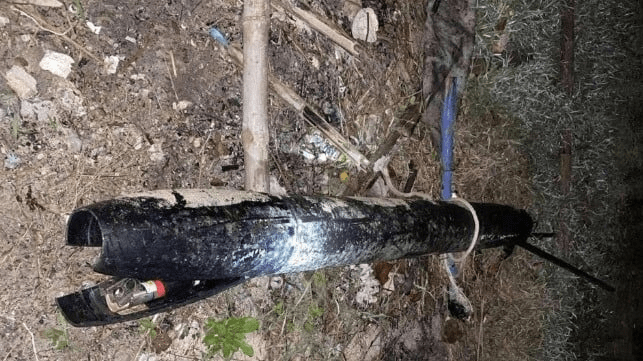
Philippine fishermen have pulled up another unauthorized research or espionage drone within the country’s waters, the latest in a series of catches that have raised concerns about Chinese spying as tensions rise in the South China Sea.
On September 28, a group of fishermen from Linapacan – a tiny island just north of Palawan, on the archipelago’s western fringe – were conducting routine operations when they came upon a 12-foot-long unmanned underwater vehicle (UUV). They retrieved the device and delivered it to the Philippine Coast Guard later the same day. Officers moved it to a nearby station for examination by security experts.
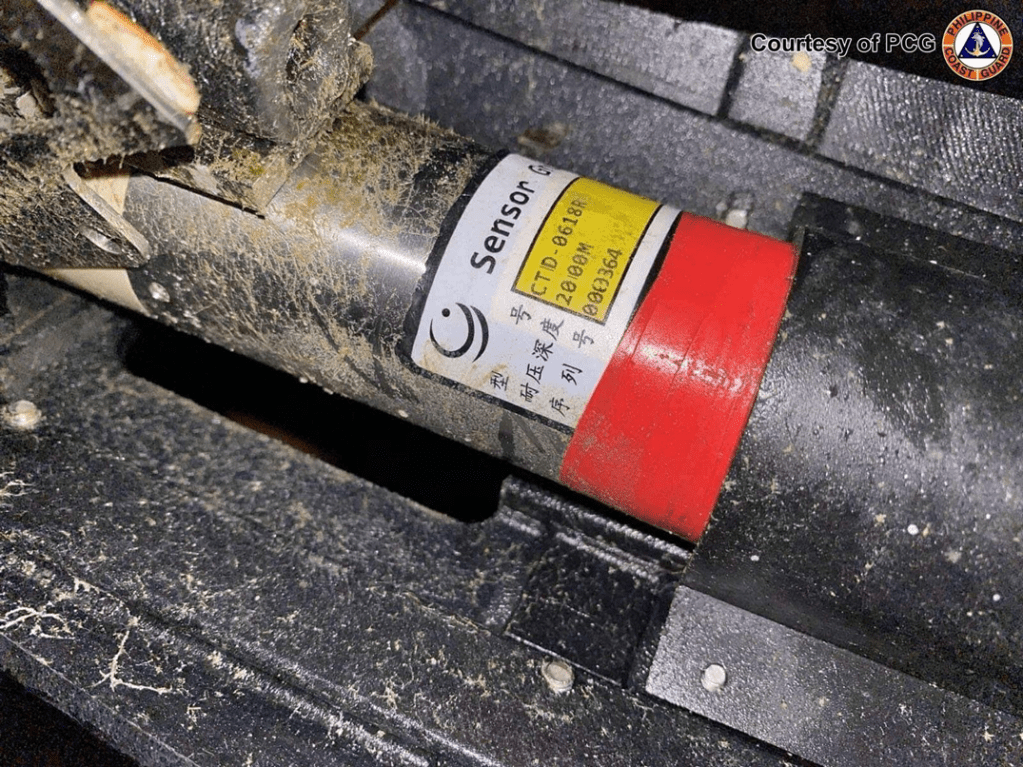
According to the PCG, a close examination revealed that the device has a Conductivity-Temperature-Depth (CTD) sensor, used for profiling the ocean’s water layers. The data is essential for stealthy submarine operations, as the layers control how underwater noise from a sub propagates. Visible corrosion on the device suggests that it was in the sea for some time, and a damaged fairing at the nose suggests the possibility of kinetic damage.
The drone had markings in Chinese characters reading “seawater salinity sensor” plus a clearly-labeled serial number, easy markers of parts sourcing and hints of the drone’s national origin. Such visible clues were not found on previously-seized drones in the Philippines. Further forensic analysis efforts are under way.

“We commend the quick action of the local fishermen for reporting this find. This incident highlights the need for continued community awareness and a whole-of-nation approach to deter unauthorized activities in our waters,” said PCG Commandant Admiral Ronnie Gil Gavan in a statement.
The region where the drone was found is adjacent to the narrow straits between the South China Sea and the Sulu Sea, a strategic region for east-west navigation. Other Chinese drone finds have also occurred in areas that could be attractive for covert submarine transits in the event of a conflict, like the Visayan Sea, Flores Sea, Java Sea, Bohol Sea, Calayan Islands and the southern Riau Islands – generally outside the commercial shipping lanes and of little use for civilian interests.
Previously recovered devices have had capabilities for seabed mapping, onboard data processing, storage, and outbound satellite transmission, according to the PCG. Analysis of onboard electronics in one case revealed a history of encrypted communications to mainland China; some of the devices are externally similar to published Chinese research drones.
Under China’s declared “military-civil fusion” policy, the distinction between military and civil activities at sea may be blurred by Chinese law and practice, and China’s state research academies have well-established links to the People’s Liberation Army. Even if the drones were deployed for scientific research purposes, the research activity was unauthorized – and therefore a potential breach of the rights of the coastal state under UNCLOS, which provides for the regulation of oceanographic research out to the 200-mile exclusive economic zone boundary.
Source: maritime-executive.com
 Station HYPO
6 October 2025 at 10:06
Going out on a limb here…Considering China’s “one child” policy, males were “valued heirs” (possible source of security for the parents as they aged) whereas females were aborted as having NO VALUE. Hence, there are far more males in the 20’s-40’s then females. As these males stand little chance of having a spouse, what a great way to “use up these useless eaters” and start a war!
To obtain all forms of information to further it’s chance of victory…China has funneled all resources in doing so…this being but one. It also hinges on the “fact” that they could easily loose 330million (what’s assumed to be close to our total population) and still be left with a billion people to dig themselves out of the nuclear hell-hole that’d be left of China.
What would be “left” for us…well, that’s up to what remains of those willing and still able to do more then just “occupy space” and complain about our country.
LikeLike