
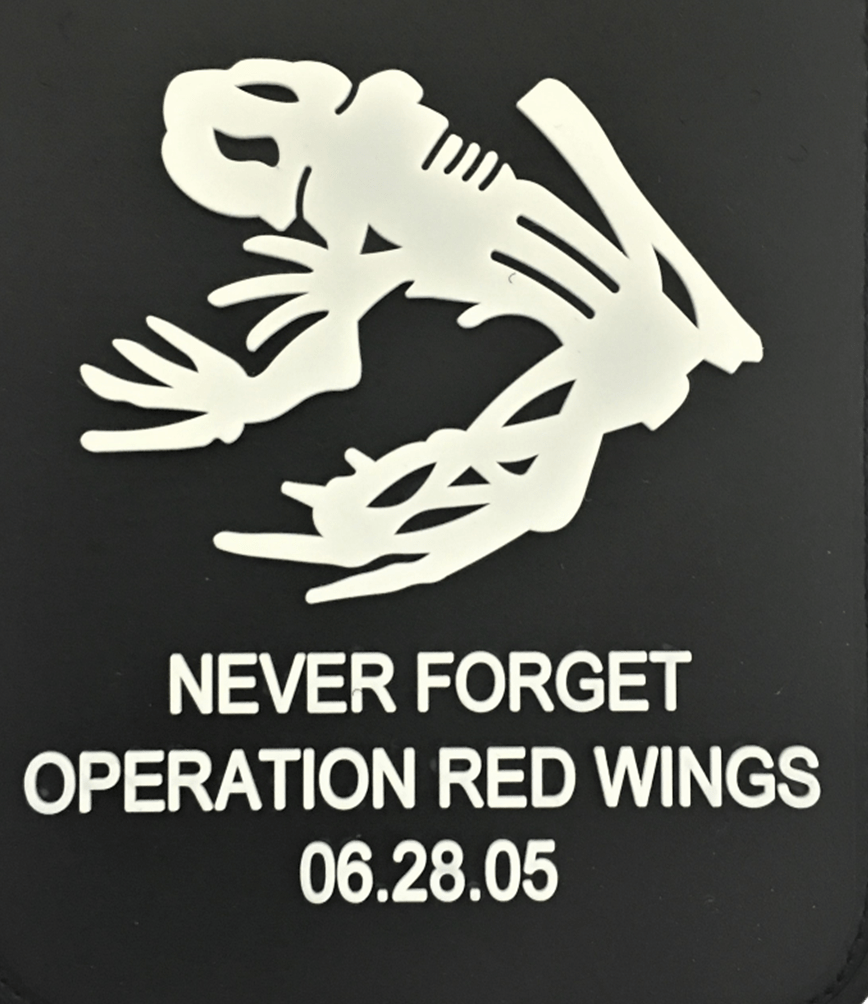
Twenty-one years ago today, on June 28, 2005, the United States suffered one of the darkest days in the history of Naval Special Warfare. During Operation Red Wings, a four-man Navy SEAL reconnaissance team operating in the rugged mountains of Kunar Province, Afghanistan, was compromised while conducting a mission against insurgent forces. The ensuing battle and rescue attempt resulted in the loss of 19 American service members.
Operation Red Wings was launched to disrupt anti-coalition activities and capture or kill Ahmad Shah, a Taliban-aligned insurgent leader operating in eastern Afghanistan. In the early morning hours of June 28, a four-man reconnaissance element from SEAL Team 10 was inserted high into the Hindu Kush Mountains near Asadabad, Kunar Province.
The reconnaissance team consisted of:
Lieutenant Michael P. Murphy, USN
Sonar Technician (Surface) Second Class Matthew G. Axelson, USN
Gunner’s Mate Second Class Danny P. Dietz, USN
Hospital Corpsman First Class Marcus Luttrell, USN
Shortly after establishing their observation position, the team was compromised. The SEALs soon found themselves engaged in an intense firefight against a numerically superior enemy force in steep, unforgiving terrain.
Despite being severely wounded, Lieutenant Michael Murphy knowingly exposed himself to enemy fire in order to establish communications and request immediate assistance. His extraordinary heroism enabled headquarters to receive the team’s distress call. For his actions, Lieutenant Murphy was posthumously awarded the Medal of Honor.
As the battle continued, Murphy, Dietz, and Axelson made the ultimate sacrifice while fighting against overwhelming odds. Marcus Luttrell, seriously wounded, survived the engagement and was eventually sheltered and protected by Afghan villagers under the traditional Pashtunwali code of honor until he could be rescued several days later.
In response to Murphy’s distress call, a Quick Reaction Force (QRF) consisting of Navy SEALs and U.S. Army aviators from the 160th Special Operations Aviation Regiment (Airborne)—the famed “Night Stalkers”—launched aboard two MH-47 Chinook helicopters.
As one of the helicopters approached the landing zone, it was struck by a rocket-propelled grenade (RPG) fired by enemy forces. The aircraft crashed, killing all 16 Americans aboard.
Those lost aboard the MH-47 were:
U.S. Navy SEALs
Lieutenant Commander Erik S. Kristensen, USN
Lieutenant Michael L. McGreevy, USN
Sonar Technician (Surface) Second Class James E. Suh, USN
Aviation Ordnanceman Second Class Shane E. Patton, USN
Senior Chief Information Systems Technician Daniel R. Healy, USN
Chief Sonar Technician (Surface) Jacques J. Fontan, USN
Lieutenant Commander Kevin A. Houston, USN
Hospital Corpsman Second Class Jeffrey S. Lucas, USN
U.S. Army, 160th Special Operations Aviation Regiment (Airborne)
Major Stephen C. Reich, USA
Chief Warrant Officer Three Corey J. Goodnature, USA
Chief Warrant Officer Three Marcus V. Muralles, USA
Chief Warrant Officer Two Chris J. Scherkenbach, USA
Staff Sergeant Shamus O. Goare, USA
Staff Sergeant James W. Ponder III, USA
Sergeant First Class Kelly J. Shank, USA
Master Sergeant James E. “Ryan” Ponder, USA
The total American loss during Operation Red Wings stood at 19 service members—making it the deadliest single day in the history of U.S. Naval Special Warfare up to that time.
The courage, sacrifice, and selfless service displayed by these warriors continue to inspire generations of Americans. Their actions exemplified the highest traditions of the United States Navy and the United States Army.
Today, we pause to remember these nineteen heroes who gave their lives in defense of freedom. Their sacrifice will never be forgotten.
“The brave die never, though they sleep in dust: Their courage nerves a thousand living men.”


28 June 2026 at 19:39
I hope their families, especially their children, know of the bravery of the fallen.
LikeLike