
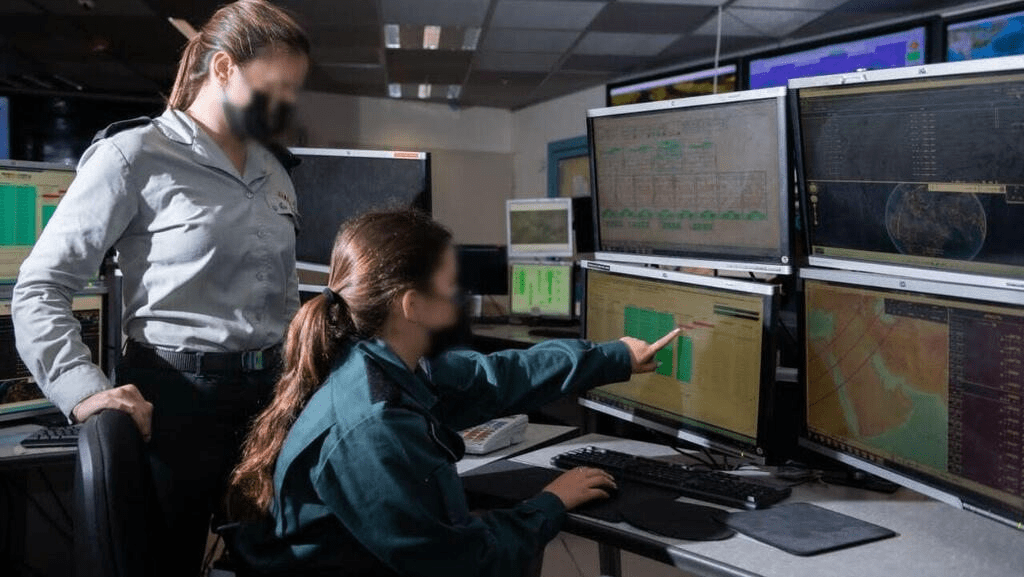
Somewhere inside an Israeli military intelligence facility, an autistic corporal is eight hours into his shift, scanning satellite imagery on multiple monitors. He does not find this tedious or boring; it’s actually quite relaxing.
When the IDF’s chief of staff visited and stopped by this soldier’s desk, the young man proudly pointed to something he’d found in an aerial photograph. The general leaned in close, but he saw nothing. The soldier pointed it out again. “There, it’s so clear,” he said.
It was clear to him, and that right there is the whole point.
Across the world’s most advanced militaries, a quiet but significant reckoning is underway. Cognitive traits long associated with autism, such as sustained attention, pattern recognition, tolerance for repetitive precision tasks, and an ability to detect anomalies that neurotypical analysts scan right past, turn out to be exactly what modern intelligence, cyber, and geospatial operations need.
One problem is that most armed forces still classify autism as a disqualifying medical condition, effectively screening out the very minds they might end up needing most in future conflict.
Israel solved this contradiction over a decade ago.
In 2013, two Mossad veterans launched a program called Ro’im Rachok, which is Hebrew for “Seeing Far.”
Testing began inside Unit 9900, the IDF’s visual intelligence division, which specializes in analyzing satellite and aerial imagery. Results did not require much interpretation. One group of autistic analysts completed an intelligence analysis in three months that had been projected to take eighteen.
During combat operations, their speed and precision proved critical. One unit commander said that the gap between the volume of incoming intelligence and the military’s capacity to process it was widening, and that these soldiers were closing it.
Over 400 soldiers now serve through the “Spectrum of Talent,” deployed across roles that include satellite imagery interpretation, software quality assurance, data classification, electronics, and electro-optics.
Their training pipeline consists of a six-month course in which IDF commanders teach alongside occupational therapists and speech pathologists.
The program is designed to produce much more than junior analysts. It’s set up to produce soldiers who leave service better equipped for civilian life.
Why does it work? Because it treats autistic cognition as a skill rather than a hindrance.
The United States is beginning to explore similar ideas.
As of April 2026, Autism Spectrum Disorder remains a formally disqualifying condition for military service. However, over 500 applicants were granted medical waivers.
Meanwhile, the National Geospatial-Intelligence Agency has launched a workforce pilot directly inspired by this model.
Here’s the structural contradiction: diagnosis excludes, but capability is already in use.
Neurodivergent individuals already work across intelligence analysis, engineering, cybersecurity, and security clearance investigations throughout the Department of Defense. Some were even diagnosed after entry. Some never disclosed at all.
It would appear that this system formally bars the door while quietly benefiting from those who slip through it.
Across the world, militaries are starting to reconsider how they approach neurodivergence.
The question is no longer whether these skills matter. It’s how long systems can afford to overlook them.
 Station HYPO
27 April 2026 at 07:49
I was a middle school special education teacher for nine years, and I worked with students who had severe autism. They’re not the service members I see in these programs when they get older. The people with autism would need to be very high-functioning individuals. Also, I’m sure the bases where they serve are nowhere near the front lines or outside their home country. I’ve witnessed and helped calm the anxiety and nerves of people with autism when fire alarms go off or thunderstorms strike. It’s like nothing you’ve ever seen. So, I like this program, and it has a special, important niche. Especially intelligence-related work. Godspeed to everyone involved.
LikeLike