
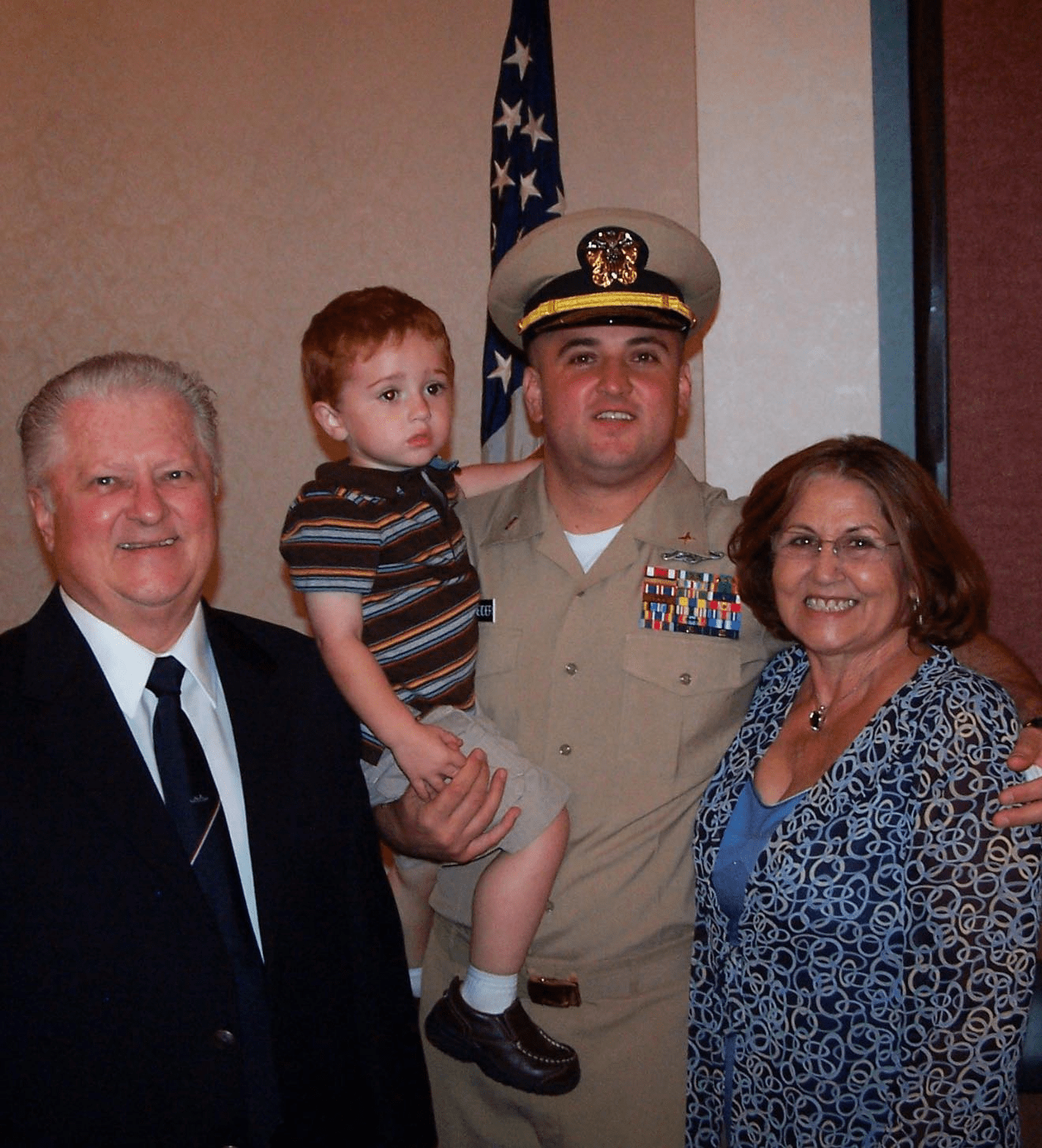
For nearly seven decades, the Schneider family has contributed to the mission of U.S. Navy cryptology and information warfare. Spanning the Cold War, the Global War on Terrorism, and today’s cyber domain, three generations — Senior Chief Cryptologic Technician Collection Ronald Schneider, Chief Warrant Officer Five Kevin Schneider, and Ensign Christopher Schneider — represent a remarkable legacy of dedication, technical expertise, and operational service.
Senior Chief Ronald E. Schneider — Cold War Cryptologic Professional
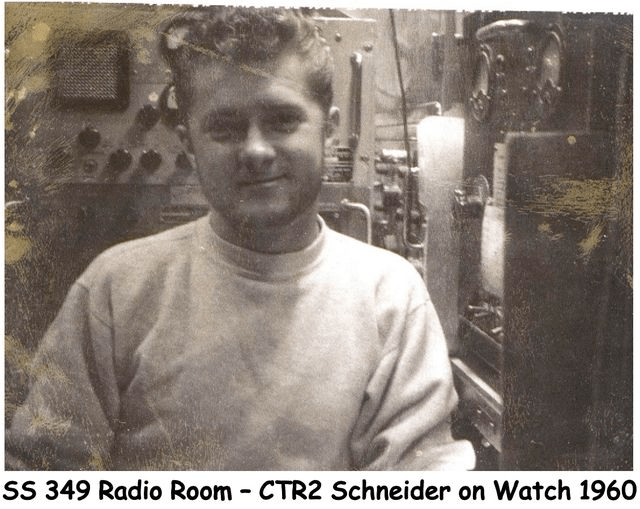
Ronald Schneider, a native of Ephrata, Pennsylvania, began his Navy career on January 2, 1957, when he enlisted as an Electronics Field Seaman Recruit. Following recruit training at Bainbridge, Maryland, he attended manual Morse operator training at the Naval Communications Training Center in Imperial Beach, California.
During this period, the Navy faced a critical shortage of Russian linguists. Demonstrating initiative and commitment, Schneider volunteered for Russian language training at the Office of Naval Intelligence in Anacostia, Washington, D.C. After completing both language and signals training, he reported in November 1958 to his first operational assignment in Karamürsel, Turkey.
Over the next several years, Schneider advanced steadily through the enlisted ranks while serving at key cryptologic sites around the globe. After 18 months in Turkey, he transferred in May 1960 to Kami Seya, Japan, where he supported Fleet Air Reconnaissance Squadron ONE (VQ-1) as a direction support operator. He later served in Sidi Yahia, Morocco, where he was promoted to Cryptologic Technician First Class.
In November 1967, Schneider reported to Sabana Seca, Puerto Rico, where he was advanced to Chief Petty Officer. After five years there, he transferred to Misawa, Japan, becoming a plank owner at Naval Security Group Activity Misawa. During this assignment he was promoted to Senior Chief Petty Officer.
His final active-duty assignment was at the National Security Agency at Fort George G. Meade, Maryland. Although selected for promotion to Master Chief Petty Officer, Schneider chose to decline advancement due to family considerations and retired from active duty on January 3, 1977.
Even after retirement, his service continued. As a civilian liaison officer for the Office of Naval Intelligence at Fort Meade, he supported naval cryptologic operations until his full retirement in January 1995, concluding 38 years of combined active and civilian service.
Throughout his career, Senior Chief Schneider served as a direct support operator and supervisor aboard numerous surface ships, submarines, and aircraft carriers, contributing to intelligence collection during the height of the Cold War.
Chief Warrant Officer Five Kevin Schneider — Information Warfare Leader
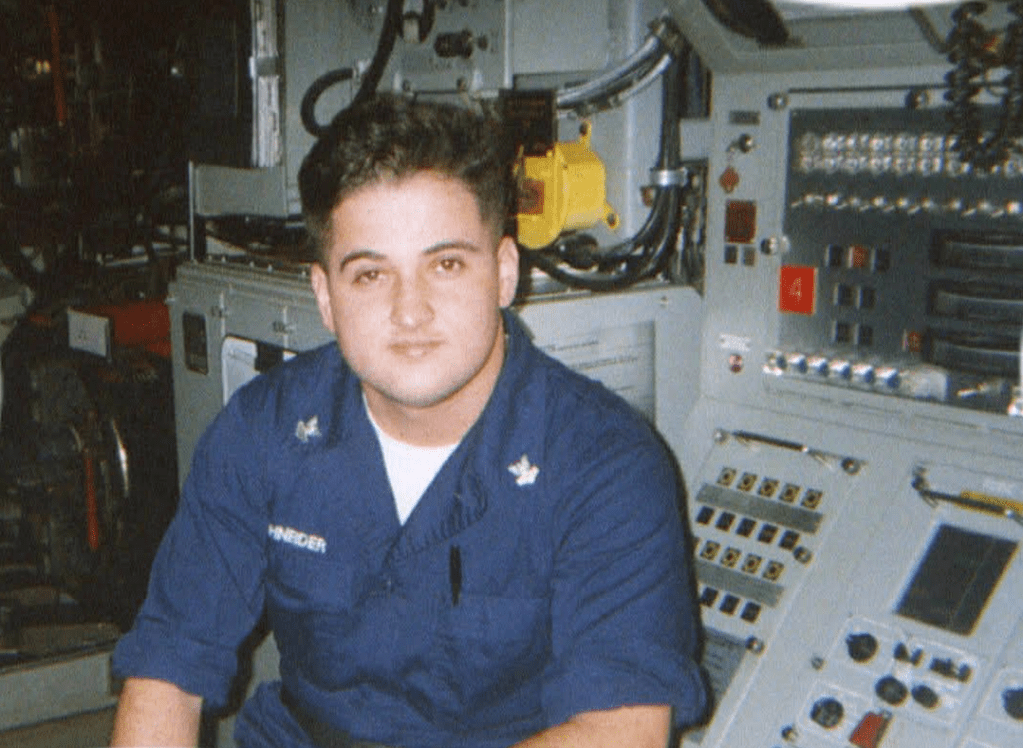
Continuing the family tradition, Kevin Schneider enlisted in the Navy in 1993. After completing recruit training at Great Lakes, Illinois, he attended Cryptologic Technician training in Pensacola, Florida, and Fort Devens, Massachusetts.
His first operational tour was at Naval Security Group Activity Kunia, Hawaii, where he served as a direct support operator from 1994 to 1997. During this time, he deployed aboard multiple platforms, including cruisers, aircraft carriers, and submarines, earning his Subsurface Warfare qualification.
He later served at Naval Security Group Activity Rota, Spain, qualifying as a watch team supervisor and supporting submarine deployments during Operation Noble Anvil in 1998. In 1999, Schneider transferred to Naval Information Warfare Activity Suitland, Maryland, where he advanced to Petty Officer First Class and led intelligence operations supporting the Fifth Fleet area of responsibility.
From 2001 to 2007, he was assigned to special projects at Fort Meade, deploying as an afloat Officer-in-Charge on sensitive missions in multiple operational theaters. He was promoted to Chief Petty Officer in 2003 and selected for commissioning as a Chief Warrant Officer in 2007.
As a warrant officer, Schneider served in a variety of leadership roles, including collection manager, signals analysis division officer, and Signals Warfare Officer aboard a guided-missile cruiser. He supported ballistic missile defense operations, search-and-rescue missions in the Eastern Mediterranean, and multiple extended deployments with carrier strike groups.
Later assignments included duty as the embedded National Security Agency liaison to U.S. Central Command’s SIGINT Requirements Division, supporting combat operations across the CENTCOM region. He also served as a department head and instructor at Information Warfare Training Command Corry Station in Pensacola, Florida.
Selected for promotion to Chief Warrant Officer Five, Schneider’s career reflects sustained excellence in operational intelligence leadership. Among his recognitions is the prestigious Captain Joseph Rochefort Leadership Award.
Ensign Christopher Schneider — The Next Generation
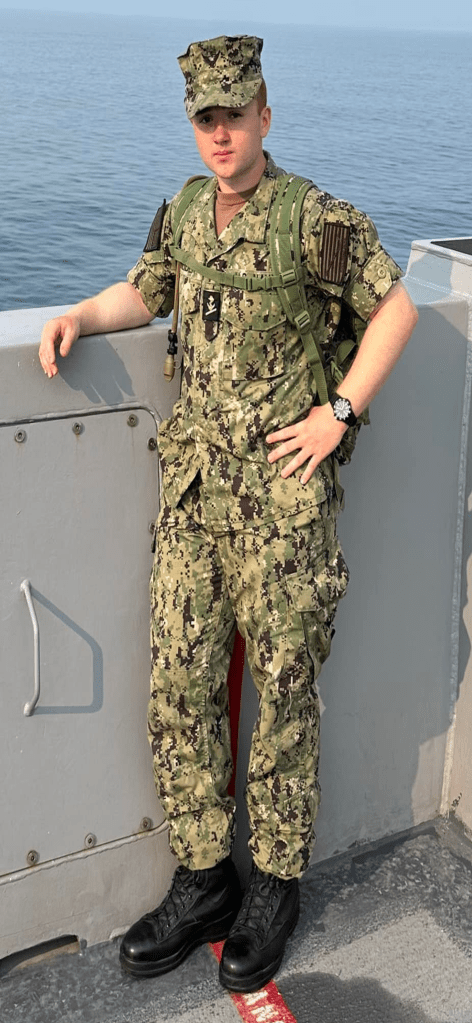
The Schneider legacy continues with Ensign Christopher Schneider, who commissions as an Information Warfare officer after graduating from Norwich University with a degree in Cyber Security and a minor in Naval Science.
During his training, he completed an Information Warfare cruise aboard an amphibious assault ship, sailing through the South China Sea and earning his “shellback” distinction after crossing the equator. With orders pending from his detailer, he represents the next chapter in a family tradition that has evolved from manual Morse intercept operations to modern cyber and information warfare missions.
A Family Tradition of Cryptologic Service
From Cold War signals intercept operations to modern cyber warfare and intelligence integration, the Schneider family exemplifies the continuity and evolution of naval cryptology. Across three generations, their combined service reflects not only professional dedication but also the enduring importance of information dominance in naval operations.
Their story is one of heritage, adaptability, and commitment — a reminder that while technology and threats change, the spirit of service that underpins naval cryptology remains constant.
 Station HYPO
Leave a comment