
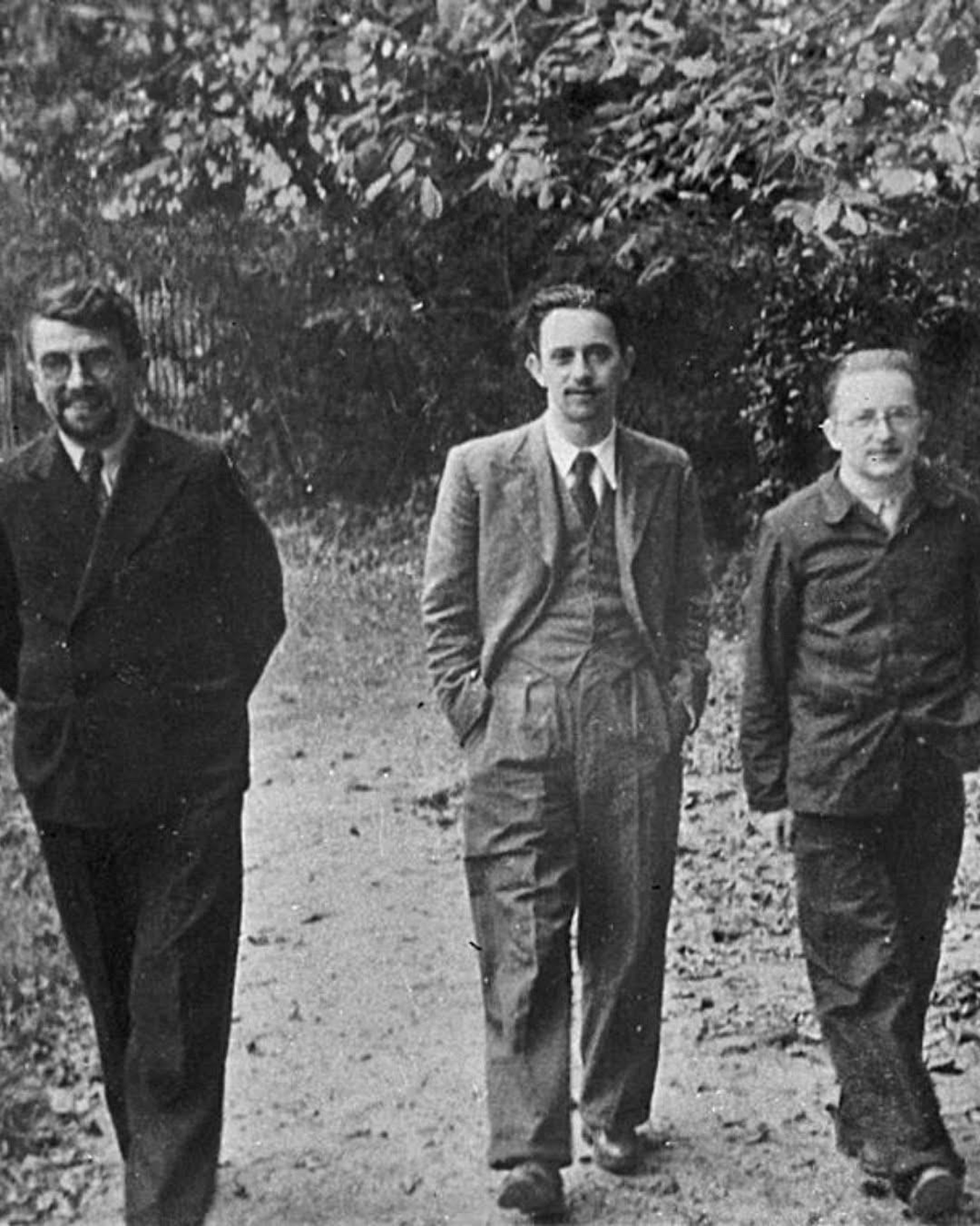
Long before the famous codebreakers of Bletchley Park achieved their wartime successes, a small team of brilliant Polish cryptologists accomplished what many believed was impossible—they broke the German Enigma cipher.
The foundation of this extraordinary achievement rested with three young mathematicians from the Polish Cipher Bureau (Biuro Szyfrów): Marian Rejewski, Jerzy Różycki, and Henryk Zygalski. Unlike traditional linguists who had historically dominated the field of cryptanalysis, these men approached the problem mathematically, applying advanced concepts from permutation theory and group theory to unravel one of the world’s most sophisticated encryption systems.
The breakthrough came in December 1932 when Marian Rejewski successfully reconstructed the internal wiring of the military Enigma machine without ever having physical access to one. His accomplishment was made possible through mathematical analysis, intercepted German radio traffic, and intelligence provided by French military intelligence, which had obtained key German cipher documents from a source within the German Cipher Office.
Over the next several years, Rejewski, Różycki, and Zygalski continually adapted their methods as the Germans introduced increasingly complex security measures. The Polish team developed a series of ingenious techniques and devices to keep pace with these changes. Among their innovations were the cyclometer, used to catalog Enigma key settings; Zygalski sheets, perforated paper sheets that helped identify daily keys; and the cryptologic bomba (or bomba kryptologiczna), an electromechanical machine designed to automate portions of the codebreaking process. These inventions represented some of the earliest examples of mechanized cryptanalysis.
As the threat of war grew during the summer of 1939, Polish leaders recognized that Germany’s continued improvements to Enigma would soon exceed their limited resources. Rather than allow years of work to be lost if Poland were invaded, they made a remarkable decision.
On July 25, 1939, representatives from Poland, Great Britain, and France met in the Pyry Forest near Warsaw. During this historic conference, the Polish Cipher Bureau revealed everything it had learned about Enigma. The Poles shared their mathematical methods, demonstrated their codebreaking techniques, and provided the British and French with reconstructed Enigma machines and detailed documentation of their work.
This transfer of knowledge proved invaluable. Although the British codebreakers at Bletchley Park would later develop new methods and machinery—including Alan Turing’s improved Bombe—to counter the increasingly sophisticated German Enigma procedures, they began their wartime effort with years of Polish research already in hand. The Polish achievements gave Britain and France a critical head start that significantly accelerated Allied codebreaking efforts.
Following Germany’s invasion of Poland on September 1, 1939, Rejewski, Różycki, and Zygalski escaped the country and continued their cryptologic work from France and later other Allied locations. Tragically, Jerzy Różycki was killed in 1942 when the passenger ship Lamoricière sank in the Mediterranean Sea. Rejewski and Zygalski survived the war, though for decades their pioneering contributions remained largely unknown outside classified circles.
Today, historians recognize that the Allied success against Enigma was an international achievement that began in Poland. Without the groundbreaking work of Marian Rejewski, Henryk Zygalski, and Jerzy Różycki, the codebreaking triumphs at Bletchley Park would have been significantly more difficult and time-consuming. Their mathematical brilliance laid the foundation for one of the greatest intelligence successes of the Second World War and helped shape the course of the Allied victory.


27 July 2026 at 12:24
There was a book about the Polish group long ago. “The Red Orchestra” – (Die Rote Kapelle) which detailed their stories.
LikeLike
27 July 2026 at 18:31
Interesting but not new information
LikeLike
12 September 2026 at 18:59
Interesting
LikeLike