
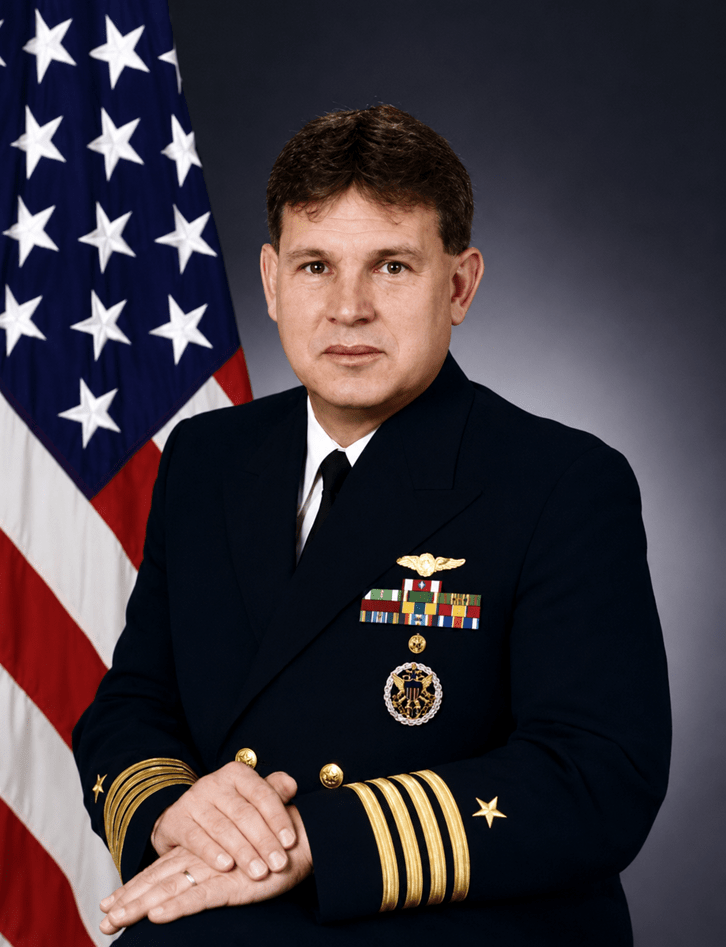
Mike Lambert enlisted in the United States Navy in 1975 as a Seaman Recruit, beginning what would become a three-decade journey from the lowest rung of enlisted service to the rank of Captain. That arc — from recruit to commanding officer — shaped the leader he became: someone who understood his Sailors because he had once been one of them.
His initial assignment in the Naval Security Group was as a Cryptologic Technician Interpretive (Russian) in the direct support division at U.S. Naval Security Group Activity Misawa, Japan when Captain Tettelbach and Captain James McFarland were Commanding Officers. He was trained by legendary figures like CTI1 Jack Menting, CTIC Greg Thomas, CTICS Jim Wild, CTIC Sam Garrison, CTI1 James Brokaw, CTI1 Andy Shoemake, CTIC Bill Skipper, and a dozen other amazing Sailors.
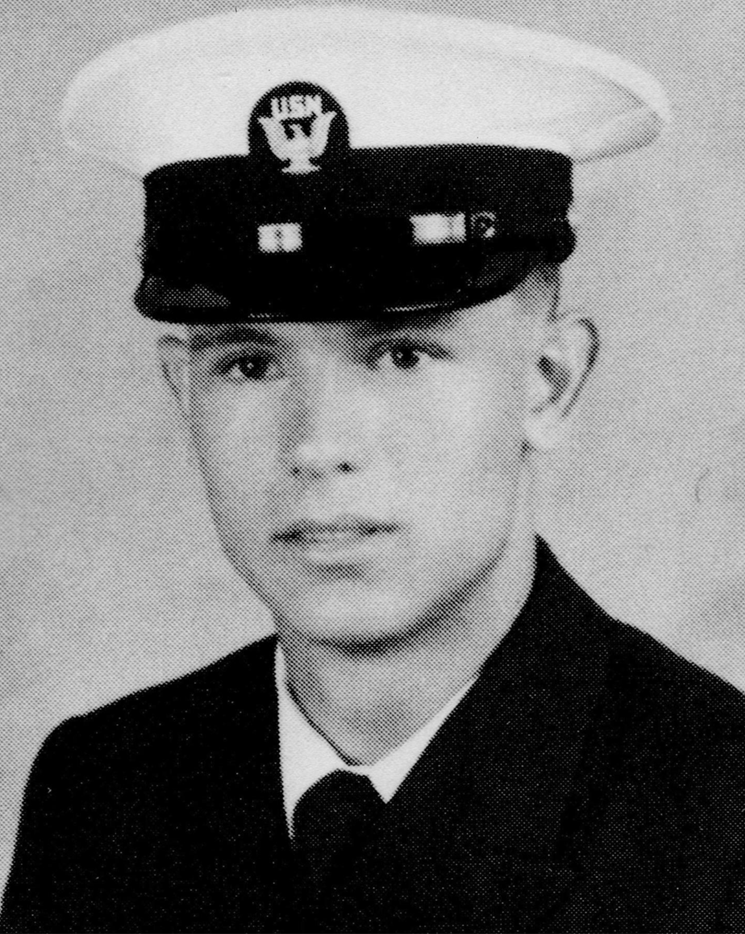
His early education ran parallel to his naval career. He earned a Bachelor of Arts in Russian from Southern Illinois University in 1981, graduating with University High Honors and membership in the Phi Kappa Phi and Phi Eta Sigma honor societies. He had previously completed the Russian Basic Language Course at the Defense Language Institute in Monterey, California. He later earned a Master of Science in Financial Management from the Naval Postgraduate School in Monterey.
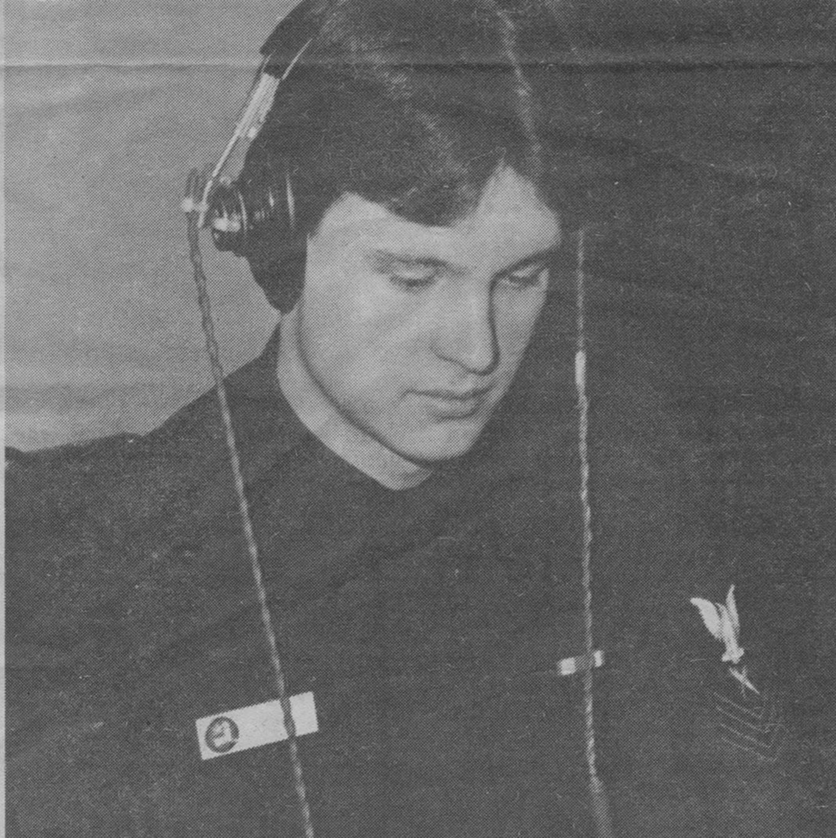
His assignments as a naval officer reflected a career spent at the intersection of intelligence, cryptology, and emerging information warfare. Ensign Lambert’s first assignment as an officer was as a Communications Intelligence Evaluator (COMEVAL) at U.S. Naval Security Group Detachment Atsugi, Japan flying in the EP-3B/E (thousands of hours) and the EA-3B (5.7 hours) with Fleet Air Reconnaissance Squadron ONE (VQ-1) from 1982-1985.
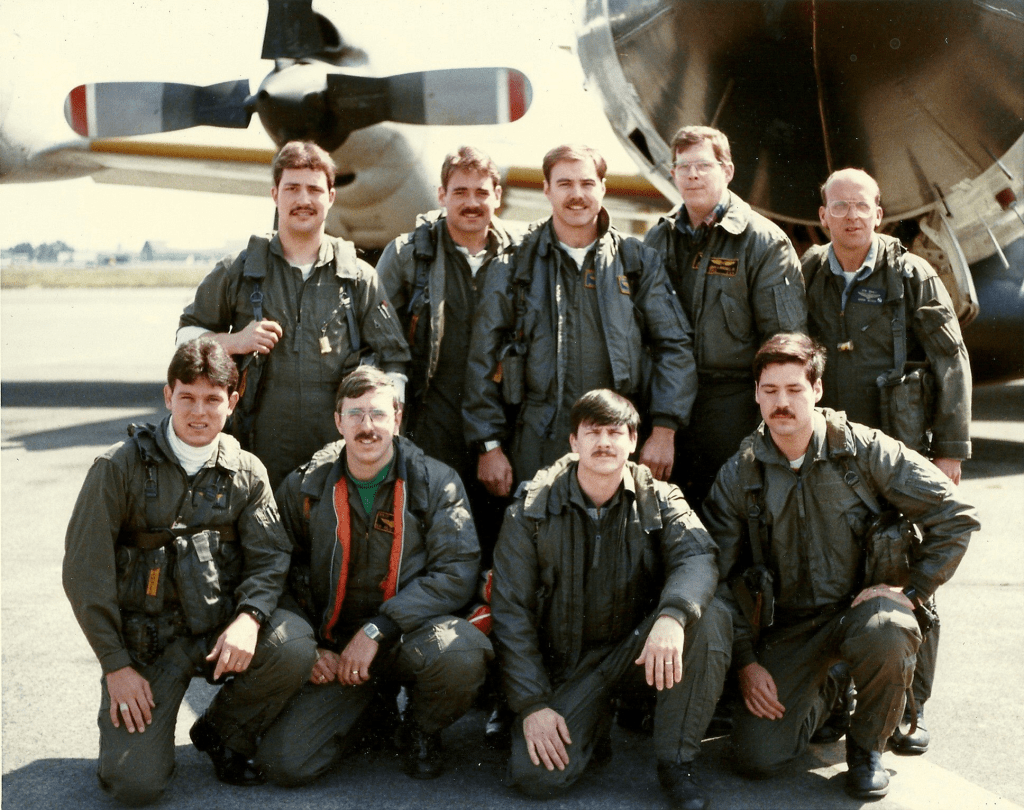
Lieutenant Lambert served as Officer in Charge of a specialized airborne collection unit from 1985 to 1988 at NSGD Barbers Point. He led a team of the Naval Security Group’s best linguists and electronics intelligence analysts, guiding the test and evaluation of a next-generation signals collection system aboard the P-3C(Mod) and earning a Navy Unit Commendation and two Meritorious Unit Commendations from the Secretary of the Navy. The Detachment Sailors won the RADM George Patrick March Award for linguistic excellence three years in a row. RADM March presented the award in person to the Sailors.
In the early 1990s, he served as the Naval Security Group Command’s Program and Budget Director (GD2), managing a $167 million annual budget in support of airborne, shipborne, subsurface, and shore-based intelligence programs — and sometimes working directly with Congressional staff to secure funding through the budget justification process.
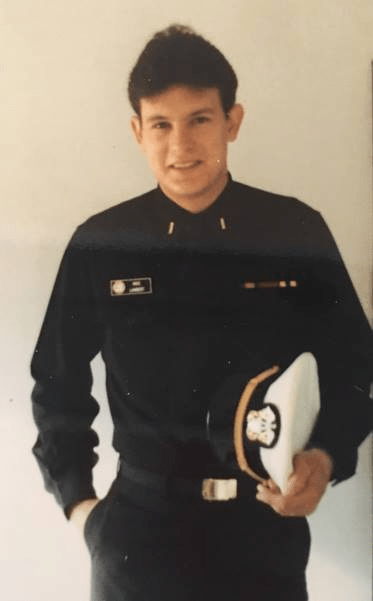
From 1994 to 1995, Lieutenant Commander Lambert served as Executive Assistant to the Commander of Naval Security Group Command, Rear Admiral Thomas F. Stevens, functioning as the confidential advisor and key aide to the Navy’s senior signals intelligence leader — a role that demanded, as he noted, integrity, tact, and discretion above all else. He subsequently served as Assistant Fleet Cryptologist for Commander, U.S. SEVENTH Fleet embarked in USS BLUE RIDGE (LCC-19).
Perhaps his most formative naval assignment came as Commanding Officer U.S. Naval Security Group Activity Yokosuka, Japan from 1997 to 2000. He took the helm of a struggling command and his Sailors absolutely transformed it. In the funniest bit of selection board irony, the Command Screening Board failed to screen him for command in 1998, a job he had been performing for 18 months. Under his leadership, the organization was recognized as the best command and control warfare unit in the Pacific region with the Association of Old Crows Award and twice designated best in the Naval Security Group for the maintenance of complex signals collection and communications equipment aboard the Navy’s only permanently forward-based ships, stationed in Japan. The men and women NSGA Yokosuka won the Fleet Activity Yokosuka’s Captain’s cup twice as best on the Yokosuka Waterfront. His crew’s retention program ranked second in 1999 and then first in the cryptologic community in 2000, earning the Gold Anchor. Chief of Naval Operations Admiral Jay Johnson personally commended him for his “no nonsense” leadership. The command’s Sailors earned a Navy Meritorious Unit Commendation.
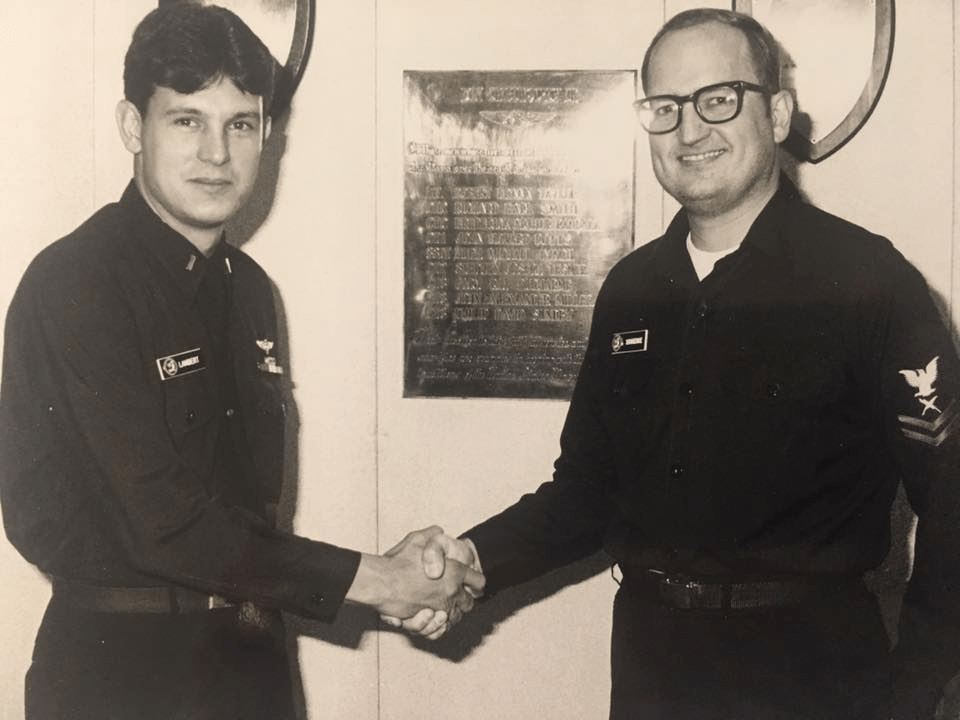
Commander Lambert then turned his attention to education, serving as Director of Training for the Navy’s Cryptologic, Electronic Warfare, and Information Warfare schoolhouse at Corry Station from 2000 to 2003. He led 400 instructors and support personnel across five geographic locations, graduating 8,000 multi-service students annually from 167 courses of instruction. He modernized the enterprise, transitioning it from paper-based instruction to a fully integrated e-learning environment and expanding the use of modeling and simulation — achievements recognized as the best in the Navy for two consecutive years. He also developed partnerships with more than 20 colleges and universities to ensure that service members attending Navy courses could earn college credit for their work.
In 2003, Captain Lambert moved to the Joint Staff as Information Assurance Branch Chief, leading an eight-person team responsible for developing and implementing policies to secure the Global Information Grid across Department of Defense. He developed initial policy concepts for Critical Infrastructure Protection and spearheaded the strategy for improving DoD’s Federal Information Security Management Act compliance scores.
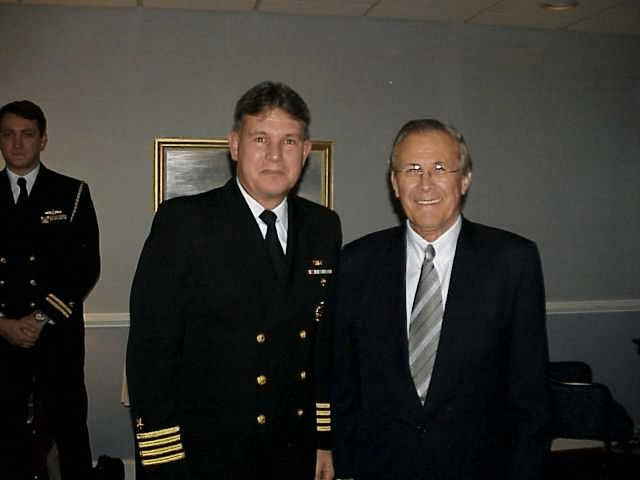
His final and perhaps most consequential naval assignment came when he was selected as Staff Director for the Secretary of Defense Donald H. Rumsfeld’s Detainee Task Force, a position he held from 2004 to 2006 in the wake of the Abu Ghraib prison scandal. He assembled and led a 50-person matrixed multi-service and civilian team responsible for responding to the Secretary of Defense, senior DoD officials, and both houses of Congress on all matters pertaining to detention operations in Iraq, Afghanistan, and Guantanamo Bay. He interfaced with some of the most senior panels in the government, including the Schlesinger Panel and the President’s Foreign Intelligence Advisory Board. His team assessed findings from 15 investigative reports and helped establish the Department’s priorities for implementing more than 500 recommendations to reform detention operations across the Global War on Terror. He also wrote the Secretary of Defense’s talking points for discussions with the President.
He retired from the Navy in 2006 after 30 years of service.
 Station HYPO
24 May 2026 at 14:26
Loved working for Captain Lambert. He loved his job and and went above and beyond in the position he had at Corry Station. That was the last two years of my Navy Career and Loved working on Corry during that time. Thanks for putting up with me Captain Lambert.
LikeLike
24 May 2026 at 19:07
Congratulations Mike on an absolutely superb career! Enjoyed working and flying with you during our time together at NSGD, Atsugi! All the Best to you and your family!
Jim McGovern
LikeLike
1 September 2026 at 19:18
Thanks for believing in me, Sir
You’re the best and always have been~!
Semper Fi, Jeff Kuzniewski
P.S. I know, this should have been handwritten.
LikeLike