
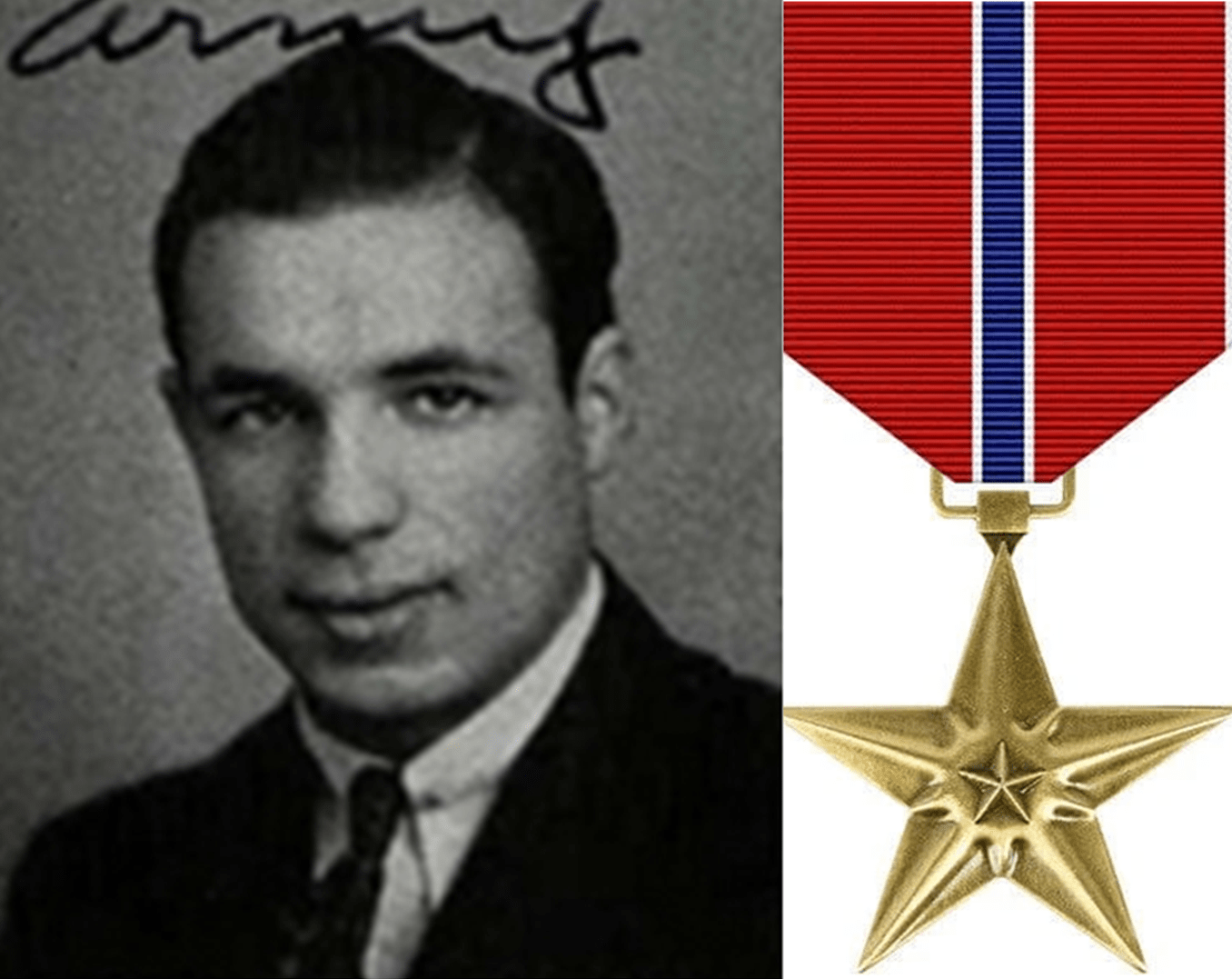
The steel decks of the battleship USS NEW MEXICO trembled beneath the thunder of war. Across the blood-soaked waters off Okinawa in the spring of 1945, death came screaming from the sky in the form of Japanese kamikaze aircraft—pilots on one-way missions of destruction. Amid the chaos, deep within the nerve center of Admiral Spruance’s flagship, one young American Sailor listened intently to the enemy.
Radioman First Class Walter L. Rougeux was not manning a gun turret or standing on the bridge with binoculars fixed on the horizon. His battlefield was invisible. Wearing headphones in the dim glow of radio equipment, Rougeux served as a Japanese Katakana intercept operator. Every transmission he copied, every coded message he deciphered, could mean the difference between survival and catastrophe.
He tracked the enemy through the radio frequency spectrum.
From Japanese radio traffic, Rougeux and his fellow cryptologic operators pieced together the deadly puzzle: aircraft departures, estimated routes, altitude, speed, and timing. It was a race against the clock where seconds mattered and mistakes cost lives. With calm precision, Rougeux calculated the moment the enemy strike force would arrive.
And on May 12, 1945… they arrived exactly on time.
As dusk settled over Okinawa, four kamikaze aircraft pierced the American defenses. Sirens wailed across the NEW MEXICO. Anti-aircraft fire clawed desperately into the darkening sky. Then came the impact.
One kamikaze slammed into the battleship with devastating force—crashing just outside the watertight compartment where Rougeux and his fellow cryptologic technicians were working. Fire erupted instantly. Steel twisted. Smoke and flame consumed the passageways.
Walter L. Rougeux was killed in the blast alongside 53 other Sailors.
He was only 23 years old.
Yet long before he became a silent warrior of signals intelligence, Walter Rougeux was known for another battlefield entirely—a baseball diamond in Clearfield, Pennsylvania.
Tall, athletic, and fiercely competitive, Rougeux was a hometown star. In 1941, he helped lead Clearfield High School to an undefeated 15–0 baseball season while batting an astonishing .426. He quarterbacked championship football teams and spent his summers playing sandlot ball beneath the Pennsylvania sun.
Professional baseball soon came calling.
In 1942, the young third baseman joined the Bradford Bees of the Class D PONY League. Though his stint in professional baseball was brief, Rougeux impressed teammates and coaches alike with his grit and natural talent. A promising future stretched before him.
But the world was at war.
Rather than chase baseball dreams while others fought overseas, Rougeux enlisted in the United States Navy in September 1942. He trained at Great Lakes, studied radio communications at the University of Wisconsin, and eventually entered one of the Navy’s most secretive and demanding wartime specialties—radio intelligence.
His journey carried him from California to Hawaii, where he underwent extensive Japanese language training before being assigned to the Pacific Fleet.
Even in war, baseball never left his heart.
In letters home, Rougeux wrote fondly about pickup games played between duty shifts and makeshift diamonds scattered across Pacific outposts. In one memorable game, he recalled blasting a grand slam for a shipyard team to win a deciding contest. Yet beneath the optimism in his words lingered the ache of separation and uncertainty familiar to an entire generation.
“Wish I could be there playing again,” he wrote home, “but I guess will have to wait ‘til this thing is over.”
For Walter Rougeux, that day would never come.
In recognition of his extraordinary service, Rougeux was posthumously awarded the Bronze Star in 1946. The citation praised his “superb technical skill,” “outstanding ability,” and “constant devotion to duty” during some of the fiercest operations of the Pacific War. His work helped guide American forces during the assault on Okinawa and carrier strikes against the Japanese homeland itself.
But medals alone cannot measure sacrifice.
Back home in Clearfield, Pennsylvania, his memory endured in quiet and powerful ways: a memorial plaque in his high school hallway, a book placed in the local library in his honor, and finally, after his remains were returned from the Pacific in 1949, burial with full military honors at Calvary Cemetery.
Walter L. Rougeux was more than a Sailor.
More than a baseball player.
More than a name etched into bronze.
He was part of the “Greatest Generation” who traded youthful ambition for duty, comfort for sacrifice, and dreams for service to something greater than themselves.
On the violent seas off Okinawa, amid fire, steel, and the fury of kamikaze attack, RM1c Walter L. Rougeux stood his watch to the very end.
And history remembers him still.


9 May 2026 at 08:41
Outstanding tribute to a gallant American from the Greatest Generation. Thank you.
LikeLike
9 May 2026 at 11:18
Well deserved honors for one of our (CT) ancestors.
RIP RM1 Rougeux!
LikeLike
9 May 2026 at 12:35
Indeed, may history never forget the contributions and sacrifices made by the members of America’s Greatest Generation! “Greater love hath no man than this, that a man lay down his life for his friends.” (John 15:13).
LikeLike
11 May 2026 at 20:03
The history of the scope and experiences of Radio Intercept Units deployed at sea to provide real-time tactical intelligence to embarked commanders, such as Spruance, Halsey, Lee, Turner, etc.) during World War II is sadly lacking and needs to be developed.
LikeLike