
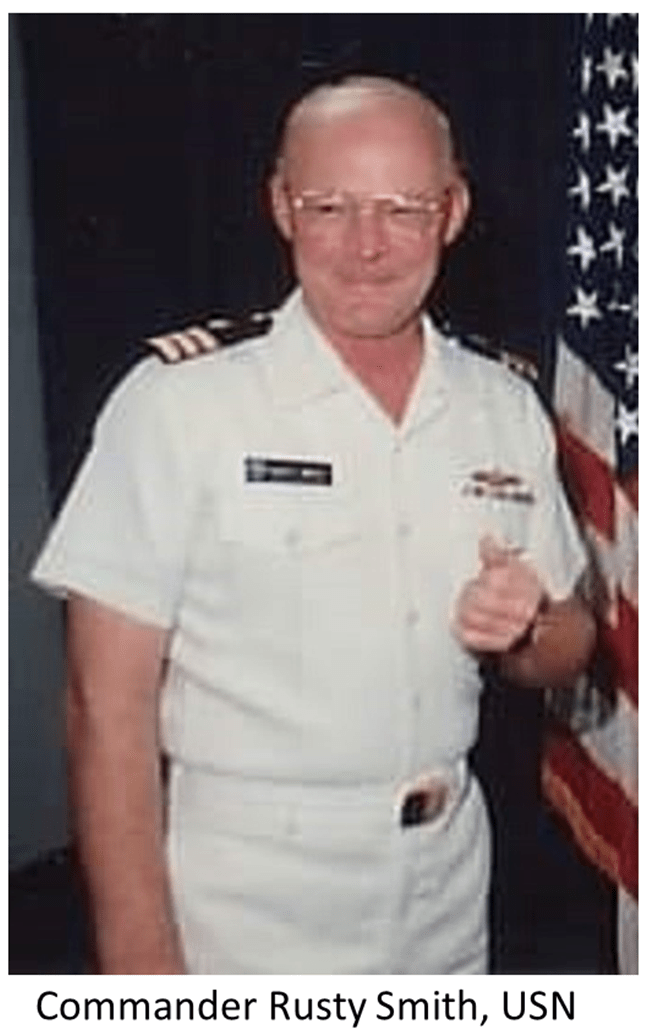
A native of St. Louis County, Missouri, Rusty Smith enlisted in the Navy in 1964 and, following recruit training, underwent “CTR” and “CTT” training at Corry Station in Pensacola, Florida. This was followed immediately by WIDEBAND, a Class C-School, and, upon completion, was given orders to Europe.
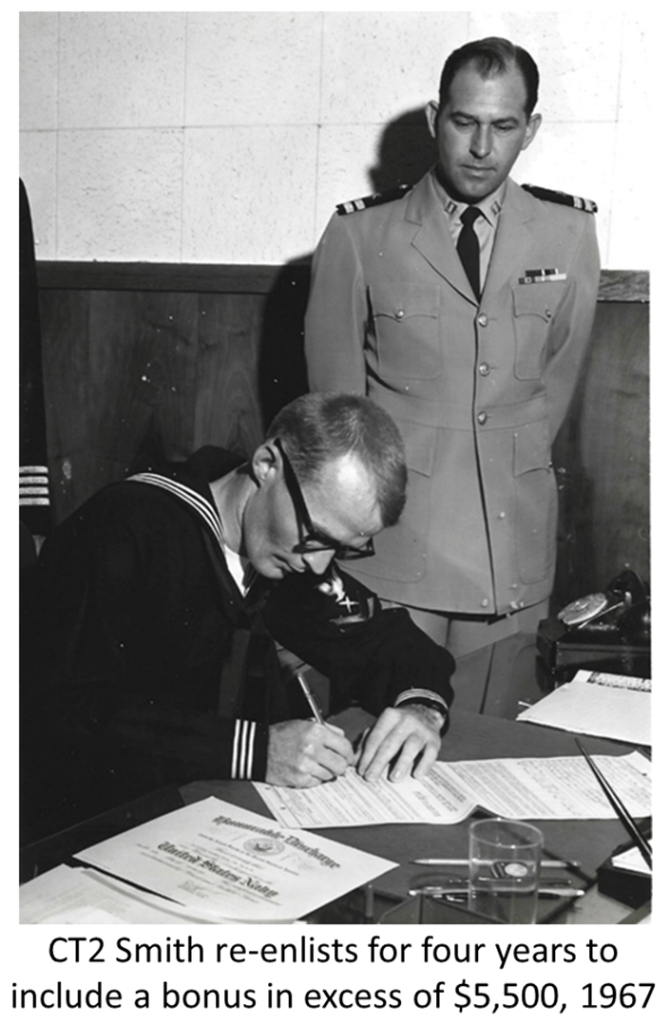
In Spain, CTSN Smith became a “Plankowner” of the newly established Naval Security Group Department of the Naval Communications Station, Rota, Spain led by LCDR Donald Wickstrand and later, CDR Paul Dillingham. In 1967, near the end of his Rota tour, CT2 Smith re-enlisted for “choice of orders” to Naval Security Group Activity, RAF Edzell, Scotland and for an exceptional re-enlistment bonus that allowed him to buy a new car and to take an incomparable 30-day road-trip throughout Western Europe in 1968 which included the Olympics in Genoble, France, staying in wonderful towns and amazing cities across the continent, on his eventual way to Edzell.
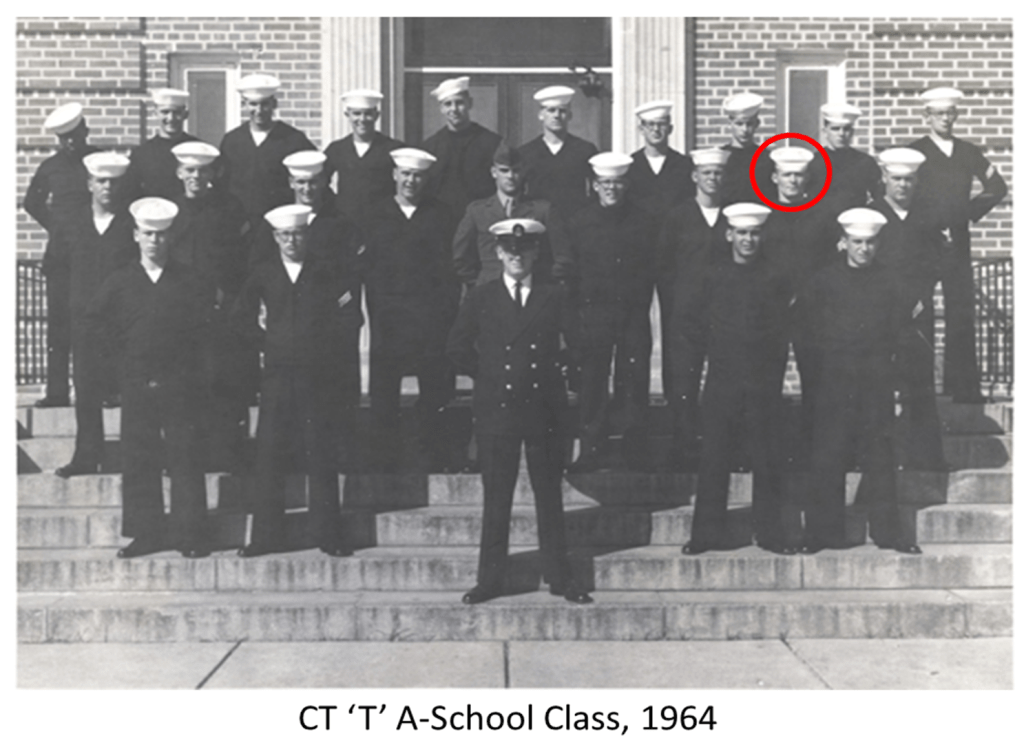
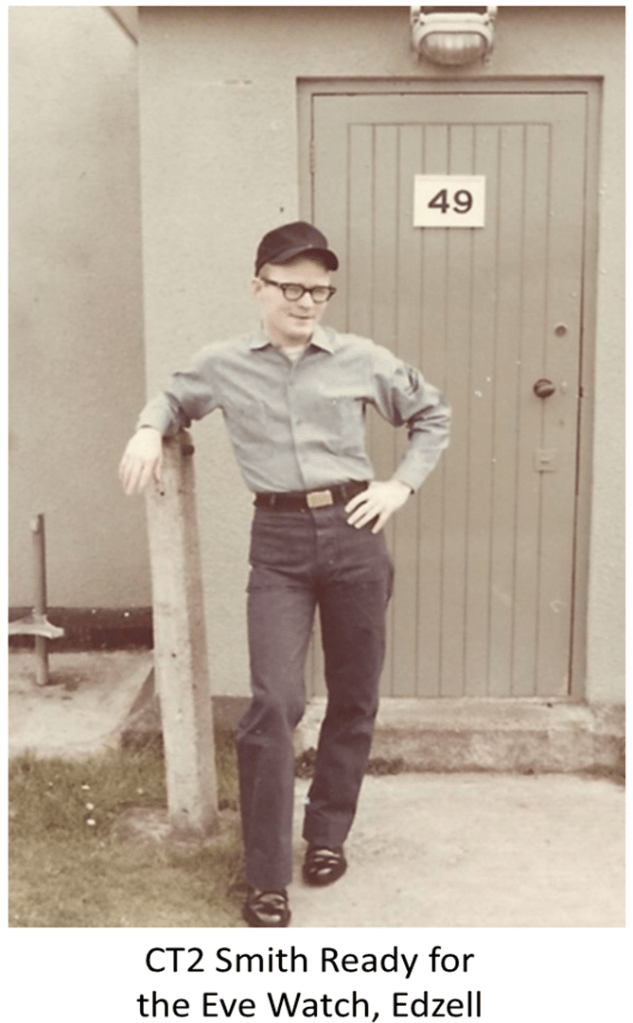
Arriving in Edzell , he was assigned to the Operations Department under the leadership of the highly regarded Limited Duty Officer CDR Paul Cooper and, further, to the WIDEBAND Division led by LT Ronald Piret, who gave him over to supervisor CT1 (T) Denny Knott’s watch section operating WLR-11 systems.
Edzell was a highly desired duty station and, because so many sailors were asking for orders there, CT2 Smith was transferred early after only 16 months of a 24 month tour. As an enhancement, he was sent to Fort Devens, Massachusetts to attend the Non-Morse Communications Analyst course (otherwise known as Non-Morse Search & Development). Upon course completion in 1969, he was assigned to the National Security Agency, first in A24 working with product from field stations like his former stations, Rota and Edzell, and later, CT1 Smith found new and professionally rewarding challenges in the Electromagnetic Propagation Prediction branch within, then, W Group.
At the end of his active enlistment in 1971, Petty Officer Smith was accepted into the Reserve Officer Candidate program and he returned to college at the University of Central Missouri. During this period, he was promoted to Chief Petty Officer (CTTC). Following graduation from UCM in February 1974, he was commissioned as an Ensign, USNR in June of the same year from Officer Candidate School, Newport, RI.
Ensign Smith’s initial assignment was as the Engineer aboard the USS CONQUEST (MSO-488), a wooden hulled, diesel powered, ocean-going Minesweeper.
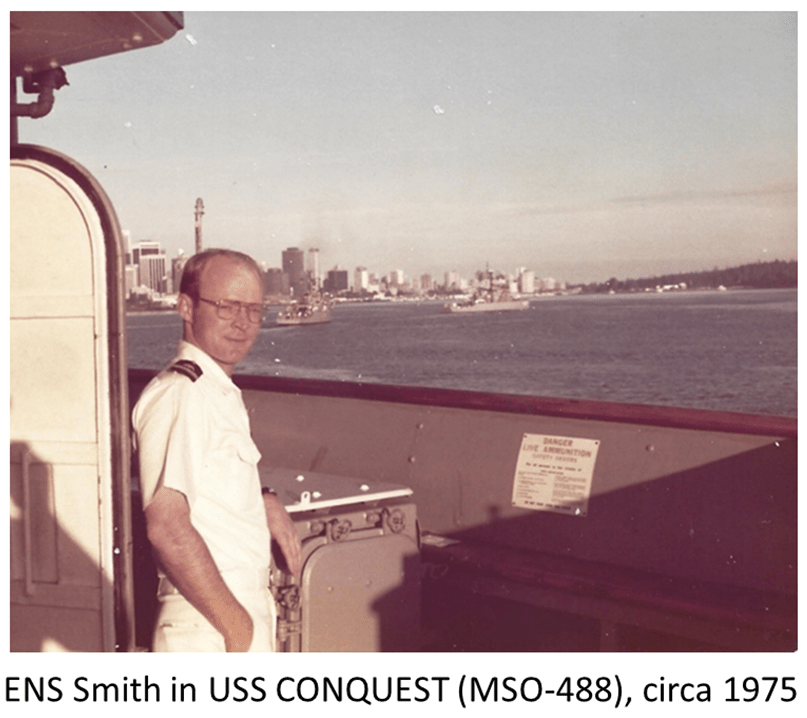
After this 3-year Surface Warfare tour, LTJG Smith augmented into the Regular Navy and returned to Cryptology in 1977 with orders to the Naval Security Group Headquarters in Washington, D.C. where he became the SIGSEC Training Officer.
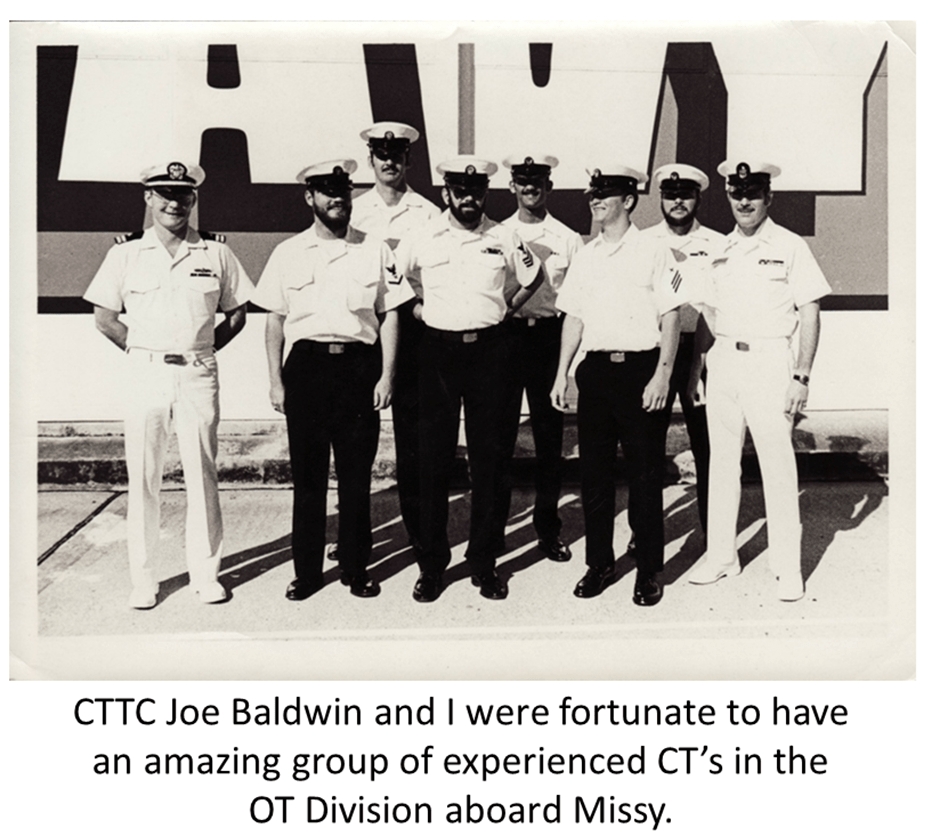
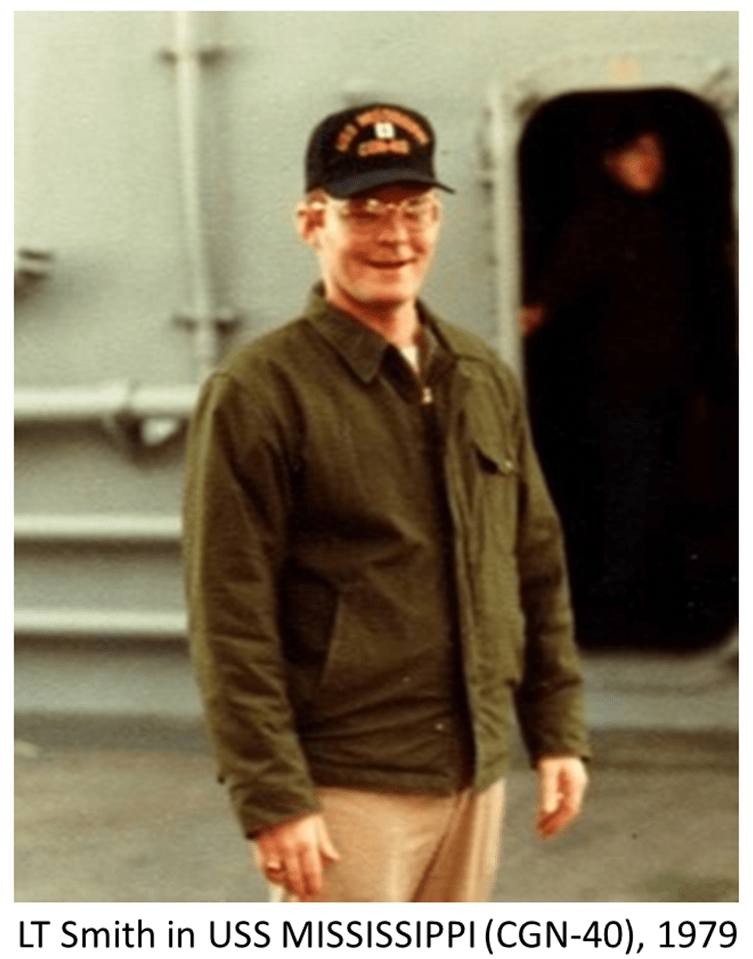
In 1979, LT Smith received orders back to sea duty in USS MISSISSIPPI (CGN-40) under CAPT Pete Hekman and later CAPT R.A.K. Taylor as the Signals Warfare Officer.
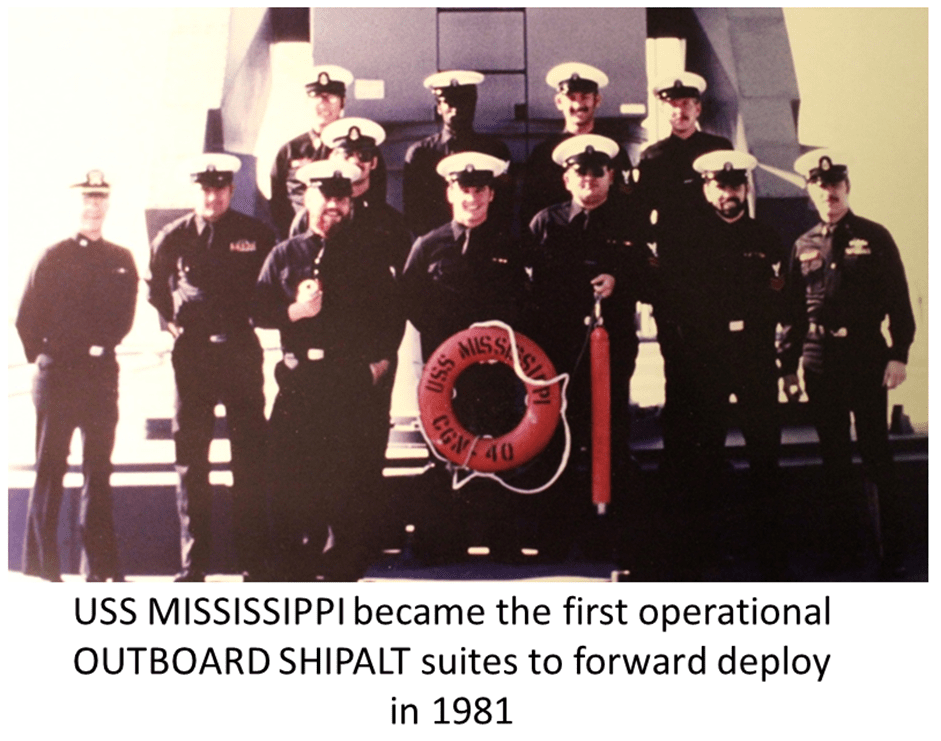
USS MISSISSIPPI and USS TEXAS became the first operational OUTBOARD SHIPALT suites to forward deploy in 1981. Following this historic deployment to the Mediterranean, LCDR Smith attended the Naval War College (Command & Staff) graduating in 1983. During this same period, he also earned a Master of Arts degree in International Relations from Salve Regina University.
After graduation from the War College, he transferred to the forward deployed staff of Commander, Carrier Group Two/CTF-60 with Naples, Italy as homeport and operating in the Mediterranean Sea where he performed duties under RADM Jerry O Tuttle as Battle Force Signals Warfare Officer in various aircraft carriers including USS EISENHOWER (CVN-69) and USS INDEPENDENCE (CV-62).
Next, retaining his focus on Europe and the Mediterranean Sea, he was once again sent to the Naval Security Group Department, Rota, Spain where CDR Joe Burns assigned him duties as Operations Officer in this superb 850 person Department heavily involved in providing air, surface, and submarine Direct Support assets wherever needed, European HFDF Net Control, various important cryptologic collection tasks, and a Bar None/First Rate Processing and Reporting (P&R) unit.
In 1986, LCDR Smith became a year-long Director’s Fellow under National Security Agency Director LGEN Bill Odom on Fort George G. Meade, Maryland. That was followed immediately by single-year NSA tours in both “A” and “R” Groups. 1989 saw CDR Smith with orders back to sea to become Fleet Cryptologist on the Commander, Third Fleet staff under VADM Jim Dorsey, homeported on Ford Island, Pearl Harbor, Hawaii and embarked in USS CORONADO (AGF-11). Shortly after arrival on the C3F staff, CDR Smith experienced a major health event that threatened to curtail not only his C3F tour but the continuation of his naval career. Fortunately, surgery fixed the problem, returning him to full duty, and allowed him to successfully complete his C3F tour.
From the Pacific, CDR Smith was sent to Pensacola, Florida in 1991 to join a long line of Directors of Cryptologic Training at the Naval Technical Training Center at Corry Station working first for CAPT Ivan Dunn and, later, CAPT George Schu, superb officers both. From Pensacola, he rejoined the Washington, D.C. staff of Commander, Naval Security Group in 1994 as one of several Special Project Officers working directly for the Deputy Commander, CAPT Joe Burns (RIP). Again, medical issues arose necessitating significant surgery at Bethesda Naval Hospital. While successful surgery returned CDR Smith to full duty, he chose that moment in time to set a new course.
Commander Rusty Smith retired from the naval service in January of 1995.


29 May 2026 at 07:43
Interesting that aboard the “Missy,” OUTBOARD was the OT Division. On board USS INGERSOLL (DD-990), we were the OB-01 Division. As the DIVOFF I was referred to as “OBWAN.”
LikeLike
29 May 2026 at 16:54
As a fellow Missourian I remember CDR Smith well on USS Coronado, COMTHIRDFLT staff. Definitely knew his stuff.
LikeLike
29 May 2026 at 19:18
Hello CDR Smith. I see you ha
LikeLike