
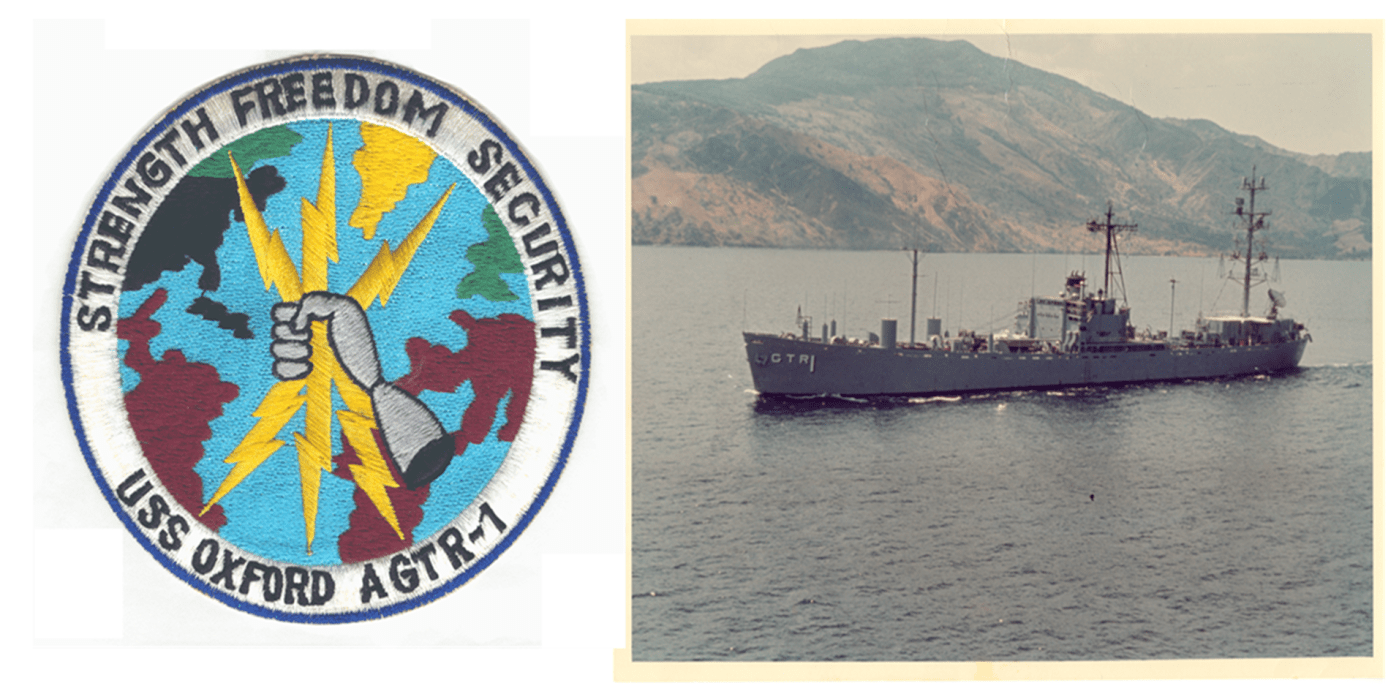
The signal success of the Oxford [redacted] during the Cuban Missile Crisis resulted in a boom in the Technical Research Ship (TRS) program. NSA’s long-term TRS program included [redacted]. Military Sea Transport Service (MSTS) charters and five of the larger Oxford-class Liberty ships. The Navy had an even more grandiose plan to build a TRS fleet from the keel up, at a cost of $35 million per vessel. They would have a cruising speed of at least twenty knots. But despite the giddy success of the Oxford, the numbers did not add up. For instance, it cost $13.5 million to convert a Liberty ship into an Oxford-class vessel, but only $3.3 million to redo a Valdez class MSTS ship. DoD was strapped for cash for the Vietnam buildup, and this kind of floating SIGINT platform, logical in theory, fell victim to the budget axe.
Failing in the big plan, the Navy opted for a far cheaper option. The idea was to convert some trawler-type vessels at very minor cost and outfit them for general intelligence collection, including (but not limited to) SIGINT. Their primary purpose would be naval direct support, with a secondary national tasking mission from NSA. They would call the vessels AGER (Auxiliary General Environmental Research).
NSA opposed the program from the beginning. Some Agency seniors believed that it was an end run around NSA’s authority to control SIGINT. Nonetheless, the Navy converted the first AGER in 1965, calling it the USS Banner (AGER-. The long-range program was to have twelve such vessels. When, in late 1965, the Navy went forward with a request to convert two more Banner-class trawlers, NSA opposed it, and Cyrus Vance, the deputy secretary of defense, sent the proposal back to the cryptologic community to resolve the conflict.
NSA and the Navy fashioned a compromise in which the vessels would sail sometimes on solely direct support missions, sometimes on hybrid national tasking and direct support orders. It would be a wholly Navy owned, manned, and protected program. The ships were smaller and less capable than the Oxford- or Valdez-class vessels, and as for speed, could not even make ten knots. They would be almost defenseless, but up to that time SIGINT ships had never been bothered by hostile forces. The Pueblo, which put out on its first operational voyage in December 1967, was an AGER-type trawler.
TRS communications were, in the early years, bothered by crowding of the HF spectrum. To solve this problem, the Oxford. in February of 1964, demonstrated for the first time the feasibility of bouncing microwave signals off the moon front a ship at sea. This technique had been used first in 1959 between two stationary locations, Hawaii and Washington, but the technical problems involved in doing it from the deck of a pitching ship were daunting. Although the problem was considered essentially insoluble, Commander William Carlin White of NSG managed to get the Naval Research Laboratory interested, and White, NRL, and NSA, all working together, gathered the equipment for a test. When the Oxford successfully communicated with the NSG site at [redacted] a new era of naval communications \VIls under way. Soon CNO-approved installation of this new gear (called TRSSCOM,or TRS Special Communication System) was programmed for the Belmont and Liberty, arid plans were made to convert all TRSs to the so-called Moon Shot system.
TRSs became very popular substitut.es for dry land SIGINT real estate. With nationalism on the rise and the United States experiencing declining popularity in the Third World, it was often the only platform available. A TRS was sent to [redacted]. TRSs were thrown into the Vietnam conflict, essentially as augmentation for existing fixed sites. An Oxford-class vessel, the Liberty, was deployed to the Mediterranean during the 1967 Arab-Israeli War. [redacted]
In the flush of enthusiasm, the latent problems in the program remained hidden. Program flexibility led to scattershot deployments to areas where the technical database was nonexistent. Vessels were put against targets with exotic language requirements that the Navy could not meet. SIGINT crew training and expertise levels appeared to many NSAers to be declining in the face of so many short-fuse deployments to strange places. Command and control/became convoluted, especially in war zones like Vietnam or the [redacted] land at times it appeared that no one really knew who had ‘control of TRSs in certain areas. Occasionally a TRS would wind up doing non-SIGINT work like hoisting refugees aboard – this happened during the Cuban Missile Crisis, and was ordered, but not done, during [redacted] Further, TRSs had to compete, in essence, with even more rapid Air Force Security Service (AFSS) airborne assets. Often the airborne fleet won out because it could get there faster, and AFSS had better trained operators and linguists.
Finally, and fatally, floating SIGINT platforms proved to be not as secure as had been expected. The Liberty incident in 1967 shocked a cryptologic community that had always assumed that American SIGINT platforms would be accorded the same courtesies that the U.S. gave to the Soviet SIGINT trawlers. The incident was repeated (with variants) the very next year when North Korea captured the Pueblo. NSA support for the program was already crumbling because of the dispute over the control of AGERs. With the Pueblo, it completely died.
The program was good in theory, and if the execution had been better, TRSs might still be around. It is still a good idea today, but the Pueblo incident probably killed it forever.
Source: NSA


15 May 2026 at 22:19
After Pueblo the Navy ditched the research ships. My first TAD was on USS Thomas J Gary DER-326 sent to dog the Soviet Leningrad (helo carrier) on her shakedown ASW exercises in Barents/Norwegian Seas. Summer 1970. Gary had 2-3″ cannon, 2-twin 20mm AA guns, torpedo tubes, hedgehog depth charge, 2 – MK19 grenade launchers, 2 – .50 cal machine guns on bridge, small arms (Thompsons, rifles, Colt 45) The Gary could barely make 20 knots. Many times the Soviets would take off leaving us to play catch up.
LikeLike