
On Saturday, April 18, 2026, I walked the hallowed grounds of Arlington National Cemetery—a place where silence carries weight and every headstone tells a story. With more than 400,000 of our nation’s finest laid to rest there, the sheer magnitude of sacrifice settled heavily on my shoulders. At times, I found myself unable to speak, overcome by a quiet, reverent awe for those who gave so much in the name of freedom.
While there, I witnessed the changing of the guard at the Tomb of the Unknown Soldier. It was more than ceremony—it was a masterclass in discipline and devotion, each step measured, each movement exact, as if time itself paused out of respect.
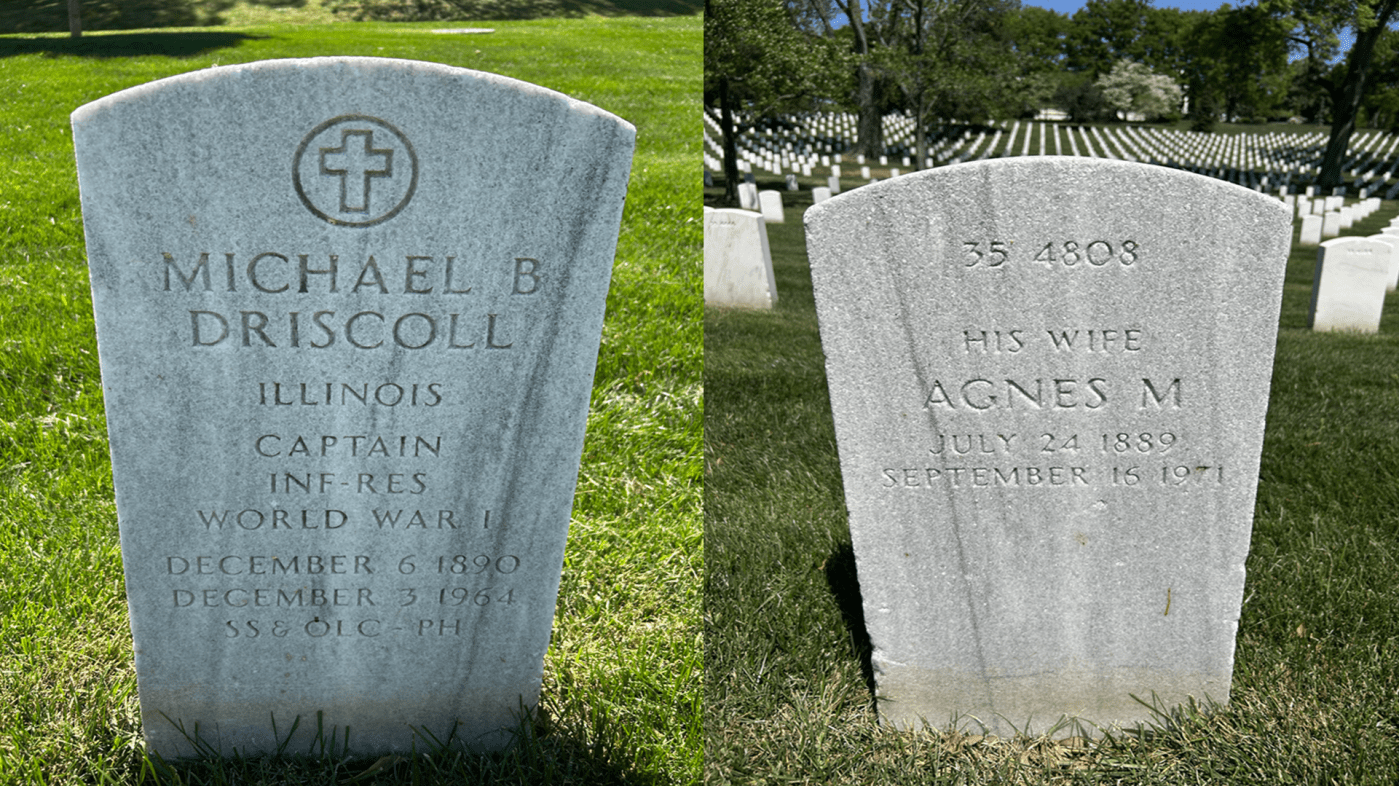
One of my personal missions that day was to find the grave of Agnes Meyer Driscoll—a quiet giant in the world of naval cryptology. I knew she rested beside her husband, Michael B. Driscoll, but I had not realized that her place in Arlington was granted through his service. I had long believed that her own remarkable contributions—shaping the course of Navy cryptology before World War II, guiding it through the crucible of war, and strengthening it into the Cold War—had earned her that sacred ground.
Her name, however, is etched on the reverse side of the marker, almost hidden from immediate view. Her husband, an Army infantry captain likely called from the Reserve during World War I, was decorated with the Silver Star with Oak Leaf Cluster—a mark of repeated valor—and the Purple Heart for wounds suffered in battle. His courage is unquestionable, his sacrifice undeniable. Yet as I stood there, I couldn’t help but feel that Agnes Meyer Driscoll—a pioneer, a codebreaker, a mind that helped shape the unseen battles of a nation—deserved more than the quiet obscurity of the back of a stone. Her legacy, vast and enduring, seemed to call out for equal prominence, for a place not behind, but beside—if not leading—the story carved in granite.
Mario Vulcano


25 April 2026 at 10:04
It’s been years since my last visit to Arlington, but I get the same feeling when visiting our local National Cemetery. Trying to visit all our friends seems to take longer and longer each year.
LikeLike