
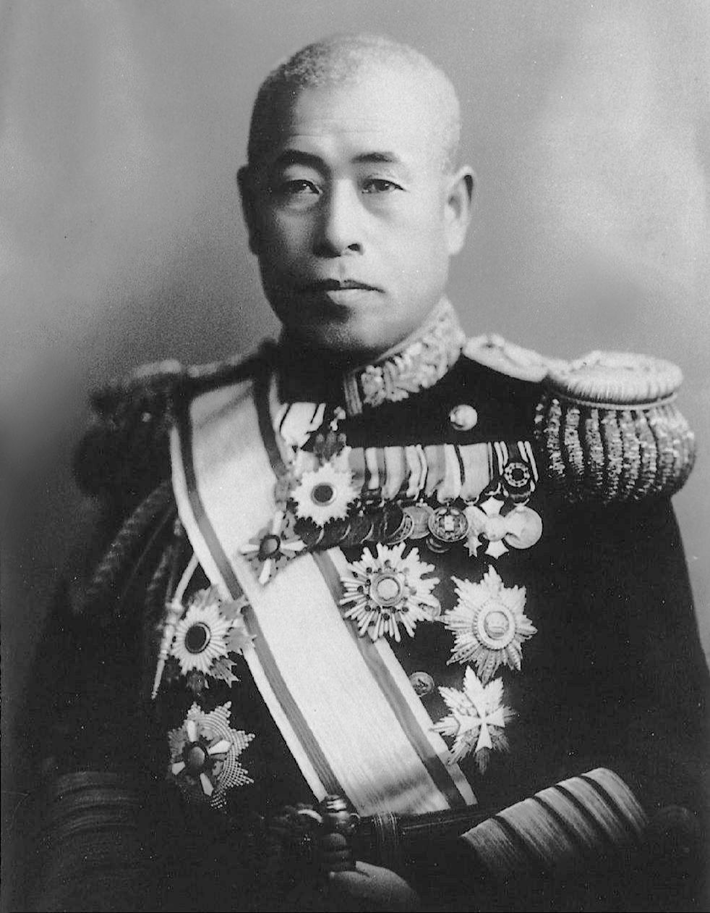
To boost morale following the defeat at Guadalcanal, Yamamoto decided to make an inspection tour throughout the South Pacific. It was during this tour that U.S. officials commenced an operation to kill him. On April 14, 1943, the United States naval intelligence effort, codenamed “Magic”, intercepted and decrypted a message containing specifics of Yamamoto’s tour, including arrival and departure times and locations, as well as the number and types of aircraft that would transport and accompany him on the journey. Yamamoto, the itinerary revealed, would be flying from Rabaul to Balalae Airfield, on an island near Bougainville in the Solomon Islands, on the morning of April 18, 1943.
President Franklin D. Roosevelt may have authorized Secretary of the Navy Frank Knox to “get Yamamoto”, but no official record of such an order exists, and sources disagree whether he did so. Knox essentially let Admiral Chester W. Nimitz make the decision. Nimitz first consulted Admiral William Halsey Jr., Commander, South Pacific, and then authorized the mission on April 17 to intercept and shoot down Yamamoto’s flight en route. A squadron of United States Army Air Forces Lockheed P-38 Lightning aircraft were assigned the task as only they possessed sufficient range. Select pilots from three units were informed that they were intercepting an “important high officer,” with no specific name given.
On the morning of April 18, despite urging by local commanders to cancel the trip for fear of ambush, Yamamoto’s two Mitsubishi G4M bombers, used as fast transport aircraft without bombs, left Rabaul as scheduled for the 315 mi trip. Sixteen P-38s intercepted the flight over Bougainville, and a dogfight ensued between them and the six escorting Mitsubishi A6M Zeroes. First Lieutenant Rex T. Barber engaged the first of the two Japanese transports, which turned out to be T1-323 (Yamamoto’s aircraft). He fired on the aircraft until it began to spew smoke from its left engine. Barber turned away to attack the other transport as Yamamoto’s plane crashed into the jungle.
Yamamoto’s body, along with the crash site, was found the next day in the jungle of the island of Bougainville by a Japanese search-and-rescue party, led by army engineer Lieutenant Tsuyoshi Hamasuna. According to Hamasuna, Yamamoto had been thrown clear of the plane’s wreckage, his white-gloved hand grasping the hilt of his katana, still upright in his seat under a tree. Hamasuna said Yamamoto was instantly recognizable, head dipped down as if deep in thought. A post-mortem disclosed that Yamamoto had received two .50-caliber bullet wounds, one to the back of his left shoulder and another to the left side of his lower jaw that exited above his right eye. The Japanese navy doctor examining the body determined that the head wound had killed Yamamoto. The more violent details of Yamamoto’s death were hidden from the Japanese public. The medical report was changed “on orders from above”, according to biographer Hiroyuki Agawa.


18 April 2026 at 13:36
Well done.
LikeLike
19 April 2026 at 16:06
Did then Captain Wenger issue written instructions to OP-20-G personnel following the shoot down of Yamamoto’s plane? If so, I’d love to have a copy of that particular Wenger document. Thank you for posting this article, Mario! Andy McKane, Molokai, HI, 19 April 2026.
LikeLike