
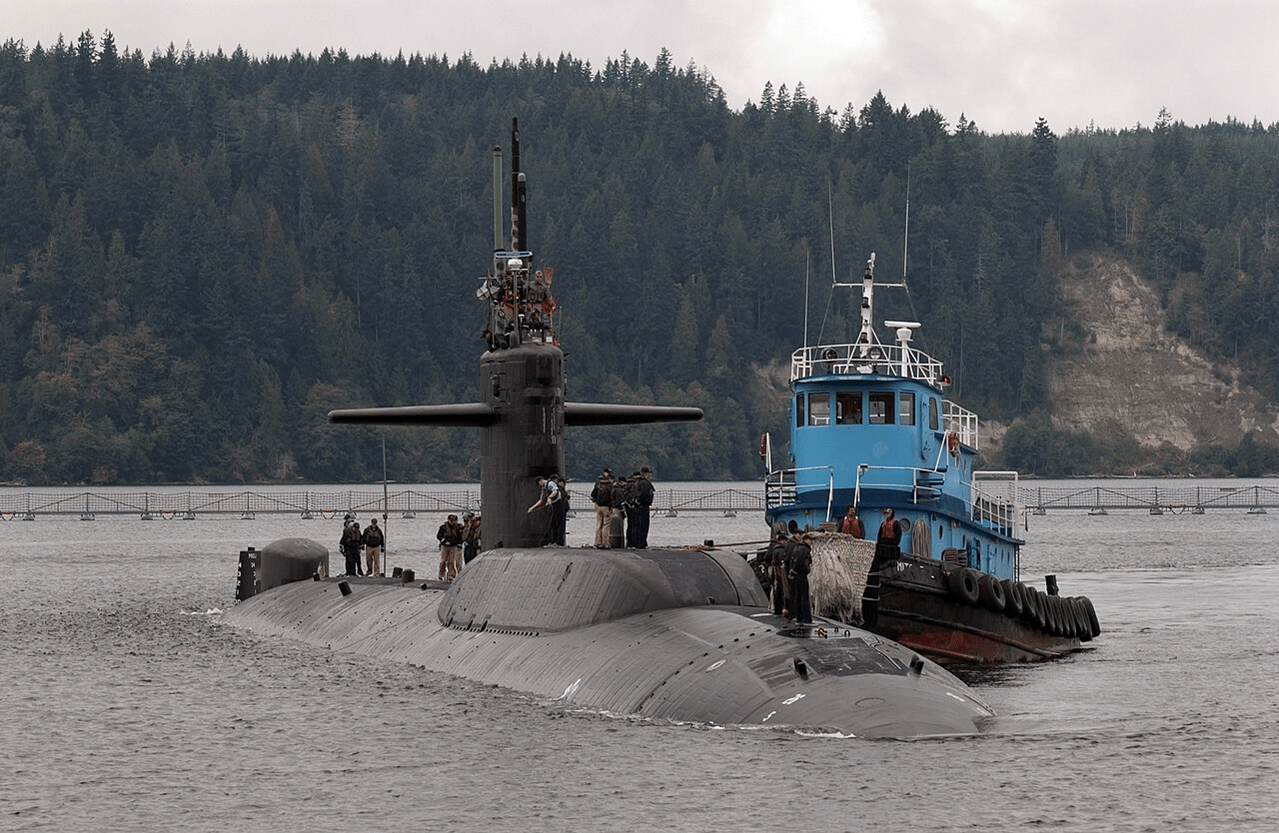
Note the broom!
The USS Parche (SSN 683), a Sturgeon-class nuclear-powered submarine, stands as one of the most extraordinary vessels in the history of the U.S. Navy. Commissioned on August 17, 1974, at a time when the Cold War was in full swing, Parche’s role evolved from a fast attack submarine into a highly specialized platform for some of the most secretive and daring missions of underwater espionage. Known for its ability to gather critical intelligence deep beneath the ocean, the Parche became the Navy’s most decorated submarine, carrying out covert operations that were instrumental to national security.
Initially, the USS Parche was designed as part of the Sturgeon class, a line of nuclear-powered fast attack submarines built to engage enemy ships and submarines. These submarines were smaller, more maneuverable, and quieter than their predecessors, making them ideal for hunting and destroying enemy submarines. However, as the Cold War developed, the strategic importance of intelligence gathering became paramount. The Parche was soon selected for a new, clandestine role that would see it evolve far beyond its original mission parameters.
In the late 1970s, Parche was extensively modified to become a key player in the U.S. Navy’s covert operations against the Soviet Union. These modifications made the submarine a state-of-the-art platform for intelligence gathering and special operations. To accommodate new espionage capabilities, the submarine was equipped with cutting-edge surveillance equipment, such as advanced sonar arrays, underwater cameras, and communication interception devices. Thrusters and landing skids were added to allow the vessel to rest on the ocean floor while conducting its missions undetected.
One of Parche‘s most important roles was wiretapping Soviet underwater communication cables, particularly in areas like the Sea of Okhotsk. These missions, part of the broader “Operation Ivy Bells,” provided the United States with valuable intelligence on Soviet military movements and strategies. Additionally, the Parche was tasked with retrieving fragments of Soviet missiles from the ocean floor, offering American engineers insights into Soviet missile technology.
The modifications were so extensive that the Parche lost much of its offensive firepower. The majority of its torpedo tubes were removed to make room for espionage equipment, leaving it with just four torpedoes. As a result, the submarine was significantly under-armed compared to other vessels of its class, but its primary mission was stealth and intelligence gathering, not combat.
The missions undertaken by the USS Parche were fraught with peril. Operating primarily in the Barents Sea, the Sea of Okhotsk, and other high-risk areas, the Parche routinely ventured into waters heavily monitored by the Soviet Navy. The risk of detection was ever-present, and the consequences of capture would have been catastrophic, not just for the crew, but for U.S. intelligence efforts as a whole.
The submarine’s operations were so secretive and sensitive that a self-destruct mechanism was put in place to ensure it would never fall into enemy hands. In the event of imminent capture, the crew was prepared to scuttle the submarine using 150 pounds of HBX explosives, effectively sacrificing themselves to prevent their mission and equipment from being compromised. This protocol underscored the grave danger that the crew faced on every mission.
Despite the risks, the USS Parche performed its duties with exceptional success. Over its 30 years of service, the Parche earned an unprecedented number of commendations, including nine Presidential Unit Citations, the highest honor that can be awarded to a military unit. This made the Parche the most decorated submarine in U.S. Navy history.
The vessel’s service record is a testament to the skill, courage, and dedication of its crew. The intelligence gathered by the Parche was vital to the U.S. during the Cold War, shaping military strategy and providing insights into Soviet capabilities. Much of the submarine’s operations remain classified, but the impact of its missions continues to be felt in military and intelligence circles.
After three decades of silent service, the USS Parche was decommissioned on October 19, 2004. The submarine’s contributions to national security and its role in some of the most daring intelligence missions in history are still largely shrouded in secrecy. The Parche was scrapped in 2006, but its sail was preserved and placed on display at the Naval Undersea Museum in Keyport, Washington, as a tribute to its legacy.
The Parche’s story is one of adaptability, bravery, and the critical role that intelligence operations played during the Cold War. As the most decorated submarine in U.S. history, the Parche exemplified the U.S. Navy’s ability to innovate and succeed in some of the most challenging and dangerous circumstances imaginable.
The USS Parche (SSN 683) may not be as well-known as other submarines from the Cold War era, but its contribution to U.S. naval history is undeniable. Its transition from a fast attack submarine to a highly specialized espionage vessel highlights the evolving nature of naval warfare during the Cold War. The Parche operated in the shadows, gathering intelligence that proved crucial to the United States’ strategic decisions. Its service, and that of its brave crew, remains a shining example of dedication to duty, even under the most extreme circumstances.
 Station HYPO
Leave a comment