
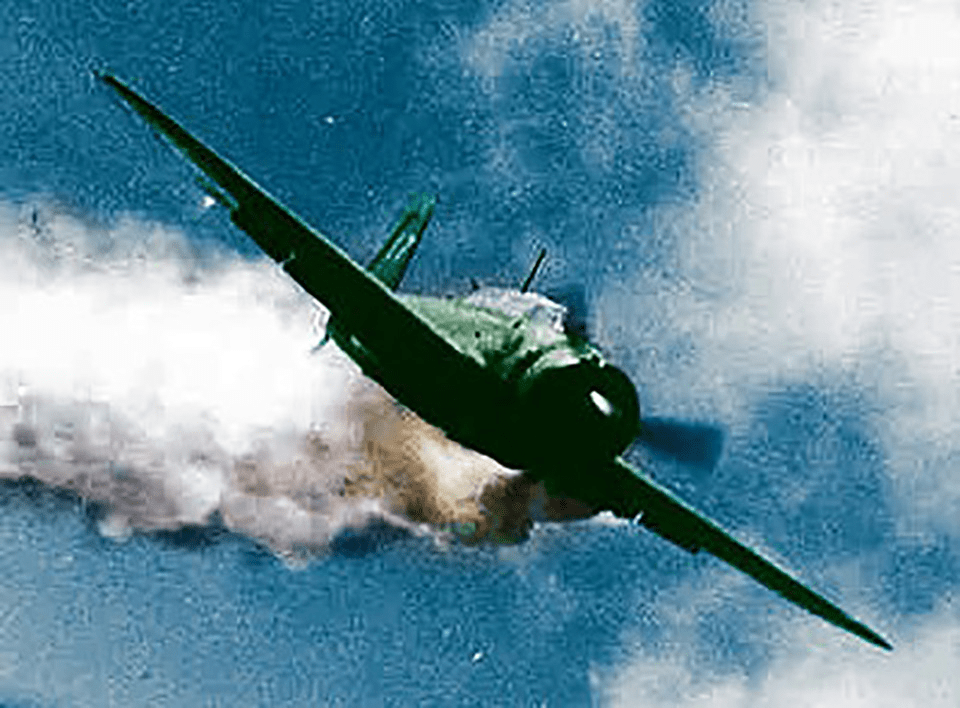
Quoting Captain Holmes again how the course of the War was changed the nature of our work:
“The virtual destruction of the Japanese Navy and the drastic reduction in the numbers of marus brought about changes in radio intelligence. It also forced the Japanese to suicide weapons of many varieties. Most effective were kamikazes which, in April and May 1945, took off from Kyushu in mass flights to attack U.S. ships in the vicinity of Okinawa. Kamikazes were the most serious threat the Navy faced during the war.”
“In controlling and forming up planes over the airfield in preparation for these attacks, the Japanese made lavish use of voice radio. Their radio messages in abbreviated Japanese, amounting to codes intended to be intelligible only to Japanese pilots and controllers, were intercepted in Guam and the Marianas. Traffic analysts language officers, and cryptanalysts soon learned that, by coordinating their work, they could milk these communications of vital intelligence. ….With intelligence gleaned from Japanese voice communications over Kyushu’ airfields, radio intelligence was able to inform Admiral Spruance that kamikaze attacks were coming, in approximately what numbers and when, in time for him to alert all ships and planes and dispose them best to meet the attack. Large numbers of kamikazes were shot down but enough got through to sink or damage many Ships. Without the timely warning radio intelligence proved, the casualties and the ship losses would have been much greater.” P 204-5.
Captain Holmes, whom I have been liberally quoting, was the head of JOCPOA, an awkward acronym for Joint Intelligence Center, Pacific Ocean Area, joint meaning, Army and Navy. He was a dedicated Navy man, a submariner who was retired for medical disability in 1936. In his unwelcome life as a civilian, He taught a the University of Hawaii and during summer vacations wrote short stories under the pen name of Alec Hudson for The Saturday Evening Post. Just before the outbreak of WWII, he was recalled to “limited shore duty only” and assigned to the predecessor of FRUPAC as a “combat intelligence officer.” He had no previous intelligence experience and joked, “In some battleships, I knew, the most important duty assigned to new combat intelligence officers was keeping track of the ship’s laundry when the ship was in port.”
I never met Holmes but I do remember seeing him walking by our building to his own directly behind us. He was easily recognized because he walked with a pronounced limp caused by arthritis of the spine. JICPOA was the primary customer of the information we provided and merging it with all other source data, disseminated it to the action commands who could be aided by it. His most important responsibility dealt with concealing that radio intelligence was the source and limiting its dissemination. It was a balancing act that permitted utilizing the information without exposing to the enemy weaknesses in their communication security. Thus the title of his book, DOUBLE-EDGED SECRETS.
Source: Recollections, by Wallace Woodbury, Jr.
 Station HYPO
Leave a comment