
Did the Imperial Japanese Navy use a mock raid on Pearl Harbor that was conducted on February 7, 1932 as a blue print for their December 7, 1941 attack?
On February 7, 1932, a mock raid was staged on Pearl Harbor, as part of a military exercise designed to test Pearl Harbor’s vulnerability to a surprise attack. In the period between the Washington Naval Conference in 1921, and 1940, the U.S. did not have a two-ocean navy. The main Pacific anchorages were in San Diego and San Francisco where the fleet could be deployed quickly in the defense of the Panama Canal or the Hawaiian Islands. Its proximity to the canal also allowed for its rapid transfer to the Atlantic should it be needed there.
“Planners” at the War Department had been considering the possibility of war with Japan since at least 1906. The eventual strategy, dubbed War Plan Orange, anticipated that in the event of a war with Japan, the Philippines and American bases in the western Pacific would be either blockaded or overrun. In the interim, the U.S. Pacific Fleet would concentrate its strength along the West Coast until the ships had received their full complement of crew. During the 1930s, ships operated with only half of their allotted crew as an economy measure. Once the fleet had been readied, it would sail west to relieve the Philippines. With the Philippines secured, the fleet would proceed to blockade Japan and seek a decisive naval showdown with the Japanese fleet.
This strategy was consistent with the writings of American naval strategist Alfred Thayer Mahan who argued that future wars would be settled by decisive naval engagements. This view was widely shared among the world’s naval powers, including Japan. Given the critical role of Hawaii in a Pacific campaign, the idea of beefing up U.S. Naval forces at Pearl Harbor was not new. It had been discussed since at least the end of World War I.
Since 1923, the U.S. Navy had conducted large-scale naval exercises, termed “Fleet Problems,” during which U.S. Naval forces would engage in mock battles with a purported European or Asian attacker. Fleet Problem Number 13 was a mock attack by a “militaristic, Asian, island nation against the military base at Pearl Harbor.” The exercise was designed to test Pearl’s defenses and assess its vulnerability to an attack.
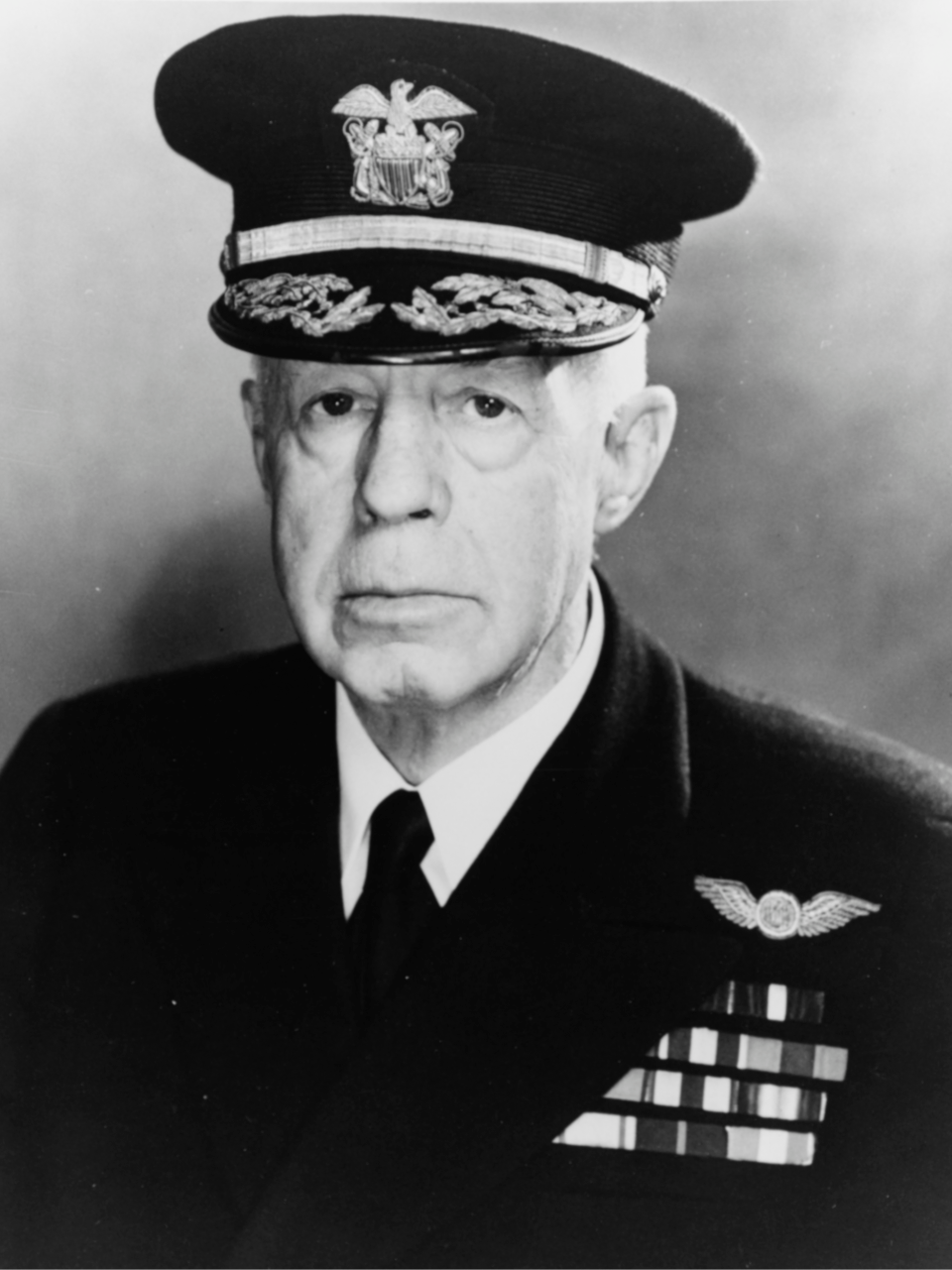
The attacking force was under the command of Rear Admiral Harry Yarnell. The admiral was a qualified naval aviator, one of the few admirals to have earned his aviator wings at a time when battleship command was still the path to promotions. In 1927, he took command of the aircraft carrier Saratoga and was instrumental in developing carrier tactics. At the time, carriers were classified as “fleet scouting elements.” They were not valued as capital ships and were considered expendable.
Yarnell maintained that Japan “had always started operations by attacking before a declaration of war.” Accordingly, he designed an attack plan that utilized carrier aviation to launch a surprise attack on Pearl Harbor. Pearl’s defenders had anticipated that Yarnell would attack with his battleships. Instead, he left his battleships behind and advanced with the carriers Saratoga and Lexington to a point north-northeast of Hawaii. At dawn, on Sunday February 7, 1932, Yarnell launched his attack with a force of 152 planes from the two carriers. His attack force first attacked the airfields and then proceeded to attack the ships along battleship row.
Yarnell achieved total surprise. The airfields were put out of commission, with not a single plane getting airborne during the attack. The attacking force scored multiple hits; they dropped sacks of white flour to simulate bombs, on the battleships. The umpires declared that Yarnell’s attack had been a complete success and declared him the winner. The Army and Navy brass, however, would have none of it. They complained that Yarnell had cheated. He had attacked at dawn on a Sunday morning, a time considered “inappropriate” for an attack. His attack vector from the north-northeast had mimicked planes arriving from the mainland. Most importantly, the Navy argued, low level precision bombing of battleships at anchor was unrealistic since “everyone knew that Asians lacked sufficient hand-eye coordination to engage in that kind of precision bombing.”
Pressured by the War Department, the umpires reversed their decision and declared that the defenders had won the exercise. The Navy and its “battleship admirals” ignored Yarnell’s contention that Pearl Harbor was vulnerable to an attack by naval air power. The exercise was widely reported in the press and was observed by Japanese naval officers at the Japanese consulate on Oahu. Some 10 years later, the Japanese Navy would launch an almost carbon copy attack on Pearl Harbor, utilizing six carriers and double the air power used by Yarnell.
The only significant innovation employed by the Japanese Navy was the use of air-launched torpedoes against the ships in Pearl lagoon. A year earlier, the Royal Navy had used slow Swordfish torpedo planes to attack the Italian fleet at its base in Taranto. The success of that attack was not lost on Tokyo. The U.S. Navy had dismissed its relevance to Pearl because Taranto’s harbor was around 75-feet deep, almost double the depth of Pearl Harbor, and it did not believe that air launched torpedoes would work in shallow waters. The Japanese Navy solved that problem by modifying their torpedoes to give them a flatter glide path.
The definitive story of the attack on Pearl Harbor has not yet been written. Pearl still has secrets to disclose. What is not a secret, however, is the fact that the Japanese attack plan against Pearl Harbor had been designed a decade earlier by an American admiral.
Source: military.com Joseph V. Micallef
http://www.military.com/navy/pearl-harbor-first-attack.html
Admiral Harry Ervin Yarnell Bio:
Admiral Harry Ervin Yarnell (18 October 1875 – 7 July 1959) was an American naval officer whose career spanned over 51 years and three wars, from the Spanish–American War through World War II.
Among his achievements was proving, in 1932 war games, that Pearl Harbor was vulnerable to a naval aerial attack. His findings were dismissed by his superiors until the Imperial Japanese Navy’s Pearl Harbor attack was just as Yarnell predicted.
Early life and Naval career
Born near Independence, Iowa, he entered the U.S. Naval Academy in 1893. After serving on USS Oregon (BB-3) during the Battle of Santiago de Cuba, 3 July 1898, Yarnell was commissioned ensign 1 July 1899 and reported to the Asiatic Station. He served in the Philippines during the Philippine-American War and with the Asiatic Squadron during the Boxer Rebellion. In 1902, he was the commissioning commanding officer of the destroyer USS Dale (DD-4).
Assignments through World War I
From Asia, Yarnell reported to Connecticut (BB-18) at her commissioning. On January 13, 1907, he was the officer of the deck when Connecticut ran aground near Culebra, Puerto Rico. Both Yarnell and Connecticut captain William Swift were court-martialed; Swift was convicted but Yarnell was acquitted.[1] Restored to duty, Yarnell sailed around the world with the Great White Fleet. Next, duty at the Newport Torpedo Station, on CINCLANT’s staff, and at the Naval War College occupied him until World War I, when he served at Gibraltar and then at London, on the staff of Admiral William S. Sims.
Interwar assignments
Yarnell then rotated between sea and shore duty until ordered to aircraft carrier Saratoga (CV-3) September 1927, as prospective commanding officer. He served as captain of the carrier from her commissioning until 17 August 1928, when he was appointed Chief of the Bureau of Steam Engineering as Rear Admiral. While in that capacity, advising the General Board on the design of a fleet submarine, Yarnell opposed smaller types, presciently noting, “our prospective opponent [Japan] has always started operations by attacking before a declaration of war”.[2]
From January to April 1930, Admiral Yarnell was Naval Adviser to the American delegation at the London Naval Conference, and, in October 1936, he became Commander in Chief, Asiatic Fleet, with the rank of Admiral. His tour there was notable for the sagacious and firm manner with which he handled a most explosive international situation.
In February 1932, Yarnell pioneered carrier tactics in an exercise that later came to be discussed as Fleet Problem XIII. Rear Admiral Yarnell commanded the carriers Lexington and Saratoga in an effort to demonstrate that Hawaii was vulnerable to naval air power. The expectation was that Yarnell would attack with battleships, but instead he left his battleships behind and proceeded only with his carriers to the north of Hawaii where it was less likely he would be detected. With a storm as cover, at dawn on Sunday, 7 February, Yarnell’s 152 planes attacked the harbor from the northeast, just as the Japanese would ten years later. The army airfields were first put out of commission after which battleship row was attacked – with multiple hits on Navy ships. No defending aircraft were able to launch. The Navy’s war-game umpires declared the attack a total success, prompting Yarnell to strenuously warn of the Japanese threat.[3]
The New York Times reported on the exercise, noting the defenders were unable to find the attacking fleet even after 24 hours had passed. U.S. intelligence knew Japanese writers had reported on the exercise. Ironically, in the U.S., the battleship admirals voted down a reassessment of naval tactics. The umpire’s report did not even mention the stunning success of Yarnell’s exercise. Instead they wrote, “It is doubtful if air attacks can be launched against Oahu in the face of strong defensive aviation without subjecting the attacking carriers to the danger of material damage and consequent great losses in the attack air force.”[4] [5]
World War II
After three years’ service commanding the Asiatic Fleet, Admiral Yarnell was transferred to the Retired List.
Admiral Yarnell was elected an honorary member of the Rhode Island Society of the Sons of the Revolution on February 22, 1940.
On 1 November 1941, as war loomed, he was recalled to active duty and worked in the office of the Secretary of the Navy as Special Adviser to the Chinese Military Mission.
Admiral Yarnell was relieved of active duty 15 January 1943, but returned in June as Head of a Special Section in the Office of Chief of Naval Operations until December 1944, when he again was relieved of active duty.
Admiral Yarnell died in 1959 at Newport, Rhode Island, his home since his retirement.
 Station HYPO
7 February 2026 at 13:08
As always…something ‘out of the ordinary’ usually is NOT planned for (why would it be? that’d be unheard of)…and the narcissists at the top of the command structure aren’t there because they ‘earned it’ so much as they “knew who’s b%$t to kiss”… Only the “exceptions” who, for the most part, are considered too wild and uncontrollable, ever “earn” their status as their minds weren’t confined to the “poured concrete” of the academies and “hacks” infesting the mid-ranks.
At one time, the military was “lead” by it’s “leaders”…but that era has long passed. Now, those attracted/nominated for the military academies aren’t necessarily there out of patriotic duty, but as another “road” to travel into political or corporate futures.
Being as it “is what it presently is”…I’m surprised when something slips out affecting the present, only finding “revelations” of past exploits of said same ‘rebels’ in the ranks…may their always be some as our country has only survived because of them.
LikeLike
7 February 2026 at 13:10
unfortunately, wrote “their” instead of “there” in the last sentence
LikeLike
7 February 2026 at 13:11
Unfortunately, missed when I wrote “their” instead of “there” in the last sentence…
LikeLike
8 February 2026 at 13:15
Check out this link – in fact, check the episodes in this podcast:
https://youtu.be/TDZiyx5RCjc?si=vRy6BedkQN8tIg-5
LikeLike