
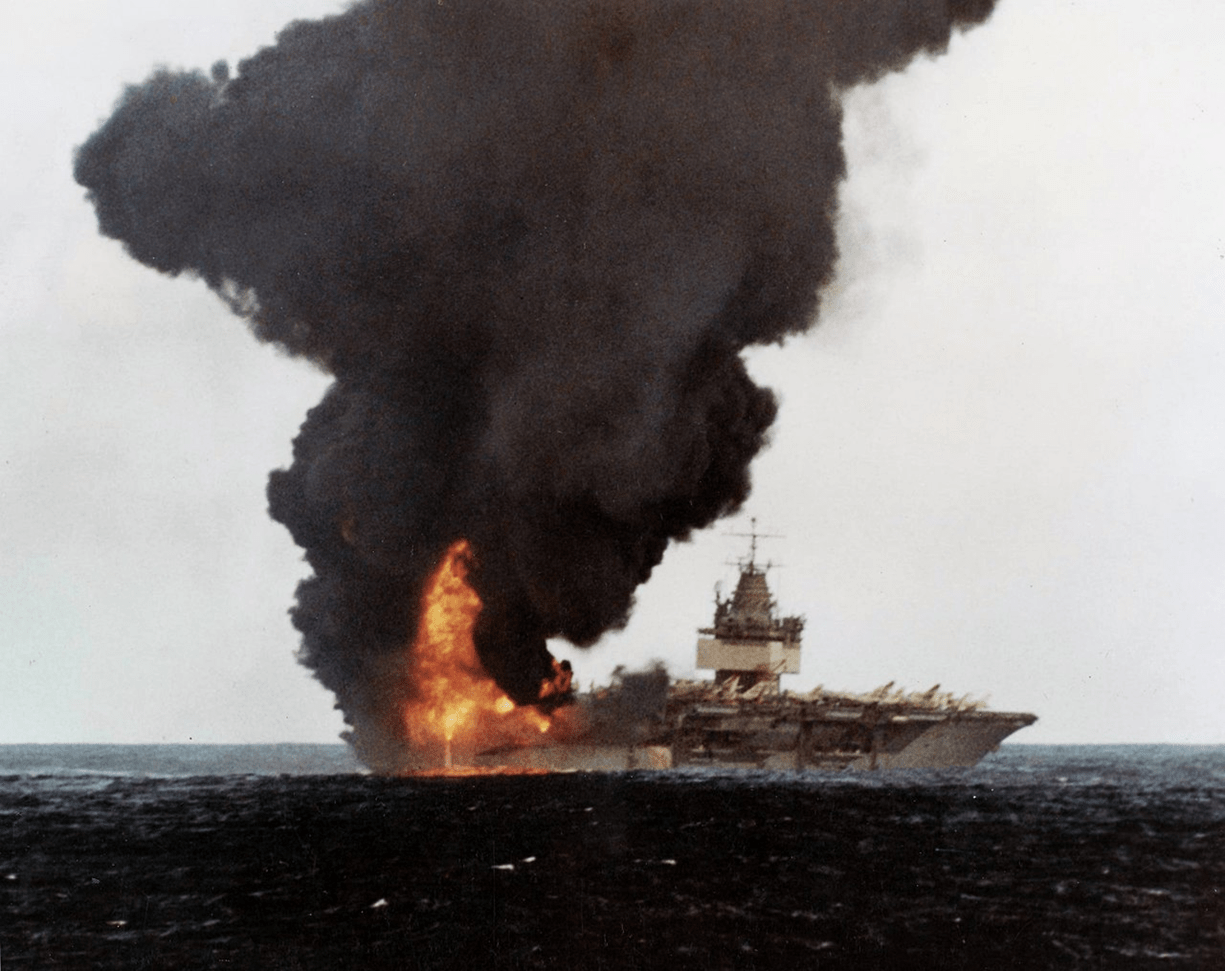
On the morning of January 14, 1969, the aircraft carrier USS Enterprise (CVAN-65) was conducting routine flight operations in the waters off Hawaii when a single moment of mechanical failure triggered one of the worst peacetime disasters in U.S. naval aviation history. What began as a normal preparation cycle for the ship’s F-4 Phantom II fighters quickly escalated into a chain reaction of explosions, fires, and heroism that would test the crew to its limits.
A Deadly Spark: The Zuni Rocket Explosion
The tragedy began when a Zuni rocket, mounted beneath the wing of an F-4 Phantom II on the flight deck, accidentally detonated. Investigators later determined that the rocket had unintentionally come into contact with an overheating exhaust from a nearby aircraft, causing the warhead to cook off.
The detonation instantly tore into the Phantom and hurled burning debris across the tightly packed flight deck—an area crowded with fueled and armed aircraft preparing for launch. In seconds, flames were roaring across the non-skid surface, igniting fuel lines and detonating munitions on adjacent aircraft.
A Cascade of Explosions
The initial explosion set off a series of devastating secondary blasts. Among the ordnance on deck were 500-pound bombs, many of them dating back to the Korean War. As the fire intensified, these aging weapons began to sympathetically detonate.
The repeated explosions:
- Blew holes through the steel flight deck,
- Destroyed aircraft beyond recognition, and
- Fed an inferno that extended multiple levels below the deck.
The shockwaves rattled compartments across the ship. Firefighting teams, ordnance handlers, and deck crews rushed into the smoke and shrapnel to battle the flames, often with little regard for their own safety.
Heroism Amid Chaos
Amid the unfolding catastrophe, Enterprise sailors demonstrated extraordinary courage. Many ran toward the initial blast zone, dragging wounded shipmates to safety as additional bombs detonated around them. Firefighting teams fought relentless heat, toxic smoke, and exploding aircraft fuel to prevent the fire from spreading into the hangar bay and deeper into the ship—an outcome that would have led to even greater loss of life.
Their actions prevented the carrier from suffering structural damage that might have put her out of service permanently.
Human and Material Losses
When the fires were finally extinguished after hours of brutal effort, the toll was staggering:
- 28 sailors killed
- 343 injured
- 15 aircraft destroyed
- Millions of dollars in damage to the flight deck and supporting systems
Despite the scale of destruction, the crew’s determination ensured the Enterprise remained afloat and capable of returning to port under her own power.
Aftermath and Lessons Learned
The 1969 Enterprise fire prompted sweeping reforms throughout naval aviation. Key changes included:
- Improved ordnance handling procedures
- Better oversight of aging munitions
- Enhanced firefighting training across carrier air wings
- Modifications to equipment placement to reduce risks from exhaust and heat sources
These reforms improved safety protocols across the fleet and remain influential in carrier operations today.
Legacy of the Disaster
The fire aboard the USS Enterprise stands as a tragic chapter in the history of naval aviation, marked not only by the magnitude of the disaster but by the bravery and resilience displayed by the crew. The lessons learned from that day continue to shape safety standards aboard modern aircraft carriers, ensuring that those who lost their lives did not do so in vain.
More than half a century later, the events of January 14, 1969, underscore the ever-present dangers of naval aviation and the courage of those who serve aboard America’s carriers—where even routine operations can turn deadly in an instant.
 Station HYPO
14 January 2026 at 07:15
This is eerily similar to the catastrophic USS Forrestal fire two years earlier, also caused by a Zuni rocket. Check out the excellent book “Sailors To The End” by Gregory Freeman for that story.
LikeLike