
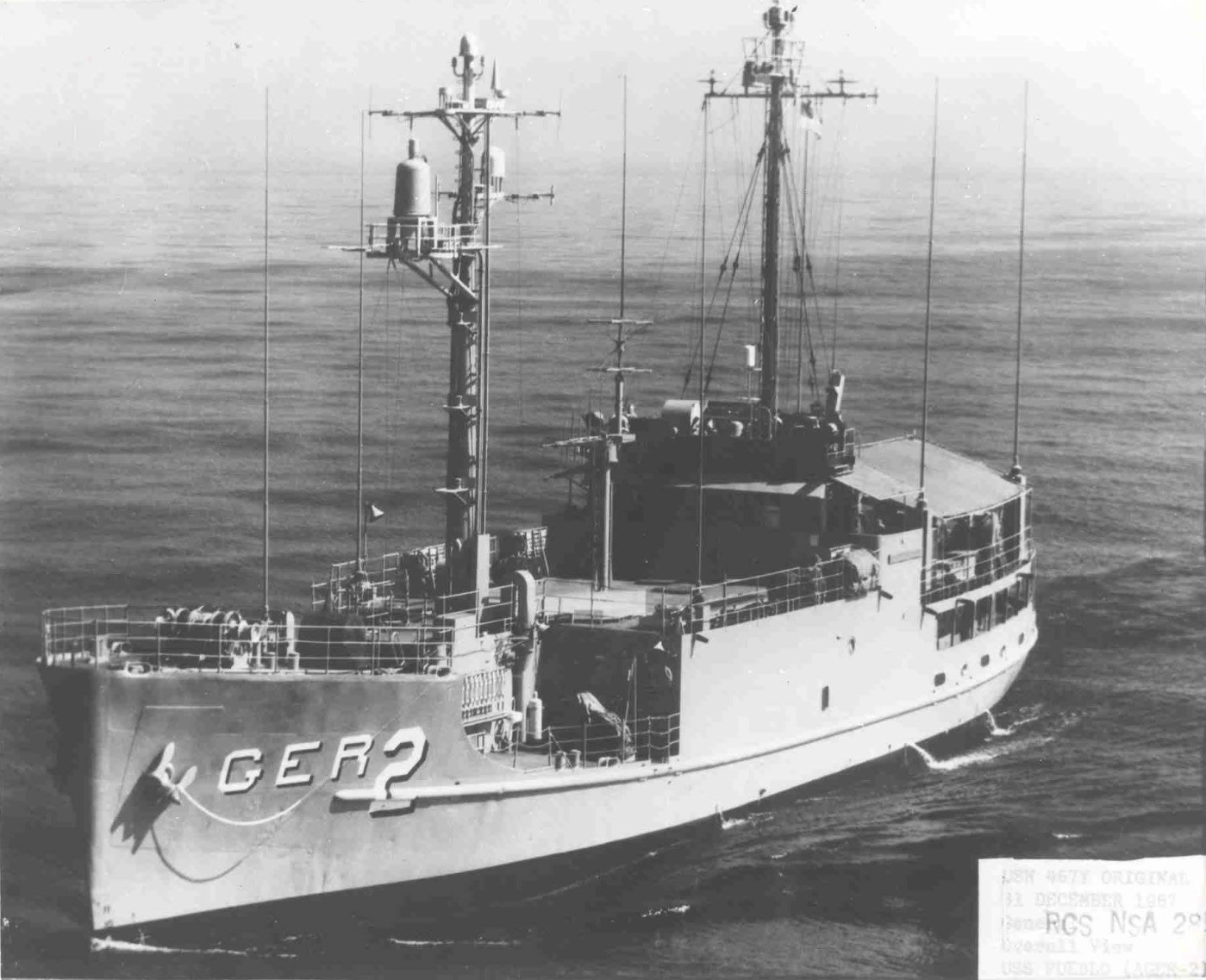
The afterglow of Super C’s (guard) satisfaction following the international press conference warmed Commander Bucher and his men well into September 1968. Their captors began to show greater concern for their welfare—medical attention improved, and the food became more plentiful and nutritious. Plates were suddenly heaped with fresh fish, canned ham, bread and butter, and apples. Some of the sailors even began to regain the weight they had lost during the previous eight months of captivity.
A few hearty meals, however, could not reverse the cumulative damage of long-term malnutrition. About fifteen crewmen still suffered nerve problems in their legs, making it difficult to walk. Others continued to battle infections, chills, and recurring fevers.
CDR Bucher himself endured severe diarrhea, fever, a brief bout of hepatitis, and numbness in his battered right leg. One day, a guard discovered him collapsed in the hall and called for Quartermaster First Class Charlie Law. Nearly blind, Law nonetheless lifted his unconscious captain—who now weighed only 115 pounds—into his arms. The skipper, he said, felt like “a bundle of feathers.” With great care, Law carried him to his room and laid him gently on the bed.
Despite their fragile health, morale among the Americans had never been higher. When the North Koreans ordered another round of written “confessions,” the crew responded with biting wit and subversive humor. LT Steve Harris claimed he had been trained as a spy by Maxwell Smart, the bumbling secret agent from the TV comedy Get Smart. Bucher wrote that his orders to “spy out” North Korea came from a ridiculous cast of characters—“Fleet General Barney Google” and CIA spymaster “Sol Loxfinger,” the latter borrowed from a Playboy parody of James Bond novels.
Super C soon demanded that the crew submit another “petition for leniency” to his government. Bucher selected LTJG Schumacher, LT Harris, and three enlisted men to assist him, and together they produced a brilliant piece of satirical counterpropaganda. While the text appeared to show remorse for their “violations” of North Korean waters, it was laced with hidden jokes that completely escaped their captors.
They described themselves as “super-spies” addicted to “adding goodies to our spy bag,” guilty of “crimes so horrible that they have seldom been exceeded in the history of the world.” The crowning line, however, came when they addressed their supposed intrusions into North Korean waters:
“We, as conscientious human beings who were cast upon the rocks and shoals of immorality by the tidal wave of Washington’s naughty policies, know that neither the frequency nor the distance of these transgressions into the territorial waters of this peace-loving nation matter because, in the final analysis, penetration however slight is sufficient to complete the act.”
Every American serviceman knew that “penetration however slight” was the legal definition of rape under military law, and when Bucher read the petition aloud, the men nearly broke down from suppressed laughter. The North Koreans, oblivious to the innuendo, accepted the statement without question. It was broadcast on North Korean radio and printed word-for-word in the English-language Pyongyang Times.
After the international press conference, Super C vanished from the Country Club prison. By October 1968, he returned—strutting with renewed confidence and an unmistakable air of pride. Bucher soon noticed why: the four small stars of a senior colonel on his shoulder boards had been replaced by two large silver stars. Super C had been promoted to lieutenant general. The crew accordingly upgraded his nickname to “Glorious General,” or simply “G.G.”
When he summoned Bucher for another all-night interrogation, G.G. was in a surprisingly genial mood, even allowing the captain to smoke alongside him. Bucher congratulated him on his promotion, and the general beamed. Then came a statement that made the captain’s heart race:
“You have said you expect to be home before Christmas. Well, I say you will not be home before then, or before your Thanksgiving, but before this month is out.”
Bucher wanted desperately to believe him but dared not raise his crew’s hopes. He decided to keep the general’s words to himself.
Before releasing their “guests”—if that was truly their intent—the North Koreans seemed determined to give them one last dose of propaganda. On October 1, 1968, the crew was transported to Pyongyang to witness an elaborate operatic production titled How Glorious Is Our Fatherland. Leading the convoy into the capital, seated proudly in his jeep like a conquering hero, was none other than the newly promoted Glorious General.
After months of captivity, the USS Pueblo crew were suddenly treated to a bizarre series of cultural outings in Pyongyang. They were taken to a theater packed with North Korean soldiers to watch elaborate propaganda musicals glorifying Kim Il Sung and mocking the Pueblo’s capture. The sailors enjoyed the shows simply as a welcome break from prison life.
Over the following days, they attended a circus featuring clumsy political satire—clowns representing South Korea’s president and an American general—and later a polished performance by the North Korean Army Chorus. Many crewmen began to hope these goodwill gestures meant they were going home.
Next came a failed North Korean attempt to recruit informants. The prisoners were invited one by one to a lavishly stocked “Gypsy Tea Room,” plied with food, alcohol, and flattery, while officials subtly asked if they’d host “visitors” from North Korea after returning to the U.S. Some sailors played along sarcastically; others openly mocked the offer.
When that yielded nothing, the North Koreans took the crew on a final propaganda trip—to the Sinchon Museum of American War Atrocities, a shrine devoted to alleged U.S. massacres during the Korean War. The museum’s crude exhibits—locks of hair, rusty knives, ropes, and staged photos—were presented as proof of U.S. brutality. The sailors, barely able to suppress laughter, mocked the absurd displays, with Captain Lloyd Bucher feigning shock and horror for the cameras.
The visit ended as a surreal mixture of indoctrination and dark comedy, underscoring both the North Koreans’ obsession with propaganda and the Pueblo crew’s defiant resilience.
Some of the Americans had hoped the trip to Sinchon was to be the first leg of a freedom ride to Panmunjom. But that wasn’t the case. When the museum tour ended, they were shipped back to the Country Club (prison). Not long afterward, the North Koreans’ recent benevolence evaporated. All talk of repatriation stopped. Robot (guard) and other room daddies began demanding to know more about the Hawaiian good-luck sign. Bucher was confined to his cell for long periods. His orderly was taken away, cutting off his communication with the crew. Bucher worried whether the abrupt change in attitude was his fault, whether he’d gone too far with his lockjaw routine and other shenanigans. Had he crossed some fatal line with the communists?
Source “Act of War”, by Jack Cheevers


Leave a Reply