
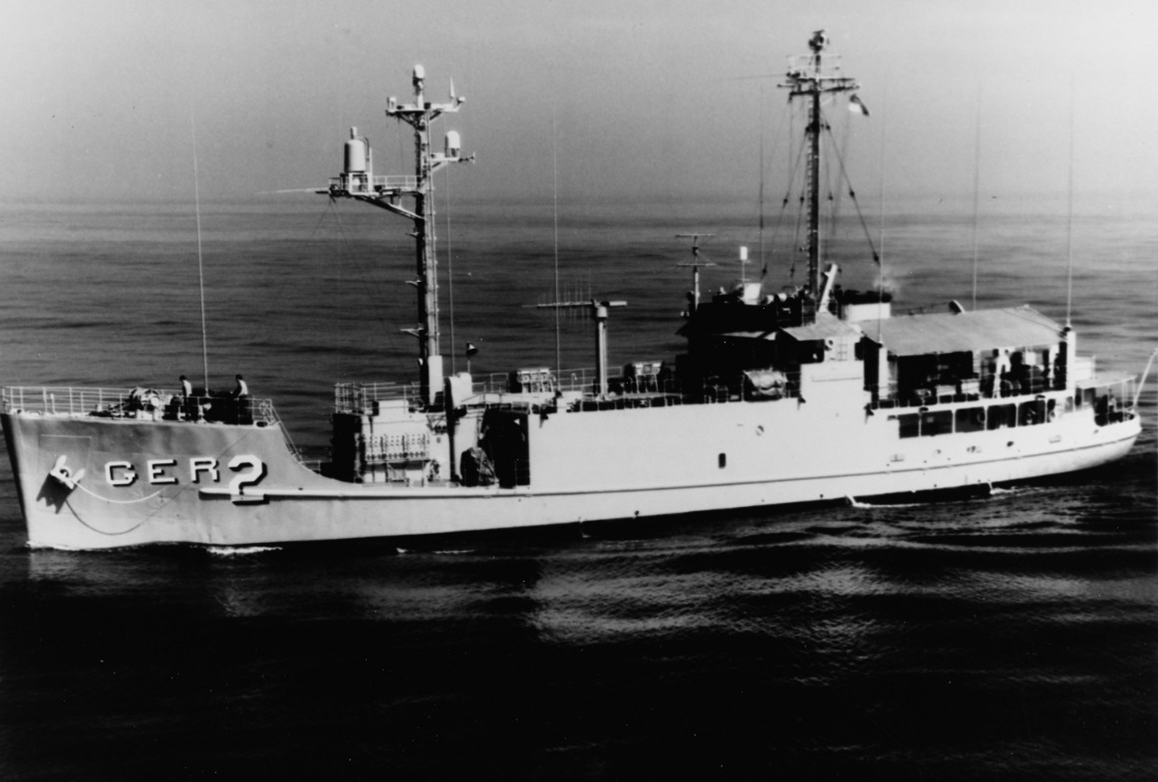
After six weeks on a diet nearly devoid of vitamins and protein, the crew began to exhibit signs of severe malnutrition. The ship’s cook, Harry Lewis, estimated they were surviving on only 500 calories per day—the equivalent of three unbuttered English muffins. Most of the men were rapidly wasting away—Bucher alone had lost forty pounds—and many suffered from debilitating diarrhea. What began as mild illnesses soon worsened; bouts of flu turned into pneumonia, and minor cuts festered into dangerous infections.
Dale Rigby, the ship’s storekeeper, developed a rash covering ninety percent of his body—an early indication of starvation. His skin peeled above the waist, while painful sores erupted on his legs. A communist doctor prescribed a mud pack, which only aggravated Rigby’s condition. Another sailor’s feet began to swell—another hallmark of starvation—and his “treatment” consisted of acupuncture, which proved useless. Several men eventually developed scurvy, a vitamin C deficiency that led to spongy gums, bleeding under the skin, and profound weakness.
In mid-March, a blizzard buried the prison, prompting the communists to exploit their prisoners further for propaganda. Having already coerced Bucher and his crew into writing a collective apology to North Korea and a letter to President Johnson pleading for forgiveness, their captors now ordered them to send new letters to relatives, politicians, and other “influential people” in the United States. Each letter carried an ominous warning: unless the U.S. government issued a formal apology, the crew would face trial and possible execution.
LT Steve Harris’s letter to his wife and mother captured the terror of the moment:
“The penalty for espionage in this country is death,” he wrote. “The only condition that we will be returned home on is for the U.S. Government to admit its crime, apologize and give assurance that it will not happen again. If these conditions are not met, then we will be executed….. I love you both so much that even as a grown man I have broken into tears many times.”
Bucher wrote to President Johnson and the director of Boys Town, warning that “Our situation is grave.” LT Murphy appealed directly to Secretary of State Dean Rusk. Others reached out to governors and senators from their home states. SGT Bob Hammond, the hardheaded Marine and Korean Linguist who had endured relentless torture at the Barn (prison), began his letter to his wife with cheerful questions about their new baby—but ended with the haunting confession that “time is running out” for him and his shipmates.
By mid-April 1968, more than two hundred of these desperate letters had reached American mailboxes, leaving the families of the USS Pueblo crew more terrified than ever.
Source “Act of War”, by Jack Cheevers
 Station HYPO
9 December 2025 at 09:31
I had a “Remember the USS Pueblo” bumper sticker on my vehicle. The OIC at DLIWC, through staff, informed those of us with the sticker that they were to be removed or the base stickers would be scrapped off.
I left mine on and always backed into parking spots so the security people couldn’t see it without exiting the vehicle and walking around to view the back of my vehicle!
LikeLike
9 December 2025 at 23:12
Reading the above comment…it’s another example of “out of sight, out of mind…denial” that the govt. used. Possibly in an effort to reduce the perception of the ineptitude of the Johnson mal-administration? Looking back on this time…it’s no wonder that those who’d served in either WWII or Korea, swore never to allow their children to enlist or to dissuade them at all costs. Ineptitude followed down from the top as no-one in command in Japan had the slightest idea of the “can of worms” their failure to plan for any scenario that could happen to a ship with top secret info. and mechanical devices on board (though very lightly armed for it’s own defense), came under attack. Honestly, you’ve got to wonder if any of ’em were ever Boy Scouts as being “prepared” seemed beyond their level of comprehension.
LikeLike