
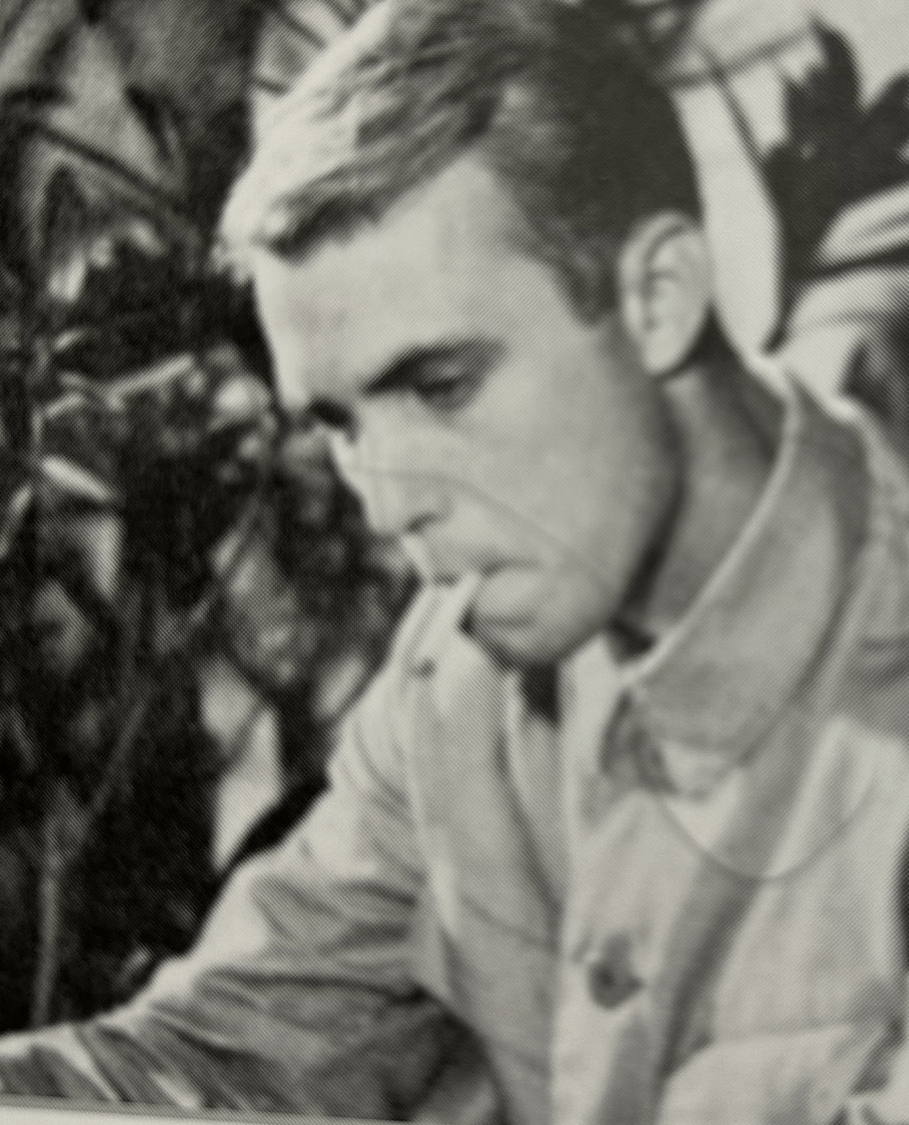
By far the most harrowing punishment inflicted on any member of the Pueblo crew was that endured by Korean linguist Marine Sergeant Bob Hammond. He later was awarded the Navy Cross for extraordinary heroism.
Roughly a week after his arrival at the Barn (prison), Hammond was taken away for interrogation. The North Koreans demanded to know whether he could speak their language. Hammond assumed they had seen the notation in his service record showing that he had received Korean language training, but he chose not to take the easy way out. Rather than confirm something the communists almost certainly already knew, he refused to say anything beyond his name, rank, and service number.
He was ordered to hold a chair above his head and was kicked in the hands, arms, and sides as his strength inevitably failed. The pain only fueled his defiance. “I was determined not to tell them anything at all, for as long as I could last,” he said. For the next six hours, up to four soldiers at a time punched, kicked, and karate-chopped him from head to toe.
Soon his hands and one arm went numb. When he could no longer hold up the chair, his tormentors jammed a two-by-four behind his knees and forced him to squat on it. Then, while an interpreter repeated the same question—whether he spoke Korean—the guards used him as a human punching bag.
The Marine repeatedly blacked out and fell to the floor, only to be yanked upright again. Sometimes the guards beat him where he lay, semiconscious. Several times they lifted him by the shirt and dropped him, his head bouncing off the concrete. Once, a guard stepped on his throat, and Hammond thought he would suffocate. At another point, he was dragged into a different room and beaten again, this time before an audience of about ten Koreans—including several women—who watched in silence.
Infuriated by his stubborn resistance, the guards escalated their cruelty. They propped him against a wall in a sitting position and stomped repeatedly on his groin. When he screamed, they shoved a rag into his mouth. Then, seated in a chair, he was struck with hand chops to his neck and head until his right eye closed and his neck went limp. Two soldiers held him upright while the interpreter clubbed the backs of his legs with two-by-fours. To intensify the pain, they forced him to remove his pants. Finally, through swollen lips, he mumbled, “Okay, okay.”
He was then interrogated for thirteen more hours, during which he “wrote a brief confession and answered a lot of questions.”
When Hammond was finally returned to his cell, his condition horrified his shipmates. Fearless and unyielding, he had endured an almost unimaginable degree of punishment. “His face was beaten so that it was distorted,” one enlisted man recalled. “His body was swollen and his stomach was so black and blue it looked as though his intestines were spilling out.”
For days, Hammond vomited blood and was unable to eat. Nearly a week passed before he could get out of bed. Yet even through the haze of agony and humiliation, the Marine’s only regret was simple and haunting: that he hadn’t held out longer.
Source “Act of War”, by Jack Cheevers
 Station HYPO
7 December 2025 at 10:20
Nuke North Kore.
LikeLike
7 December 2025 at 14:24
N. Korea’s unimaginable cruelty stems from their total disregard of human life in general. Nothing but a “meat sac” to be used for the “divine leader.”
Nothing said about Sgt. Hammond’s return to the U.S. as to what happened to him while back here (aside from the medal). Would be very interested to know how he fared otherwise…
LikeLike
7 December 2025 at 22:59
As a CT in GTMO at the time we had no idea how hard they had it … We were trained and cautioned not to say anything but N R S … not at all sure I could have held out as long as this man .. a true hero.. God Bless him and all the others on that ill fated ship..
LikeLike