

This post has been updated with a statement from U.S. Pacific Fleet.
American and Philippine defense secretaries unveiled a task force designed to deter Chinese coercion in the South China Sea and enhance alliance defense cooperation.
U.S. Defense Secretary Pete Hegseth and Philippine Secretary of National Defense Gilbert Teodoro announced “Task Force Philippines” on Friday at the Association of Southeast Asian Nations’ Defense Ministers Meeting Plus in Kuala Lumpur, Malaysia.
“We’re publicly announcing the Task Force Philippines, here with you today, which will be another step in our cooperation. Increasing interoperability, exercising and preparedness for contingencies―so that we can decisively respond to crisis or aggression and reestablish deterrence in the South China Sea,” Hegseth said.
Washington outlined its concern about the South China Sea issues during a meeting with Hegseth’s Chinese counterpart, Minister of National Defense Adm. Dong Jun. During his joint presser with Teodoro, Hegseth noted American and Philippine attention to Scarborough Shoal, which has become a flashpoint for aggressive exchanges between Philippine and Chinese forces.

“Composed of approximately 60 servicemembers led by a one-star general or flag officer, Task Force-Philippines increases efficiency in bilateral coordination, improves operational and exercise execution, and boosts humanitarian assistance and disaster response preparedness,” reads a statement from U.S. Pacific Fleet following an earlier version of this post. “It does not involve new combat forces or offensive operations, unilateral deployments, or permanent military basing. Task Force-Philippines represents the steady evolution of the 74-year-old Philippine-U.S. alliance as both our nations continue to uphold a secure and prosperous Indo-Pacific.”
This task force is the latest initiative from Washington and Manila to counter Beijing’s efforts to solidify its claims over several disputed maritime features in the South China Sea. Tensions have increased as Beijing’s cutters rushed to intercept Manila’s fishery vessels at several locations across the region.
American, Philippine and Chinese forces have been sent to Scarborough amid Beijing’s attempts to claim the maritime feature as a national nature reserve. Recent Chinese activity has seen the placement of two buoys within and outside of the shoal and the deployment of maritime security officers.
At Second Thomas Shoal, an incident earlier this week saw Philippine Marines apprehend and tow away a Chinese fishing boat. Manila said that the encounter was prompted by the vessel’s illegal activities and use of cyanide for fishing. A Chinese state media opinion piece claimed the incident caused “physical harm” to the fishermen.
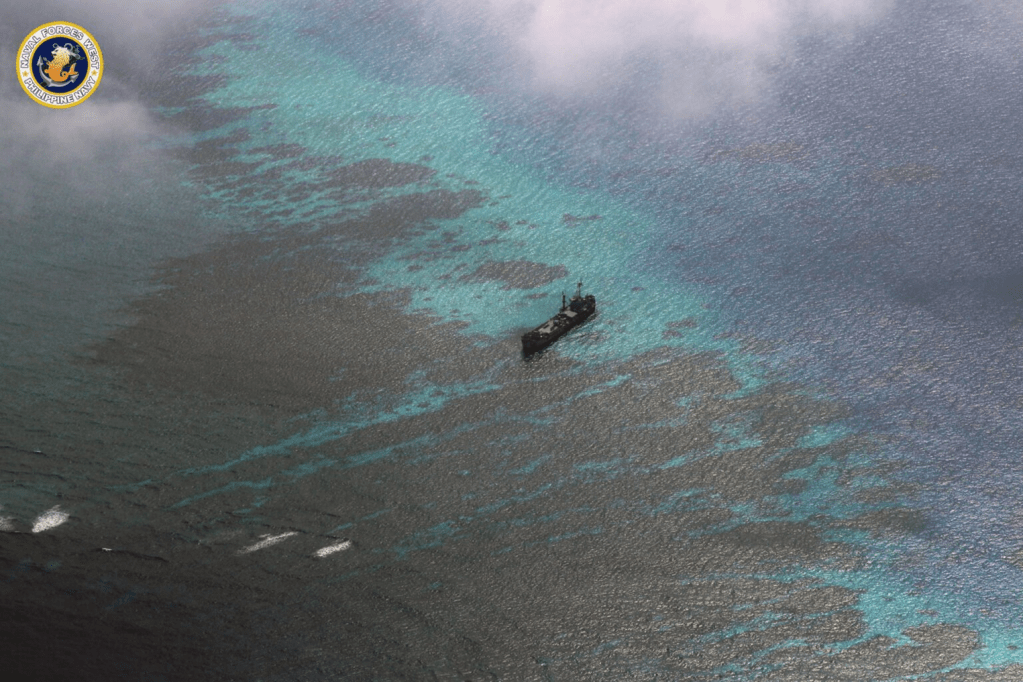
Aside from South China Sea concerns, American and Philippine defense officials revealed the completion of an Alliance Readiness Action Plan. According to Hegseth, this plan will “accelerate all of our major defense priorities” identified by Washington and Manila. Previous initiatives have prioritized cyber security development, joint defense industrial base efforts, unmanned systems and missile deployments.
While the size and scope of Task Force Philippines is unclear, the initiative follows the previously established Task Force Ayungin. Revealed last year by former Secretary of Defense Lloyd Austin and named after the Philippine designation for Second Thomas Shoal, this unit was forward deployed to the Southeast Asian nation with the intent to back Philippine forces operating in the South China Sea. The Pentagon claimed that Task Force Ayungin provided training to enhance maritime domain awareness and operate American-funded unmanned surface vessels used by the Philippine Navy.
Washington and Manila rapidly expanded their defense cooperation following a string of incidents in the South China Sea between Chinese and Philippine forces that started in 2022. Despite measures that sought to decrease military-to-military ties by the Duterte Administration, the current Marcos Administration has stepped up its ties in a bid to bolster its forces and deter China.
The two countries have also bolstered their activities in Northern Luzon amid Manila’s concerns of a spillover during a potential cross-strait conflict between China and Taiwan. In April, Gen. Romeo Brawner, Chief of Staff of the Armed Forces of the Philippines, told forces assigned to the region to prepare for such a contingency.
Source: USNI.org by Aaron-Matthew Lariosa
 Station HYPO
Leave a comment