
As a former Strategic War Planner for the Joint Chiefs of Staff, student at the United States Army War College, and Professor of Strategy at the National War College, I spent my formative years on active duty reading and analyzing both the theory and practice of some of the world’s theorists and practitioners of the art of warfare. Among them were Sun Tzu the great Chinese general and strategist whose seminal work “The Art of War” has endured from its inception 600 BC until today and Carl Von Clausewitz a Prussian general and military theorist who stressed the psychological and political aspects of waging war in his “On War” in which contains his maxim “war is the continuation of politics by other means.”
Continue reading “Analysis | So what is the end state in Ukraine?”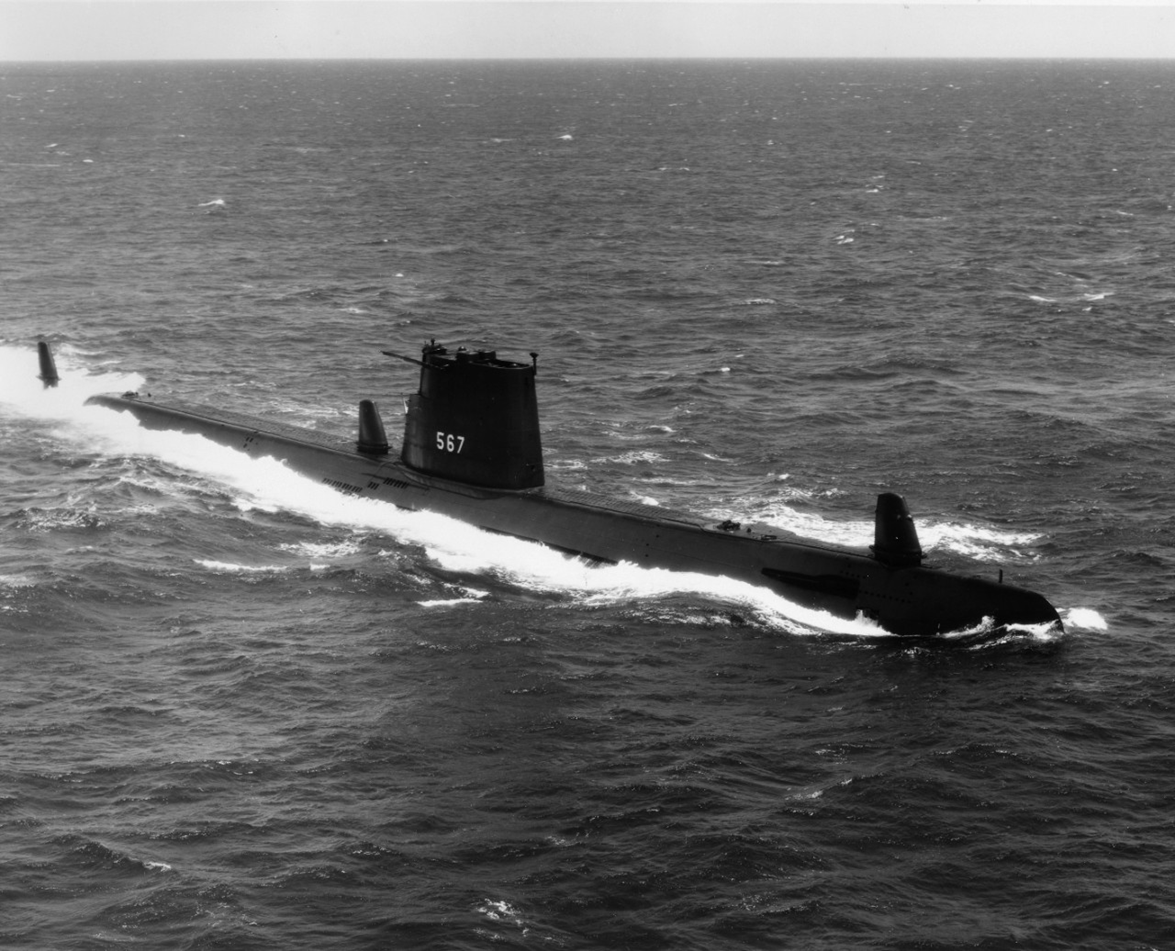
In the shadows of Cold War tensions, beneath the surface of the Sea of Japan, a little-known but significant event unfolded in August 1957 that marked a turning point in submarine espionage and international maritime confrontations. The USS Gudgeon (SS-567), a U.S. Navy submarine, became the first American submarine forced to surface by a foreign power during the Cold War—a moment that revealed the fragility of Cold War boundaries and the stakes of underwater intelligence gathering.
Continue reading “The USS Gudgeon Incident of 1957: The First Cold War Submarine Surfacing”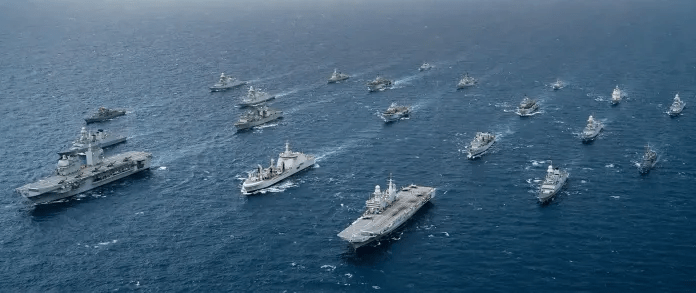
In the context of the deployment of the aircraft carrier HMS Prince of Wales and its Strike Group to the Indo-Pacific, the United Kingdom has confirmed that it is spearheading a proposal for France and Italy to join in a series of coordinated carrier missions in the region—aimed at clearly demonstrating Europe’s commitment to the security of its allies. The initiative would fall under the framework of the European Carrier Group Interoperability Initiative (ECGII), whose main objective is to enhance the ability of European navies to operate together as part of a combined Strike Group.
Continue reading “The navies of the United Kingdom, France, and Italy are planning a coordinated deployment of their aircraft carriers to the Indo-Pacific”
Under this plan, SpaceX’s satellites would play a big role in the Space Force’s kill chain.
The Trump administration plans to cancel a fleet of orbiting data relay satellites managed by the Space Development Agency and replace it with a secretive network that, so far, relies primarily on SpaceX’s Starlink Internet constellation, according to budget documents.
Continue reading “Pentagon may put SpaceX at the center of a sensor-to-shooter targeting network”
By Ryan D. Martinson
While much of the international attention on China’s naval buildup is focused on its rapidly modernizing surface fleet, the People’s Liberation Army Navy (PLAN) is also taking bold steps to field a first-rate submarine force. By the end of this year, the service could have as many as 25 Yuan-class submarines, which are among the world’s most advanced diesel-electric boats. Its small-but-growing fleet of nuclear-powered attack (SSN), guided missile (SSGN), and ballistic missile (SSBN) submarines has achieved major technological upgrades, and with the benefit of a massive production facility in Huludao, may be on the cusp of significant expansion.
Continue reading “Exposed Undersea: PLA Navy Officer Reflections on China’s Not-So-Silent Service”For more than a decade, American defense and foreign policy leaders have declared China the top long-term competitor — what the Pentagon refers to as the “pacing threat” — and the Indo-Pacific the priority theater. From the Obama-era “Pivot to Asia” to the Trump and Biden administrations’ strategic guidance, the message has been consistent: the future of U.S. power projection, deterrence, and economic competition hinges on our presence in the Pacific. But each time the Middle East ignites, that focus slips — and China quietly gains ground.
Continue reading “Losing the Long Game: China Advances As U.S. Refocuses on the Middle East” Station HYPO