
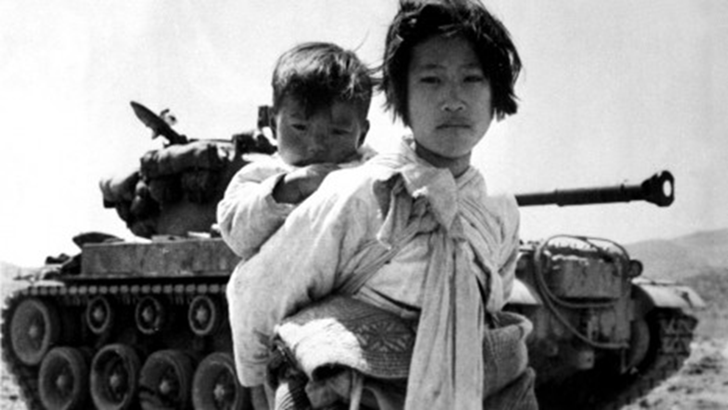
In the aftermath of World War II, one of the thorniest problems for the United States was the status of Korea. The peninsula had been an independent nation for centuries before the Japanese took it as a colony in 1910, but it was unclear whether Koreans could govern themselves after three decades of foreign rule. In August 1945, Soviet forces were fighting the Japanese military on the China-Korea border, and there was concern that the Red Anny might occupy the Korean peninsula.
Continue reading “Start of Korean War the Lack of COMINT”
SIGINT Data Processing and Exploitation
Just as solid-state electronic technology changed the capabilities of SIGINT satellites dramatically, the computer revolution that began in the 1950s, and that is still underway, changed the capabilities of computer processing, almost day to day. The capability to process SIGINT information was especially powerful and quick to develop, because the SIGINT satellites collected electrical signals that, with proper coding, were in a form that computers could work on directly. From 1960 to 1975 the multiplying effect of improved satellite collectors and improved computer processors would provide a many-fold increase in operational capabilities. Developing the processing methodology was the key.
Continue reading “Early History of the National Reconnaissance Office (5 of 5)”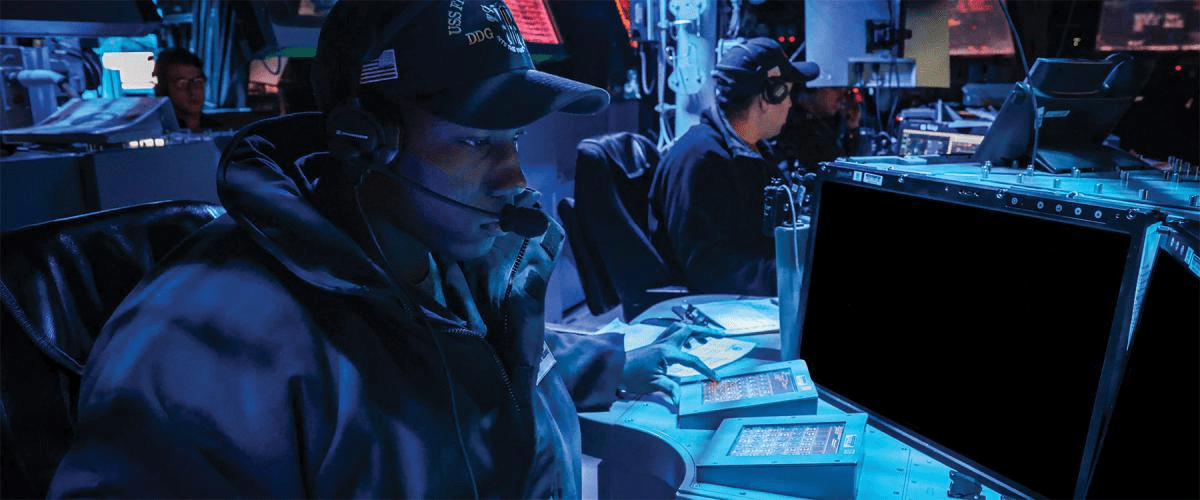
The Navy’s center of gravity is evolving toward the information domain—not because it replaces ships or aircraft, but because it has become the decisive enabler of lethality, survivability, and decision advantage at sea.
Continue reading “Congratulations to ENS Kevin H. Nguyen, Cryptologic Warfare Officer, Winner of U.S. Naval Academy Class of 2026 Capstone Essay Contest – Category: Information Warfare”
The history of the Cryptologic Technician community is filled with stories of dedication, sacrifice, and service in defense of the nation. Among those stories is that of Cryptologic Technician Interpretive Second Class (CTI2) Chad M. Kueser, whose courage and resilience embody the finest traditions of military service.
Continue reading “CTI2 Chad M. Kueser (Ret.): A Warrior’s Sacrifice and Unyielding Determination”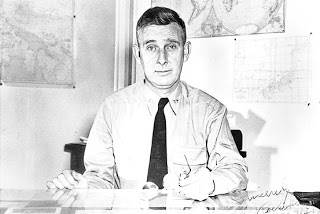
The President of the United States takes pride in presenting the DISTINGUISHED SERVICE MEDAL posthumously to CAPTAIN Joseph J. Rochefort, United States Navy, for services set forth in the following citation: For exceptionally meritorious service…while serving…as Officer in Charge of the Combat Intelligence Unit (Station HYPO) from March 1942 through June 1942.
Continue reading “Honoring and Remembering CAPT Joseph J. Rochefort, USN, Navy Cryptologist”
Communist attacks on the destroyer USS Maddox (DD 731) in the Gulf of Tonkin in August 1964 and the killing of American service personnel in South Vietnam later in the year and in early 1965 convinced American military leaders that the outbreak of war was imminent. It was apparent that rather than buckling under U.S. military pressure, Hanoi had decided to take the offensive. CINCPAC noted in March 1965 a “shift of communist tactics” intended to “bring about the disengagement of the U.S. in South Vietnam.” In a prescient statement, Admiral Sharp concluded that the North Vietnamese felt that “if they can kill Americans, harass U.S. personnel, and destroy U.S. facilities the American people will, in time, become so tired of the war that we will abandon our efforts there.”
Continue reading “Preparations for War in Southeast Asia, 1965”
