
By: Robert W. (Bob) Mitchell, CTT2 3/67-9/68 Galeta Island, CZ — 9/68-8/69 Rota, Spain
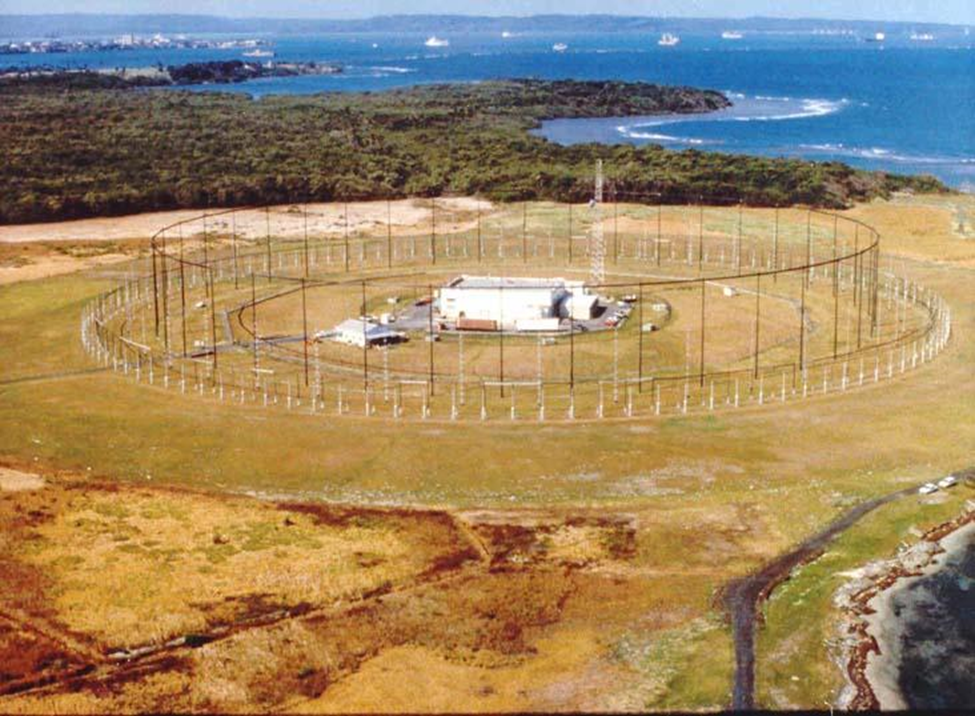
For more than three decades, Galeta Island stood watch for potential enemy approaches to the Panama Canal. Hidden among tropical forests on Panama’s northern coast, the massive AN/FRD-10 Circularly Disposed Antenna Array (CDAA)—better known to generations of Cryptologic Technicians as the “Wullenweber” or simply the “Elephant Cage”—was one of the most recognizable and important collection sites operated by the U.S. Naval Security Group.
Cryptologic Technicians assigned there worked around the clock collecting, processing, and reporting intelligence that contributed directly to U.S. national security.
One of the challenges faced by the operators and maintenance personnel at Galeta was the tropical environment itself. The antenna array required a vast open area around the ground plane and antenna elements. Left unchecked, Panama’s aggressive vegetation growth would quickly have engulfed the site. This was critical to the operation of the site for helping improve the signal to noise ratio plus improve the signal strength.
Many former personnel recall that vegetation-control herbicides commonly referred to as “Brush Killer” were regularly used around the antenna field to suppress brush, vines, and mangrove growth. The objective was straightforward: maintain clear ground conditions for operation and maintenance of the antenna system. Veterans who served at Galeta frequently remember large areas beneath and around the array being kept remarkably free of vegetation.
There were three very important military documents that controlled what could be used to suppress this growth.
On review of the maintenance manual for the AN-FRD-10; NAVFAC (Naval Facilities Engineering Systems Command) MO (Maintenance & Operation)-109a, Paragraph 4.3.5 MAINTENANCE TO GROUND PLANE we find, “The ground plane area should be maintained in good condition and kept free of foreign matter at all times.”
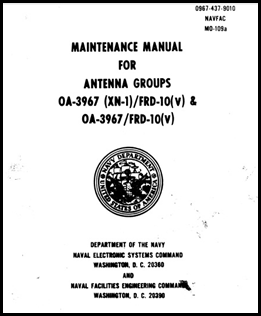
Paragraph 4.3.5.1 VEGETATION.
At most installations, vegetation is not permitted to grow in the area of the ground plane. Where necessary or desirable, appropriate herbicides and soil sterilants should be applied in order to restrict vegetation growth.
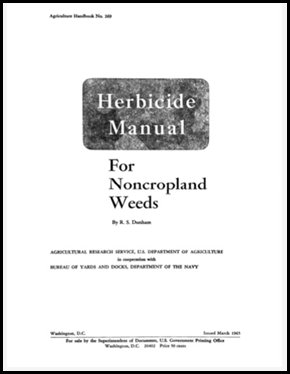
NAVFAC Manual MO-314 and the special assistant for applied biology from the appropriate NAVFAC Engineering Field Division should be consulted for recommendations prior to applying any soil sterilant or herbicide. The ground plane area should be inspected quarterly for uncontrolled growth of grass, weeds, or other vegetation.
NAVFAC MO-314 Pre-1989 – Herbicide Manual for Noncropland Weeds specifies on page 16. “Some woody species are tolerant to 2,4-D but susceptible to 2,4,5-T and vice versa. For use on mixed populations, the two herbicides are combined in a formulation sold as “brush killers.” These brush killers contain one-third to one-half 2,4,5-T and two thirds to one-half 2,4-D.”
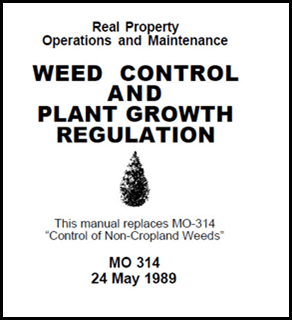
NAVFAC MO-314 Post-1989 – Herbicide Manual for Noncropland Weeds – All reference to 2,4,5-T was completely removed from the manual.
Galeta Island was built on Punta Galeta (Galeta Point) covered in mangrove trees that are woody plant species.
Today, more than thirty years after the station ceased operations in 1995, current satellite imagery reveals something remarkable. While nature has reclaimed portions of the former facility, the footprint of the Wullenweber array remains clearly visible. Dense mangrove forests now surround much of the former installation, yet the circular pattern of the antenna field can still be identified from the air.
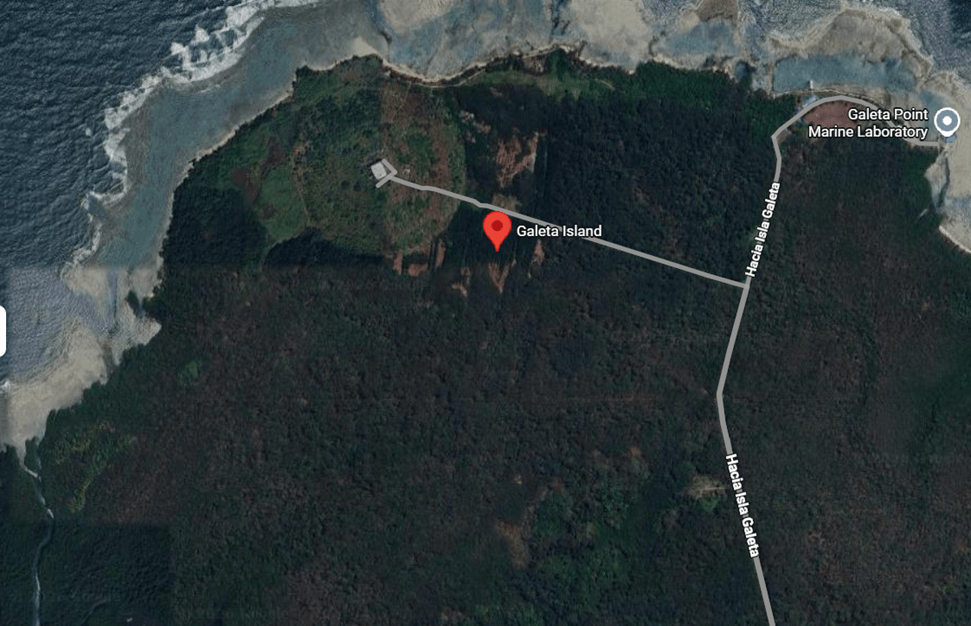
The persistence of the array’s footprint is striking when compared with other abandoned military sites in tropical environments. Visitors examining modern aerial imagery can still discern the distinctive circular shape that once supported one of the Navy’s premier SIGINT collection systems. The former operations building remains at the center of the circle, serving as a reminder of an era when thousands of Cryptologic Technicians stood watch from this small island (peninsula) on the Caribbean coast.
For those who served there, Galeta Island was more than an intelligence collection site. It was a unique duty station where cutting-edge Cold War technology met one of the world’s most challenging tropical environments. The Wullenweber array dominated the landscape and became a defining symbol of service at Galeta.
Although the radios are silent today, the great circle remains visible from the sky—a lasting monument to the sailors, Marines and soldiers who operated one of the most important cryptologic collection stations of the Cold War and remains an enduring part of Naval Security Group history.
However, because of the toxic herbicides that were used to control the vegetation, many of those same sailors, Marines and soldiers who worked there are starting to have medical issues identified in the PACT ACT (Promise to Address Comprehensive Toxics) that can be presumptively caused by those toxic herbicides.
If anyone who served at Galeta Island has filed for VA disabilities and were denied, that’s because the VA is adamant about the fact that “those toxic herbicides” were not used in Panama. It is not considered a TERA – Toxic Exposure Risk Activity. Those documents explained previously prove otherwise. There is a chance you can get approved if you have an illness considered presumptive by the PACT ACT, prove you served at Galeta Island, provide the documented evidence and meet with a Veterans Law Judge.
The jungle may eventually reclaim every trace of the station, but the medical issues now showing up in those who worked their will last throughout their lifetime.
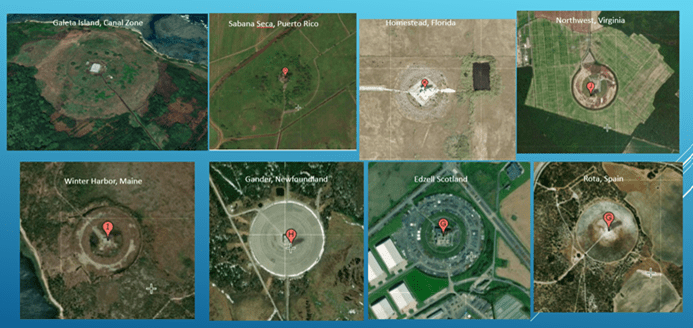
And, Oh, by the way. These same manuals were used in all 14 US built AN-FRD-10 Wollenweber arrays throughout the world in the early to mid-60’s plus the 2 built by Canada. This includes 8 sites to monitor the Atlantic – Galeta Island, CZ – Sabana Seca, Puerto Rico – Homestead, FL – Northwest, Virginia – Winter Harbor, Maine – Gander, Newfoundland – Edzell Scotland and Rota, Spain.
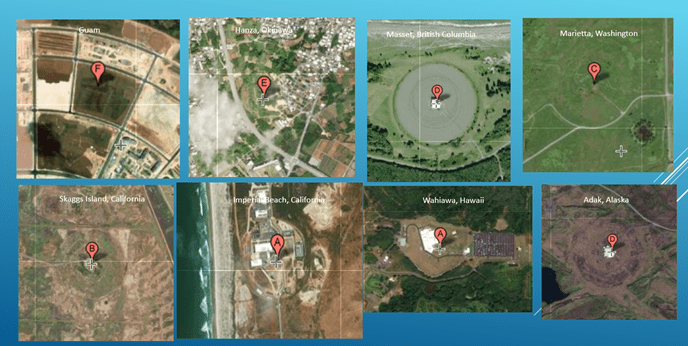
Plus includes 8 sites to monitor the Pacific – Guam – Hanza, Okinawa – Masset, British Columbia – Marietta, Washington – Skaggs Island, California – Imperial Beach, California – Wahiawa, Hawaii and Adak, Alaska.
If you are considering filing for VA disability presumptively caused by toxic herbicide exposure in the PACT ACT, I will be happy to assist with the necessary documentation.
Contact me; Robert Mitchell at bmitchell47@gmail.com
 Station HYPO
11 June 2026 at 11:11
Great article about “down home”. Bob, you left Coco Solo a month before Torrijos overthrew the Panamanian government. I got there 4 months after. Stayed there for 3 years. My son was born there. CTO2 Roger G. Brace
Sent from Yahoo Mail for iPhone
LikeLike
11 June 2026 at 13:12
I was stationed at NSGA Rota in 1996-1998. As a fresh-faced, rookie CTI3 Arabic linguist in the summer of 1996, I was on Facilities duty and tasked with leading a crew of two summer hire kids to weed the entire Wullenwebber array by hand. A good bit of those “weeds” had thick stalks that we had to hack with tools unfit for the job. I believe the boatswain mate first class in charge of Facilities enjoyed giving us CT’s busy work to see how we’d handle his garbage. We were told that standard lawn and weeding equipment couldn’t be used because of the delicate array. Well, once we’d finished the tasking after two weeks of busting our butts, I saw Spanish contractors out on the array with weed eaters following up on our hard work. Needless to say, I was a little chagrined.
Anyway, I’m curious about the herbicide exposure, and if anything like that was ever used at Rota in the years leading up to my time there. I have certain disabilities that I’ve been unable to tie to anything definite.
Thank you for the story.
LikeLiked by 1 person
12 June 2026 at 22:21
Well, yes…..the same documents that controlled Galeta Island were used to ensure vegetation was not growing on the ground plane in all 14 US Wollenweber sites. So Rota was one of them. If you have a disability that can be presumptively caused by toxic herbicides you should file a claim with the VA.
LikeLike
23 June 2026 at 07:38
Very interesting. Thanks for sharing!
LikeLike