
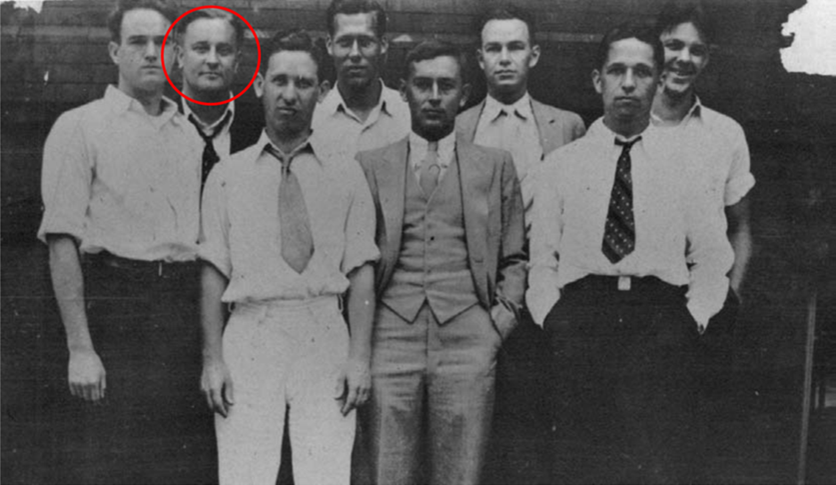
Radioman Second Class (RM2c) Walter Carl Rathsack was selected for the tenth class of the On-The-Roof Gang training that began in March 1933. Along with the other seven Radiomen in the class, he graduated in June 1933 and was ordered to Station BAKER in Guam. In the years leading up to World War II, Petty Officer Rathsack performed Radio Intelligence operations in Guam, Philippines and Hawaii.
Featured image:
OTRG class number 10
l-to-r (front): Jones, Kisner, Marks, Hoover.
L-to-r (rear): Rathsack, Barnum, Groundwater, Gelineau.
RM1c Rathsack was at Station HYPO in Hawaii during the attack on Pearl Harbor, and he wanted to get into the fight by going back to sea into the fight. In early 1942, he volunteered for duty on several Radio Intelligence Units (RIUs) deployed on board U.S. Navy ship for tactical intercept during combat, but he was never selected for the duty.
In early February 1942, the U.S. Navy asked for volunteers for one of the most dangerous assignments available to Radio Intelligence operators – duty on board a U.S. Q-ship. Q-ships were converted merchant ship with concealed weaponry meant to lure German U-boats into a surface attack – it was a standard U-boat tactic to attack unarmed merchant ships with surface weapons, leaving the torpedoes available to use submerged against armed Navy ships. All Sailors on board the Q-ship were volunteers. By this time a Chief Radioman (CRM), Rathsack volunteered and was assigned to the newly converted sugar carrier SS Carolyn, now designated USS Atik (AK 101).
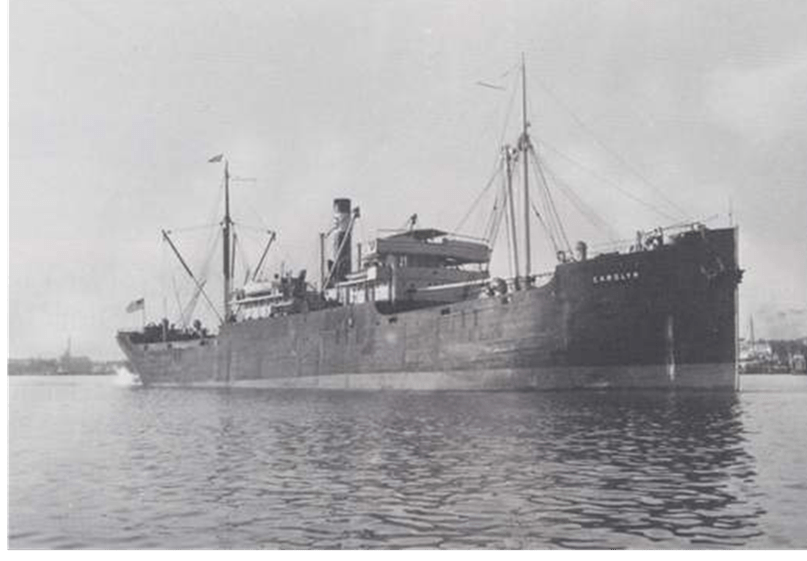
American Q-ship
The radio intercept operators aboard Q-ships intercepted German U-boat communications in order to identify locate and track these submarines as they prepare to attack their defenseless victims. The intercept operator would also double as the ship’s communicator.
While on its maiden voyage 300 miles East of Portsmouth, Virginia on March 27, 1942, USS Atik encountered German U-boat U-123 as the submarine was on the surface. The submarine quickly launched a torpedo, which struck Atik on the port bow. As U-123 approached closer to finish off the Atik with surface weapons, Atik dropped its concealments and opened fire with all weapons. The U-boat quick retreated and was slightly damaged on the bridge by .50 cal guns fired from Atik. Disabled by the earlier torpedo attack, Atik was a sitting duck for a later attack. CRM Rathsack radioed distress signals that were heard by other Navy ships, merchant vessels and on shore, but before any rescue effort could be mounted, U-123 returned to launch a salvo of torpedoes that san the Atik. Before the night was over, a gale blew in, preventing any rescue attempt from being mounted.
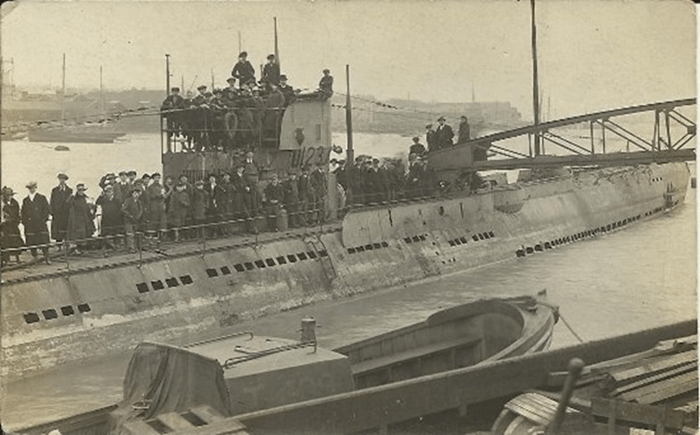
No survivors of the USS Atik were ever found. Despite the numerous battles in which On-The-Roof Gang operator participated in, it is believed CRM Rathsack was the only intercept operator to die in combat during World War II.
Source: Matt Zullo, CTICM (ret)
 Station HYPO
Leave a comment