
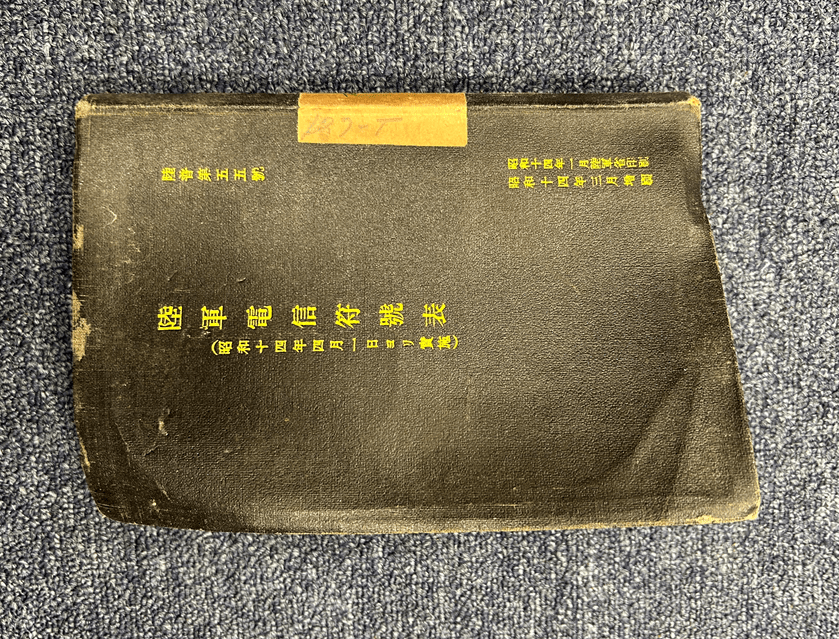
This codebook was forcibly taken six months prior to WWII from the radio operator of the Japanese tanker Nisshin Maru on May 28, 1941, by George A. Muller, an inspector with the U.S. Customs Service. The seizure occurred while the vessel was docked in San Francisco, under the pretext of conducting a search for narcotics.
In response, the Japanese Consul in San Francisco formally protested the incident and advised his government to immediately discontinue the use of the compromised cryptographic systems. Tokyo followed this recommendation, and the codebook was subsequently replaced. At the time of the seizure, the U.S. Navy’s Communications Intelligence organization (OP-20-G) had been successfully exploiting the codes and ciphers contained in the volume. As a result, the incident inadvertently deprived U.S. intelligence of a valuable source of information.
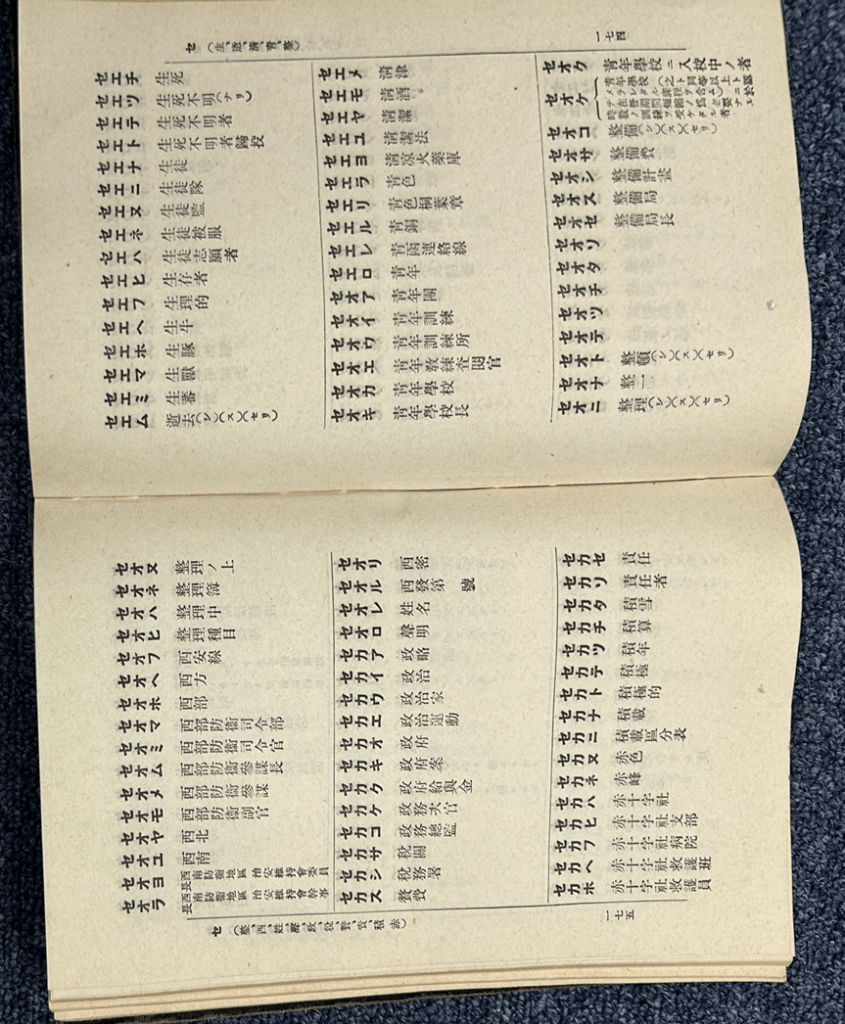
This episode illustrates the risks of conducting intelligence-related operations without full awareness of existing sources and methods. Although Inspector Muller believed he was acting in the best interests of the United States, his actions ultimately had unintended and damaging consequences for ongoing intelligence efforts.
This Codebook can be found at the Command Display, Corry Station, Pensacola.
 Station HYPO
19 March 2026 at 11:18
That was a Major screw up. Pre Pearl Harbor. An inspector decides to go spy? Strange timing, i don’t buy it, somebody told him to do it. My fellow spooks were already on it. Seems like no interagency connection, wonder we’re I’ve seen that before?
LikeLike
19 March 2026 at 11:43
i’m surprised Mr. Hoover’s boys were not involved in the fiasco!
LikeLike