
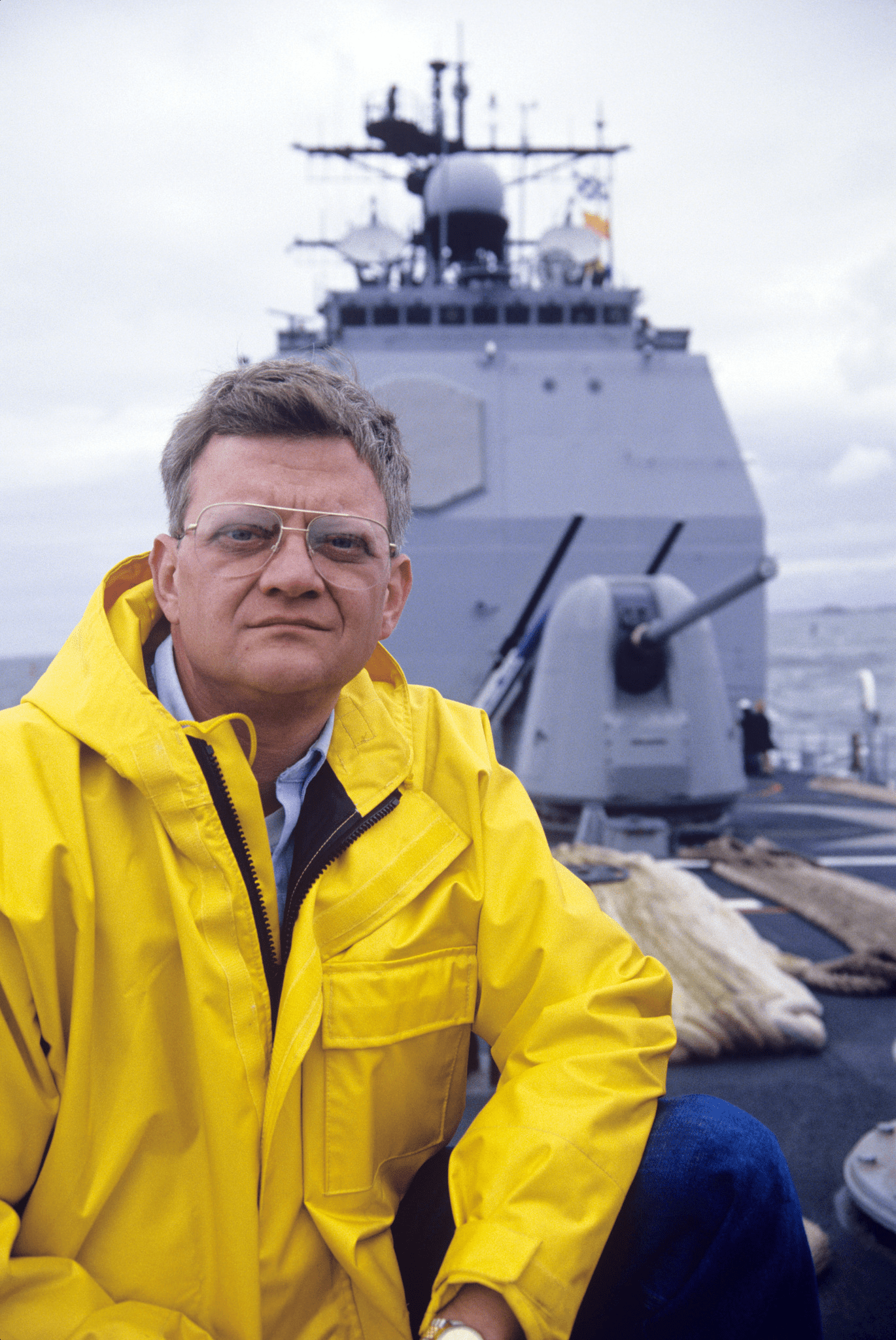
In 1982, an insurance agent with a fascination for naval history and Cold War strategy sat down to write a novel. He had no grand expectations—just a hope that maybe 5,000 readers would buy his book. That writer was Tom Clancy, and the manuscript was The Hunt for Red October.
What happened next was anything but ordinary.
From Modest Expectations to a Breakout Success
Clancy’s debut novel, published in 1984 by the U.S. Naval Institute Press, was a meticulously detailed thriller centered on a Soviet submarine captain attempting to defect to the United States with his crew and his nation’s most advanced ballistic missile submarine. At the heart of the story was CIA analyst Jack Ryan—an unlikely hero whose intellect, not brute force, drove the narrative.
Clancy believed he would be fortunate to sell 5,000 copies. Instead, the novel quickly moved 45,000—a remarkable achievement for a first-time author, particularly one writing dense, technically rich military fiction.
Readers were drawn to the authenticity. Clancy’s descriptions of submarine warfare, sonar tracking, and Cold War naval strategy felt less like fiction and more like classified briefings turned into prose. His background research—painstaking and precise—gave the novel credibility that resonated deeply with military professionals and civilians alike.
The Presidential Boost
The turning point came when Ronald Reagan publicly praised the book, reportedly calling it “the perfect yarn.” In the politically charged atmosphere of the 1980s—when U.S.–Soviet tensions were central to global affairs—such an endorsement was electrifying.
Reagan’s praise transformed The Hunt for Red October from a niche military thriller into a national sensation.
Sales skyrocketed:
300,000 hardcover copies
2 million paperback copies
For a debut novel, those numbers were extraordinary. Clancy had not only succeeded—he had ignited a new genre of techno-thriller fiction.
Why It Worked
Several elements explain the book’s explosive growth:
Authenticity – Clancy treated military technology and intelligence tradecraft with seriousness and respect.
Timing – The Cold War backdrop made the story feel urgent and relevant.
A New Kind of Hero – Jack Ryan was an analyst, not a commando—an intellectual protagonist who solved problems through analysis and moral conviction.
Political Realism – The novel avoided caricatures, presenting Soviet characters with complexity and humanity.
A Cultural Impact Beyond Books
The success of The Hunt for Red October established Clancy as a dominant voice in modern military fiction. It launched the enduring Jack Ryan series and eventually led to film adaptations, video games, and a vast multimedia franchise.
More importantly, it demonstrated that American readers had a strong appetite for intelligent, research-driven thrillers rooted in real-world geopolitics.
What began as a writer’s modest hope to sell 5,000 copies became a landmark moment in publishing history. With one novel, Tom Clancy proved that detailed military fiction could capture the imagination of millions—and that sometimes, even in the world of high-stakes submarine warfare, the quiet analyst can change everything.
 Station HYPO
17 February 2026 at 13:29
Mr. Clancy came to NSA to talk to our CY600 class. Everyone who could sneak into the Green Room did so. He talked casually about a Washington Post article. I felt my face freeze. Afterwards some of us talked about this. He had figured one of our secret issues from that article. Everyone commented they had the “face freeze” experience.
Mr. Clancy also said that going from an insurance agent to an author was like being cured of leprosy
LikeLike
17 February 2026 at 14:46
There were two major-league works of military techno-fiction in the 1980s:
One was The Hunt for Red October. The other was The Flight of the Intruder. I read and have reread both and enjoyed both movies based upon the books!
I also met and conversed with Tom Clancy on Sunday after Mass in Prince Frederick, Maryland.
LikeLike
19 February 2026 at 11:20
Seeing the film as a teenager is what inspired me to join the Navy straight out of high school as a cryptologic linguist. Recalling the helicopter delivery scene onboard USS Dallas played a roll in saving my life from being elecrocuted in similar fashion onboard USS Normandy back in 1997. Still working on the PTSD. God bless you, Tom Clancy!
LikeLike