
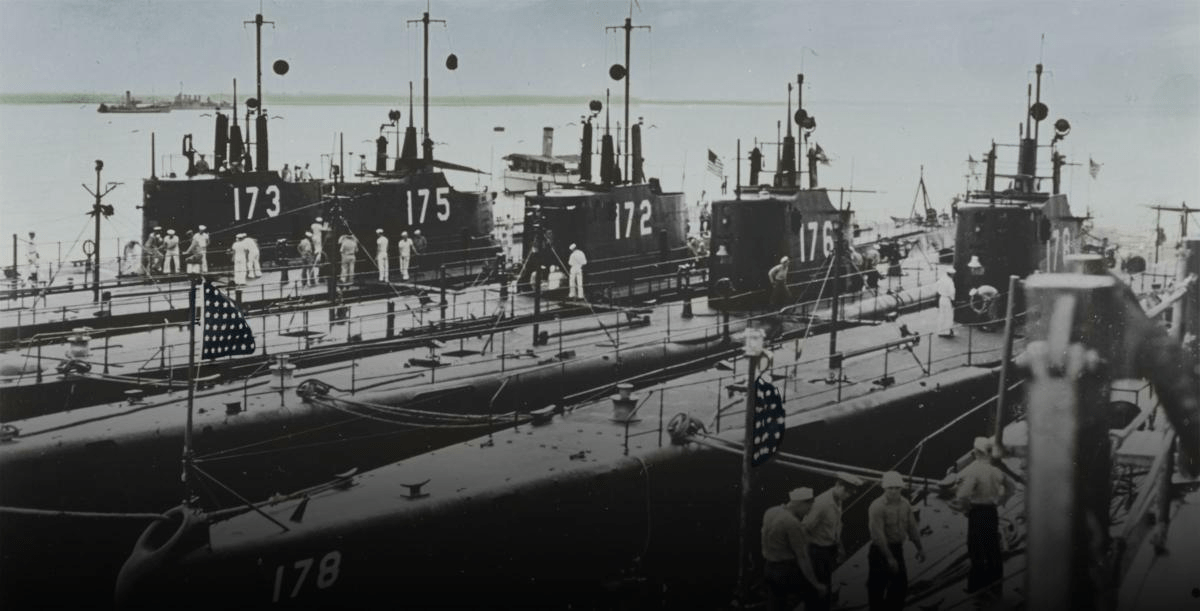
Clay Blair, Jr., who served as a Quartermasters, 2nd Class on submarines in WWII, wrote a 1,000 page book subtitled, The U.S. Submarine War Against Japan. He titled his book, SILENT VICTORY, because the skippers and crews like their comrades in radio intelligence were not permitted to discuss their exploits until after the War was over. In summary:
“Lockwood (SubPac Commander) and his staff tabulated the final results for all submarine commands and submitted the figures to the Navy Department. Lockwood claimed the U.S. Submarines had sunk about 4,000 Japanese vessels for about 10 million tons. His figures included one battleship, eight heavy and light aircraft carriers, and twenty heavy and light cruisers. Fifty-two U.S. submarines had been lost from all causes during the war, including forty-five fleet boats. About 375 officers and 3,131 enlisted men had died out about 16,000 who actually made war patrols. This was a casualty rate of almost 22 percent, the highest for any branch of military.”**
Admiral Layton in his book, “And I Was There: Pearl Harbor and Midway — Breaking the Secrets” p 473, made this comment about the close coordination between the sub force and radio intelligence:
“Orders would be flashed out with up-to-date information on the courses of Japanese convoys. This made for a very efficient use of our forces, because it eliminated long and fruitless searches for likely targets. It was not unusual for all for our submarines on patrol in the central Pacific to be occupied simultaneously in an a attack directed on the basis of information supplied by radio intelligence. Sometimes it was only a matter of hours between decryption of a maru messages and one of our submains reporting a sinking.”
** These figures were scaled down significantly by the Joint-Army-Navy Assessment Committee nevertheless represented an impressive accomplishment. “The U.S. submarine force, composed in total of about 50,000 officers and men represented only about 1.6 percent of the total navy complement. In other words, a force representing less than 2 percent of the U.S. Navy accounted for 35 percent of Japan’s maritime losses.” Blair, Silent Victory, p. 879.
 Station HYPO
Leave a comment