
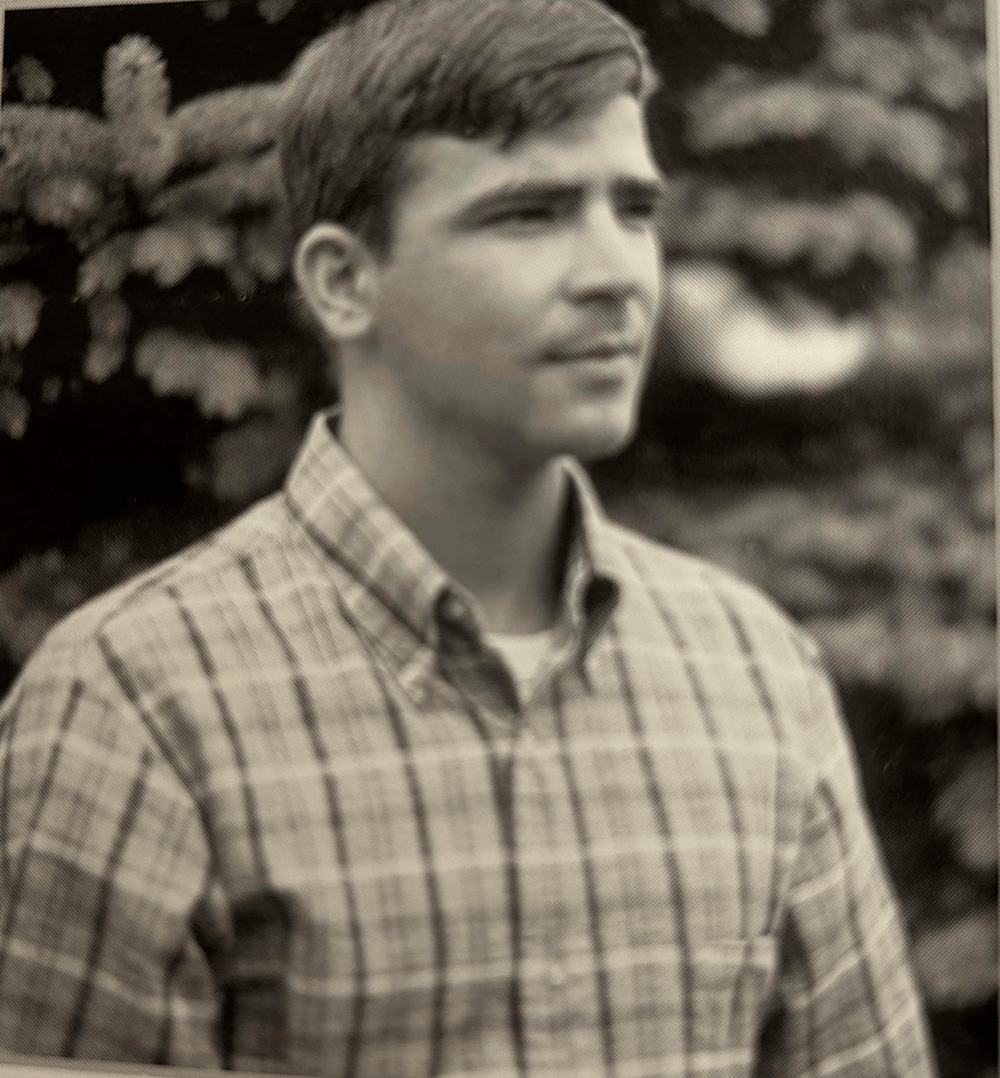
At five feet six inches tall, Harry Iredale was one of the shortest members of the Pueblo crew and acutely self-conscious about it. What he jokingly referred to as his “vertical deficiency” had made him the target of teasing for much of his life. The son of a pipe fitter, he was raised in a loving but, in his view, overly protective blue-collar family near Philadelphia. Determined to prove himself, Iredale poured his energy into academics, earning straight A’s in high school—except for a single B. He was also passionate about sports, especially basketball, football, and volleyball. Teammates called him “Half Pint,” but despite his stature, he was fiercely competitive.
Like several other Pueblo crewmen, Iredale tried to survive his first days in captivity by keeping a low profile. But on the third night, his strategy failed. At three a.m., guards stormed into his cell, dragging him to an interrogation room where four or five soldiers waited, clutching AK-47s. When he refused to admit to violating North Korean waters, he was ordered to his knees.
An interpreter commanded him to pick up a wooden chair by its front legs and hold it above his head. Within minutes, pain coursed through his arms and shoulders, the muscles burning as he struggled to comply. When his arms sagged, guards drove their boots into his sides and chest. He tried to stay upright but eventually collapsed onto the grimy floor. The beating continued—kicks landing everywhere but his head.
Over and over, Iredale lifted the chair, held it until his strength gave out, dropped it, and curled into a ball as the assault resumed. Even a larger, stronger man could not have endured such torment for long. Though he knew some details of the Pueblo’s mission, he had little knowledge of its electronic surveillance systems or the Navy’s intelligence operations. What secrets could he possibly reveal that were worth this pain? The longer the beating went on, the more he realized the futility of resistance. Dying or lapsing into unconsciousness on the freezing floor would help no one. After about twenty-five minutes of relentless kicks and blows, he gave in and agreed to confess.
The interpreter sneered at him. “You’re a weakling,” he said. “You gave up too early.”
Life at “the Barn,” as the sailors called their prison, offered no respite. Their daily meals consisted of watery turnip soup, rice, stale bread, and occasionally a piece of foul-smelling fish they dubbed “sewer trout.” Meals were delivered in grimy buckets that looked like they were normally used for scrubbing floors.
That afternoon, the day he signed his confession, Iredale received the same miserable meal as the others—but in a larger portion. The gesture humiliated him. “It looked like I was being rewarded,” he recalled. “It made me look bad.” Too hungry to refuse the food, he ate only his share and passed the rest to his fellow prisoners. The experience left the small but spirited oceanographer seething with anger—an anger not only at his captors, but at the cruel circumstances that had forced him to betray his own sense of honor.
Source “Act of War”, by Jack Cheevers
 Station HYPO
6 December 2025 at 15:11
All the while, as each were tortured…our govt.’s elites (civilian and military) showed their sociopathic/psychopathic utter disregard for the men they tossed in harm’s way…vastly outgunned, within a slow-moving vessel that was refitted rather then scrapped…those unfortunate sailors (and civilian personnel) , at least, still believed in “honor, duty and service.”
I find it more the despicable that I’ve NEVER heard of any concrete plans to defend these practically defenseless vessels (U.S.S. Liberty as well) should they be attacked. More damning is the fact that this happened after the U.S.S. Liberty. How utterly stupid does it have to appear that the Pueblo would be so disregarded when containing all the latest (for the time) in signal intelligence equipment and manuals.
In but a short time later…when fed into said same machines pulled off and shipped to Moscow, were the codes stolen by John Arthur Walker and, may have been the reason the N. Koreans captured the Pueblo to begin with…having knowledge that the Soviets were in search of said same machines.
As this disaster continued to play out, for the members of the crew, for eleven more months, the damage to our intelligence, nuclear subs and military planning, went on ’til the mid ’80s. In that regards, it appears not much has changed since John Arthur Walker stated, “the security at K-mart is better then that of the Navy” when questioned on why he spied for the Soviets.
LikeLike