
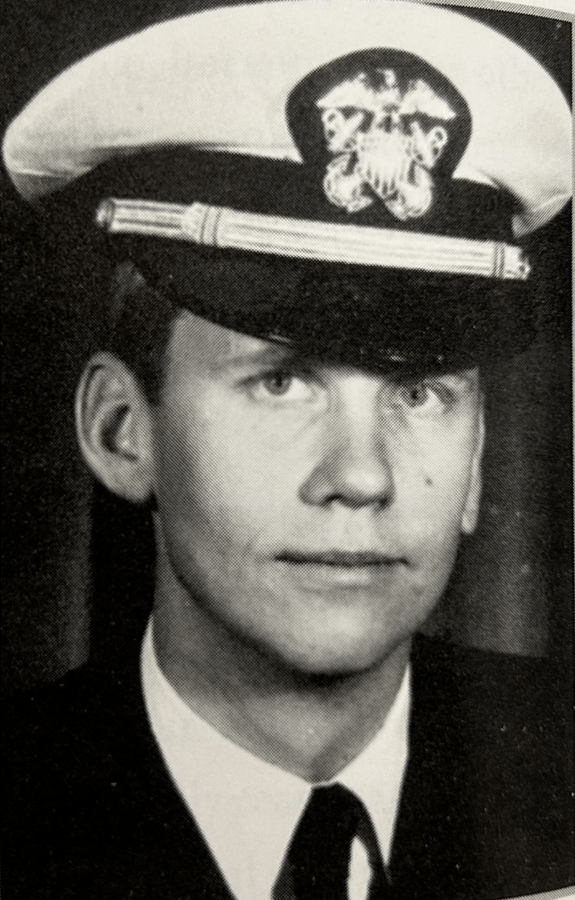
Lieutenant Schumacher had endured a brutal beating on January 26 1968, followed by an even more savage assault the next day. Dragged into the same interrogation room where the Pueblo’s officers had once been threatened with a firing squad, he was ordered to kneel and raise his arms over his head. Two guards cocked their AK-47s, pressing the bayonets within inches of his face.
“What oceanographic measurements did you take?” an interpreter with fierce black eyes demanded in precise English.
The American officer answered with defiance rather than fear:
“Why did you shoot at our ship?”
Like Commander Bucher, Schumacher held a mind full of classified knowledge. He had written the daily logs of the Pueblo’s mission, recording the positions of radar and radio sites intercepted along their route. As the ship’s communications officer, he understood the code machines and, more dangerously, which specialists handled the most sensitive electronic equipment.
Schumacher felt an unshakable duty to protect those secrets—if necessary, with his life. Alone in his freezing cell, he resolved to follow the U.S. Armed Forces Code of Conduct, revealing nothing but his name, rank, and serial number. Yet, he knew his tolerance for pain was limited. It was only a matter of time before the agony would force him past the limits of discipline and endurance.
Now, as he knelt trembling, his arms aching under the strain, the interrogator and guards closed in. Five other North Koreans stood by, observing with the detached curiosity of students watching a grim experiment. When Schumacher refused to speak about oceanographic work, one guard began striking his elbow with brutal precision while another drove booted kicks into his chest. Searing pain shot through him like electricity; his ribs burned, and each breath came shorter than the last. The beating dragged on for nearly fifteen minutes until his body felt aflame and his thoughts blurred into confusion.
He realized he could not last much longer. The information they wanted seemed trivial—hardly worth dying for. Yet revealing it would break the Code. Then again, could the Code even apply in this twisted limbo? The United States and North Korea were not technically at war. Was he even a prisoner of war? And if they beat him into madness, what might he say without meaning to? Desperate to end the pain, he gave in.
“All right,” he gasped. “Stop kicking me and I’ll tell you.”
Schumacher explained how the Pueblo measured ocean temperatures and salinity. In that moment, the North Koreans had begun to infiltrate his mind, and the realization horrified him. On January 28, consumed by despair, he tried to end his life in the same way Commander Bucher had—by drowning himself in the small water pail in his cell. But, like his captain, he found the task impossible.
The beatings were not limited to officers. The day after Schumacher’s suicide attempt, he walked the corridor and saw Harry Iredale, the Pueblo’s junior oceanographer, forced to kneel with his arms raised in the same position—another victim of the relentless cruelty that had become their daily existence.
Source “Act of War”, by Jack Cheevers
 Station HYPO
5 December 2025 at 05:38
Back at headquarters they had chosen not to help the ship when it was necessary.
LikeLike
5 December 2025 at 06:25
Because America under the reins of LBJ could not fight two conflicts at the same time. The conflict in Viet Nam occupied much of the resources of our Armed Forces and LBJ’s “Great Society” program coupled with Viet Nam was very expensive. He refused to raise taxes to fund both activities and so had the FED violate the constitution and print far more paper dollars than we had gold and silver to back them! Once Nixon decoupled the dollar from species; the insidious inflation we’ve experienced since 1972 began creeping into our economy!
LikeLike
5 December 2025 at 10:19
I was a CTM3 aboard the USS Georgetown at (AGTR2) the time.
I was in the crypto room when the Pueblo was under seige and reading the teletype messages from the Pueblo.
Everyone in the crypto room was saying things like “We’re going to kick the N. Koreans ass”, and “we’ll blow their ships out of the water”.
We didn’t even send a plane to help them.
I still have trouble believing we just abandoned the Pueblo. So very sad.
LikeLike
5 December 2025 at 10:42
My Dad, CTTCS Prater, talked about these guys all the time. Ticked him off all his life we didn’t do anything to save the ship.
LikeLike
5 December 2025 at 11:12
I was in the comm center CincLantFlt reading the words coming in on the printer, everyone gathered around in shock. We waited for our Presidents esponse, NOTHING. I knew then I would not stay in.
LikeLike
7 December 2025 at 13:19
I was an Ensign stationed at the Classified Material Issuing Office (CMIO) when this occurred. Many months of material were compromised. As we counted pubs and destroyed materials, I could not help but pray for our shipmates.
LikeLike