
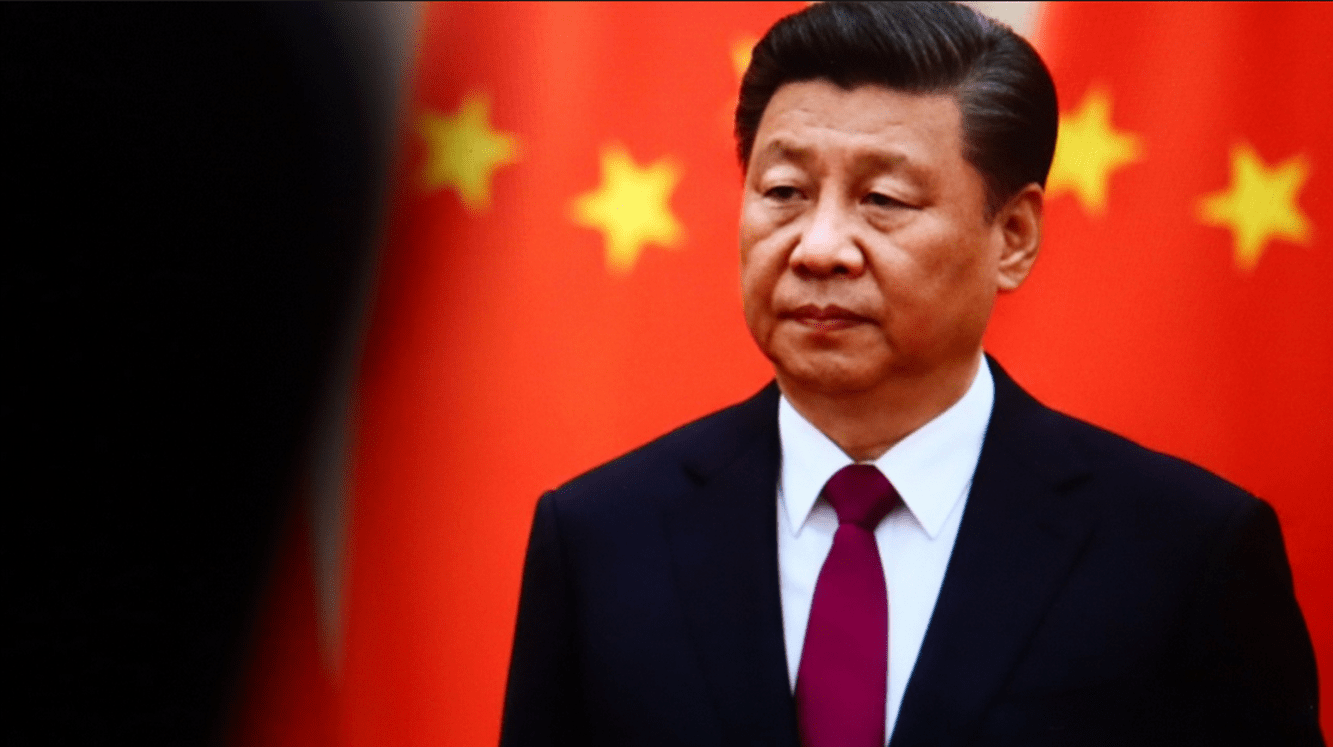
President Donald Trump must take decisive steps toward bolstering US alliances in the Indo-Pacific before talks with Xi Jinping in April.
China is testing the Trump administration’s resolve in the Indo-Pacific, probing for cracks in America’s alliance architecture while calibrating how far it can push before Trump’s state visit next April. The administration’s efforts to build a more stable relationship with China have created tactical space for diplomacy on core American interests—but recent weeks have seen Beijing interpret American restraint as permission to escalate grey-zone coercion against Tokyo and Taipei.
The coming months present a narrow window to shore up alliance credibility, signal clear limits to Chinese adventurism, and proceed with US-China diplomacy from a position of alliance cohesion and American strength.
Tokyo’s increasingly explicit warnings that a Taiwan contingency threatens Japanese survival are an accurate accounting of its security environment. Prime Minister Takaichi’s November 7 statement—that PLA use of force against Taiwan could qualify as a “situation threatening Japan’s survival” under the 2015 Peace and Security Legislation—constitutes the most direct Japanese commitment to Taiwan’s defense in modern history.
Beijing has taken the development seriously: A Chinese diplomat in Tokyo threatened to “cut off the filthy necks” of those who intervene in “unification” with Taiwan; while Beijing has imposed a travel advisory, suspended seafood imports, deployed Coast Guard vessels to the Senkaku, and launched live-fire exercises in the Yellow Sea.
This is not typical diplomatic theater. Beijing is running a coordinated campaign to intimidate Takaichi into retracting her comments and to deter other allies from linking their security to Taiwan’s. The Trump administration must recognize that silence in the face of this coercion campaign reads as acquiescence—and acquiescence will invite even further escalation.
China Is Winning the Western Pacific
For years, China’s “Anaconda strategy”—the slow, constricting pressure of military exercises, cyberattacks, diplomatic isolation, and economic coercion—was producing the opposite of its intended effect. Taiwanese identity has steadily risen, along with its defense spending. Additionally, the island has wisely pivoted to an asymmetric defense strategy built around mobile missiles, sea mines, and drones designed to exact high costs against any invading force.
The past 10 months have overturned the chessboard. The combination of the Trump administration’s trade policy—20 percent tariffs on Taiwan-origin goods despite its status as a critical technology partner, rumors of potential tariffs on its semiconductors, and mixed signals on US defense commitments has opened fissures for Beijing to exploit.
Officials across Asia privately express bewilderment that Washington treats friends barely better than adversaries. The Pentagon’s singular focus on the invasion threat, while understandable, neglects the daily grey-zone warfare that batters Taiwan’s will to fight. The administration’s summer pause on arms deliveries and postponed defense consultations ahead of trade talks with Beijing likewise undermined confidence in the US commitment to the region.
In Taipei, the political atmosphere is toxic. The opposition Kuomintang, now led by the unification-curious Cheng Li-wun, controls the legislature and has signaled opposition to President Lai Ching-te’s proposed defense budget increases—even as the Trump administration demands Taiwan spend up to 10 percent of its GDP on defense. The special defense introduced by Lai last week—which commits Taiwan to reaching 5 percent of GDP by 2030—is reaching a make-or-break moment. If it fails, the narrative of Taiwan’s freeriding will gain currency with those in Washington seeking a reason to cut the island loose.
In Tokyo, confidence in American reliability has deteriorated across three dimensions. First and most salient is that Japan endured eight rounds of trade talks with the United States while simultaneously facing pressure to increase defense spending—a dual squeeze that appeared more extractive than collaborative. President Trump’s documented skepticism of the US-Japan Security Treaty compounds these concerns.
Second, Japanese officials invoke Ukraine’s experience dealing with the United States as evidence that American alliance commitments may prove negotiable: Washington’s apparent willingness to entertain Russian demands without consulting its European allies has shaped Tokyo’s expectations for how the United States might respond to a Taiwan crisis.
Finally, the recent warming of US-China relations risks undermining the logic of coordinated export controls. If Washington now permits the export of its own advanced chips to smooth trade talks with Beijing while Japanese firms remain constrained, Tokyo will reasonably question whether technology coordination serves Japanese interests.
This is the very deterioration of the US alliance framework that Beijing has sought for a decade. The goal was always to convince Taiwan that resistance is futile, America that defense is too costly, and allies that Washington’s word is unreliable. For the first time in years, that strategy is gaining traction.
The administration has less than five months before President Trump’s state visit to China to arrest this deterioration and enter negotiations from a position of allied cohesion. This requires specific actions across diplomatic, military, and economic domains.
First, the Trump administration should proceed with its planned $330 million arms sale to Taiwan without apology or delay. Beijing will protest loudly, as it always does—and this should not derail longstanding US policy. The sale represents the routine implementation of the Taiwan Relations Act, continues a bipartisan policy spanning four decades, and involves spare parts for defensive systems that Taiwan already operates. More importantly, proceeding on schedule matters enormously for rehabilitating Taipei’s confidence and shaping Beijing’s calculus in the months ahead.
If the administration pauses or conditions the sale to avoid upsetting summit preparations, it risks validating Beijing’s theory that economic leverage can veto US security commitments—a narrative that has taken shape around Trump’s previous decisions to cancel or delay arms sales and travel by Taiwan officials.
Second, the White House should publicly support Tokyo’s position on Taiwan without equivocation. Takaichi took a significant domestic political risk in articulating the survival-threatening scenario framework. Although US ambassador George Glass forcefully defended Takaichi against Beijing’s coercive response—calling it “economic coercion” and saying “we have her back—Washington needs senior-level validation that the United States shares Tokyo’s assessment that a Taiwan blockade or invasion would imperil vital Japanese interests, and that Washington would consult closely with Tokyo in any contingency. This need not involve any change in longstanding US policy; it requires consistent, high-level validation that Japan’s Taiwan policy aligns with US interests and enjoys American backing.
In particular, Chinese Coast Guard deployments near the Senkaku Islands and live-fire exercises in the Yellow Sea demand a response beyond diplomatic protest. The Trump administration should consider accelerating the delivery of defense systems to Japan and undertake additional, visible demonstrations of alliance coordination—at a minimum, conducting its own ISR operations near the Senkaku and, perhaps, including a trilateral exercise involving Japan and the Philippines, timed to coincide with any further Chinese military posturing.
Third, the United States should coordinate with allies to address remaining issues with Beijing’s rare earth licensing regime ahead of the April state visit. China’s two-year continuous purchase requirement before granting general licenses for rare earth exports is not a bilateral US-China issue—it affects Tokyo, Berlin, and other allied manufacturing centers as severely as American industry, sometimes even more so.
The administration should brief allies on the status of bilateral negotiations with China and present a unified position during negotiations: Beijing should reduce the timeline for general licenses to six months or eliminate them entirely. This is an opportunity to demonstrate that when China attempts economic coercion, it faces coordinated resistance from the United States and its allies. Japanese officials, already concerned about rare earth supply security for their electronics and automotive sectors, will welcome American leadership on this issue.
Finally, Trump should empower his National Security Advisor to coordinate cross-Strait policy across multiple domains of competition. The current White House structure creates challenges for Taiwan: Much US-China diplomacy now flows through trade negotiations, while traditional security coordination runs through the State and the Department of Defense. Taiwan sits precisely at the intersection of these issues—a security commitment intertwined with trade and technology competition.
Marco Rubio, as both Secretary of State and National Security Advisor, is well-positioned to bridge this gap—but requires sufficient presidential trust and authority to ensure that arms sales, technology controls, diplomatic messaging, and trade negotiations with respect to Taiwan advance coherent strategic objectives and reflect the President’s intent. Without proper coordination on Taiwan policy, tactical decisions made in isolation risk compounding into strategic contradictions that allies struggle to interpret—and Beijing learns to exploit.
How President Trump Can Succeed at the China State Visit
The most dangerous scenario is not that the April state visit goes poorly, but that events between now and then create a crisis that the summit must manage, rather than opportunities it can advance. Beijing’s track record suggests it will test US resolve in the run-up to high-level engagement. The most likely vector is grey-zone escalation through intensified PLA exercises around Taiwan or coordinated economic coercion timed to demonstrate leverage before Chinese president Xi Jinping sits down with Trump. A worst-case scenario could involve ramped-up maritime interdiction of Taiwan-flagged vessels or a de facto blockade of Kinmen or Matsu.
The administration should establish clear red lines now, privately communicated to Beijing: a quarantine or blockade of Taiwan’s offshore islands would trigger immediate US response—not necessarily military intervention, but comprehensive economic countermeasures and emergency arms deliveries to Taiwan.
Similarly important is managing Taipei. President Lai’s rhetorical approach to cross-strait relations has occasionally unnerved US officials who worry that he could invite a crisis that would embroil the United States. The administration should make clear—privately, directly—that while Washington supports Taiwan’s democratic system and will fulfill its obligations under the Taiwan Relations Act, US support is not a blank check; and the United States opposes unilateral changes to the status quo from either side of the Strait.
Trump’s April state visit to China offers an opportunity to move beyond tactical crisis management and toward a theory of purpose in US-China relations. The Trump administration has succeeded in producing a fragile peace after years of political and economic escalation. It is true and commendable that the deal struck in Busan produced meaningful wins that, if successful, will save American lives by halting the flow of fentanyl precursors into the United States and offer reprieve for American farmers.
But stability is not a strategy. The April state visit should advance three concrete objectives:
First, the United States can establish principles for managing China’s grey-zone conduct. Beijing will not agree to cease military exercises around Taiwan or end its “Anaconda strategy.” But the summit can establish that certain actions—kinetic blockades of civilian shipping, offensive cyber operations against critical infrastructure, physical harassment of Taiwan officials and diplomatic personnel—constitute unacceptable escalation requiring proportionate response.
Second, the United States should reaffirm its commitment to the status quo in the Taiwan Strait. Both sides benefit from preserving the current equilibrium. If Beijing seeks changes to US declaratory policy—shifting from “we do not support Taiwan independence” to “we oppose Taiwan independence”—the answer must be no. These are not synonyms. The former preserves US flexibility and avoids predetermining an outcome to cross-Strait differences; the latter risks granting Beijing an important step in its quest to constrain Taiwan’s international space and establish veto authority over its future.
Third, Washington should advance practical cooperation with Beijing where its interests genuinely align. The summit should explore crisis communication protocols, military-to-military dialogue, and methods of coordinating domestic policy frameworks to head off civilizational risks posed by some classes of emerging technology.
The Cost of US Inaction on Taiwan
If the administration proceeds to the April state visit without addressing allied confidence gaps and Taiwan’s domestic political fractures, Xi will interpret this as validation that time favors China. At best, he will treat the summit as an event to be managed; at worst, as leverage to extract concessions from the United States while offering nothing in return.
Beijing could emerge from the summit more confident in its Anaconda strategy, prompting renewed confidence in its ability to engage in intensified military exercises and grey-zone warfare against Taiwan. Tokyo could conclude that US commitments are conditional and reevaluate its own foreign policy orientation. Taiwan’s domestic politics could fracture further, with the opposition KMT using US ambivalence as justification to block defense spending and undermine the US-Taiwan partnership.
The coming months offer a narrow window to demonstrate that allied cohesion anchors American strategy in Asia. Credible alliances enable effective summit diplomacy; effective diplomacy reinforces allied strength. The Trump administration has an opportunity to enter 2026 from a position of allied unity and establish terms that advance American interests. It begins with proceeding on the Taiwan arms sale, backing Tokyo publicly on cross-Strait security, coordinating allied pressure on Beijing’s weaponization of rare earths, and empowering clear leadership to coordinate Taiwan policy amid competing
Source: National Interest, 4 December 2025… by Kareem Rifai, and Ryan Fedasiuk
 Station HYPO
Leave a comment