
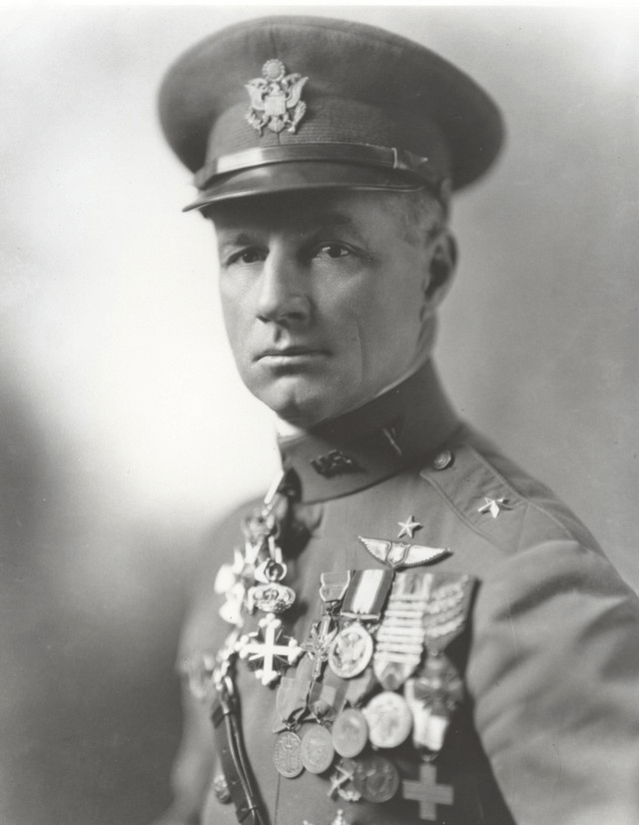
In 1921, U.S. Army Brigadier General William “Billy” Mitchell demonstrated what many considered unthinkable at the time: aircraft could sink battleships. Under his direction, Army-Air Service bombers successfully destroyed decommissioned warships — including the former German battleship Ostfriesland and the U.S. Alabama — during highly publicized bombing trials, proving that aerial bombs posed a genuine threat even to heavily armored capital ships.
But most naval and Army leaders refused to accept the implications. Despite these dramatic results, the Navy persisted in building more battleships. Indeed, many in the establishment insisted the era of the dreadnought — not that of the bomber — remained supreme.
By 1924, during an inspection tour of the Pacific and Asia, Mitchell had become even more outspoken. In a 323-page report, he warned that Japan would likely strike first — not with surface ships, but with aircraft — against U.S. holdings in the Pacific, including Hawaii and the Philippines. He even predicted a dawn attack on Pearl Harbor.
His warnings were dismissed. In 1925, Army and Navy brass court-martialed Mitchell for insubordination after he publicly accused them of “almost treasonable administration of the national defense” for clinging to battleships. He was forced out of the military, his career cut short.
Yet for all their certainty in steel-hulled ships, the military establishment soon found that the very thing Mitchell had warned about was not only possible — it was inevitable. On December 7, 1941, Japanese aircraft struck Pearl Harbor at roughly 7:55 a.m. — eerily close to the time Mitchell had forecast nearly two decades earlier — and launched parallel attacks on U.S. forces in the Philippines.
By then, it was tragically too late: the age of battleships had passed, and Mitchell’s prophecy — once scorned — had become history.
 Station HYPO
26 November 2025 at 23:56
And yet…we’ll continue to build surface ships, knowing full well that they’re even more prone to be sunk with modern weapons and satellite use showing their continual locations.
LikeLike
29 November 2025 at 02:29
I wonder to what extent H. G. Wells’ book, The War in The Air, published in 1908 might have influenced such visionaries as Billy Mitchell.
LikeLike