

The Intelligence Specialist (IS) rating in the U.S. Navy was created on July 26, 1975, as a merger of the former Photographic Intelligenceman (PT) rating (established April 10, 1957) and selected responsibilities that had previously fallen under parts of the Yeoman (YN) rating.
Historical Background
Photographic Intelligenceman (PT): This rating was established in 1957. Sailors in this role specialized in interpreting high-altitude aerial photographs, analyzing photographic reconnaissance to produce intelligence information.
Yeoman (YN): The Yeoman rating has long functioned as the Navy’s administrative and clerical workhorse. Among Yeomen, there was a specific Navy Enlisted Classification (NEC) — 2505, “Intelligence Clerk” — which provided Yeomen who were cleared for intelligence work the ability to perform certain administrative intelligence tasks.

After the Vietnam War, naval leadership undertook an occupational study that concluded the Navy would be better served by consolidating the PT rating and those intelligence-related Yeoman tasks into a unified rating: the Intelligence Specialist. The change was intended to streamline training, increase performance efficiency, and provide clearer career paths for Sailors working in naval intelligence.
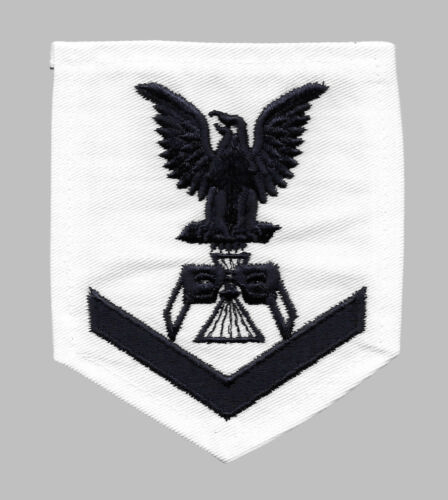
Training and Badge / Insignia
- The PT badge (for Photographic Intelligenceman) featured a symbolic hourglass that represented an image seen through a magnifying glass. That emblem underscored the role’s emphasis on detailed photographic interpretation.
- After establishment of the IS rating, new training pipelines were put in place (“A” school and subsequent technical training). Initial “A”-school for IS was conducted at Lowry Air Force Base, Aurora, Colorado, until the mid-1980s. Lowry had been a joint training center for intelligence and photographic interpretation courses.
- The “A” school was later moved to the Navy Marine Corps Intelligence Training Center (NMITC) at Dam Neck, Virginia. This became the permanent site for basic IS training, after which more specialized follow-on training (“C” school) is given.
Duties and Role
Intelligence Specialists manage and analyze classified military information concerning adversaries and potential adversaries. Their mission is to transform raw data into usable intelligence to support planning and decision-making at strategic, operational, and tactical levels. Their responsibilities include:
- Gathering, sorting, and evaluating multi-source intelligence (photo, imagery, human source, electronic etc.).
- Preparing and presenting intelligence briefings and reports for commanders and mission planners.
- Producing planning materials: map overlays, photographic mosaics, graphics, composite imagery, charts, and the like.
- Operating with intelligence systems, maintaining databases, libraries, and intelligence files — both ashore and afloat.
Modern Details and Requirements
- The Navy uses the Enlisted Manning Code (EMC) B600 to identify the IS rating.
- IS training has two major phases: an “A” School (basic technical and rating fundamentals) followed by “C” school, which provides more specialized skills. These are located at Dam Neck, Virginia.
- Physical and administrative qualifications include: U.S. citizenship, ability to obtain and maintain a Top Secret / Sensitive Compartmented Information (SCI) security clearance, normal color vision (or correctable), and good performance in written and ASVAB (Armed Services Vocational Aptitude Battery) requirements.
Legacy and Significance
Since its establishment in 1975, the IS rating has become a cornerstone of naval intelligence operations. The creation of this rating reflected the Navy’s recognition of intelligence as a warfighting discipline requiring professional expertise.
From the Cold War to the present day, IS Sailors have provided critical intelligence support for operations ranging from strategic nuclear deterrence to counterterrorism and humanitarian assistance. The rating continues to evolve alongside emerging domains such as cyber, space, and unmanned systems intelligence.
 Station HYPO
Leave a comment