
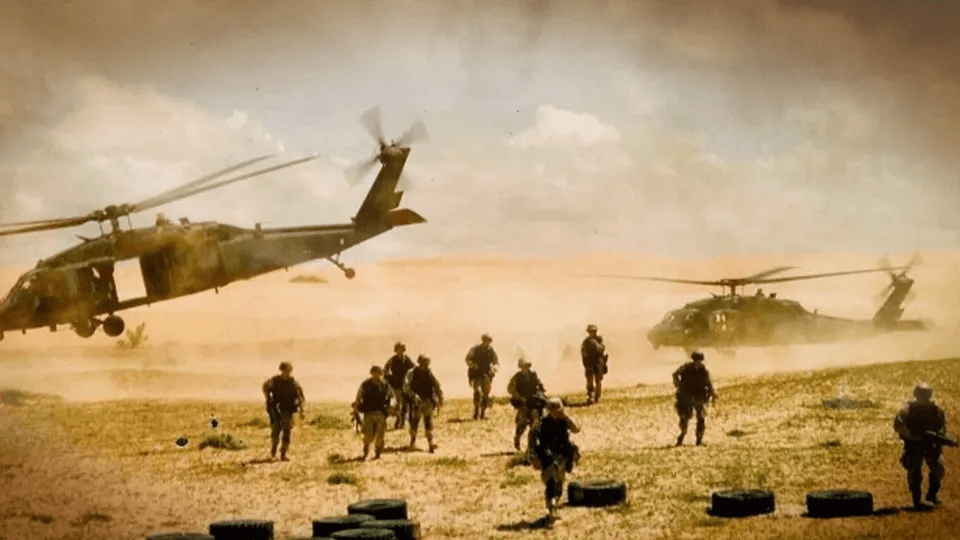
The Battle of Mogadishu, fought on October 3–4, 1993, remains one of the most intense and heroic engagements involving U.S. forces since the Vietnam War. The battle took place in Mogadishu, Somalia, during Operation Gothic Serpent, a mission launched by U.S. and United Nations forces to capture Somali warlord Mohamed Farrah Aidid and stabilize the region during a time of famine and civil unrest.
Background
In 1992, Somalia was ravaged by famine and violence as rival clans fought for control after the fall of dictator Siad Barre. The United Nations initiated Operation Restore Hope, a humanitarian mission to deliver food aid. However, warlords like Aidid began attacking UN peacekeepers and stealing supplies. When 24 Pakistani peacekeepers were killed by Aidid’s militia in June 1993, the U.S. took direct action. The elite Task Force Ranger—composed of U.S. Army Rangers, Delta Force operators, and helicopter crews from the 160th Special Operations Aviation Regiment (SOAR)—was sent to capture Aidid’s top lieutenants.
The Mission
On the afternoon of October 3, 1993, Task Force Ranger launched a daylight raid into the heart of Mogadishu to capture two of Aidid’s lieutenants. The plan was expected to take less than an hour. Supported by Black Hawk and Little Bird helicopters, about 160 American soldiers descended on the city from a base on the outskirts.
The operation began successfully—the targets were captured—but events quickly spiraled out of control when Somali militia forces and armed civilians swarmed the area. Within minutes, a rocket-propelled grenade (RPG) struck a UH-60 Black Hawk helicopter (call sign Super 61), sending it crashing into the city. A second Black Hawk (Super 64) was later shot down as U.S. forces attempted to secure the first crash site.
The Battle
What was meant to be a one-hour mission turned into an 18-hour firefight as American soldiers found themselves surrounded and outnumbered—facing thousands of heavily armed Somalis. The city’s narrow streets made it difficult for armored rescue convoys to reach them, forcing Rangers and Delta operators to fight block by block.
Despite overwhelming odds, the soldiers displayed extraordinary courage. Rangers formed defensive perimeters to protect their wounded, while helicopter pilots provided close air support under intense fire. Delta snipers Master Sergeant Gary Gordon and Sergeant First Class Randy Shughart volunteered to defend the crew of the second downed Black Hawk, Super 64, piloted by Chief Warrant Officer Michael Durant. Knowing reinforcements could not reach them in time, Gordon and Shughart fought off advancing militia until they were overrun and killed. Their sacrifice saved Durant’s life; both men were posthumously awarded the Medal of Honor—the first since the Vietnam War.
Casualties
By the time the battle ended the next morning, 18 American soldiers were killed and 73 wounded. Estimates of Somali casualties vary widely, ranging from several hundred to over a thousand killed and many more wounded. The bodies of several U.S. soldiers were dragged through the streets by mobs—an image that shocked the American public and led to questions about U.S. involvement in Somalia.
Aftermath and Legacy
Following the battle, President Bill Clinton ordered the withdrawal of U.S. forces from Somalia by March 1994. The battle profoundly shaped American military policy, emphasizing caution in humanitarian interventions and the importance of clear objectives and exit strategies.
The events of October 3–4, 1993, were later immortalized in the 2001 film “Black Hawk Down,” based on journalist Mark Bowden’s bestselling book. The story remains a testament to the bravery, brotherhood, and sacrifice of the soldiers who fought in Mogadishu.
 Station HYPO
6 October 2025 at 09:30
And now we have Somalis everywhere in the States…including Congress…..thanks to our Politicians…..
LikeLike