

Man has always felt that he was in control. He has felt confident that he can control the elements and has conquered nature. Yet time after time nature has proven him wrong. It is said that “Eternal vigilance is the price of Freedom”. It can also be said that Eternal vigilance is the price of safety – be it in your homes, on the roads, or in the workplace.
Complacency can extract a terrible price from those who are lulled into its relaxed, comfortable grasp. Ours is not the first accident wherein a terrible cost in human life has been paid – history is replete with examples which, with the wisdom of 20/20 hindsight, beg the question: “Why did this accident have to happen?”
While preparing notes for this publication, people interviewed who had been at Kamiseya before the fire told one story when asked about fire drills and evacuations. Those stationed at Kami after the fire told a very different story.
Never in the history of the Naval Security Group – before or since – has tragedy struck so swiftly or with such lasting alterations to the basic way we do business. Over one terrible night, years of mindset were washed away. With the light of day came the realization that the only priority, the only course of action, the only thought when a fire alarm sounds is – GET OUT! Now we do not stop for hats, jackets, to lock safes, or anything else along the way. Evacuate the spaces is the only order of the day and do not re-enter a structure until it is declared safe by competent authorities. We also learned a hard lesson in housekeeping that night. Blocked exits became unblocked. Locks and chains on exits were removed and replaced with what we now call panic hardware. Exit signs were posted, emergency lighting installed and fire drills were held. We, all of us in the Security Group, learned a new way of doing business. The base was shocked and devastated. Heads hung low and confidences were shaken.
The base chapel was too small to hold the mourners at the memorial service held on Monday, 27 September. The service was moved to the base theater.
After the flames were extinguished, after the smoke cleared and after the losses totaled it fell to Captain Pearson to summarize the fire in a standard report to Washington.
Following that report a Court of Inquiry was held: evidence was presented, testimony given and, in the end, findings and recommendations given.
But first, and on a much more personal level, families had to be notified. Telegrams were sent with the dreaded words “I deeply regret to inform you . . . .” Arrangements were made and efforts coordinated as remains were escorted back to 12 families in hometowns across America. Follow-up letters were sent. Shock, surprise, concern and questions were expressed at all levels of the government: all the way to the White House.
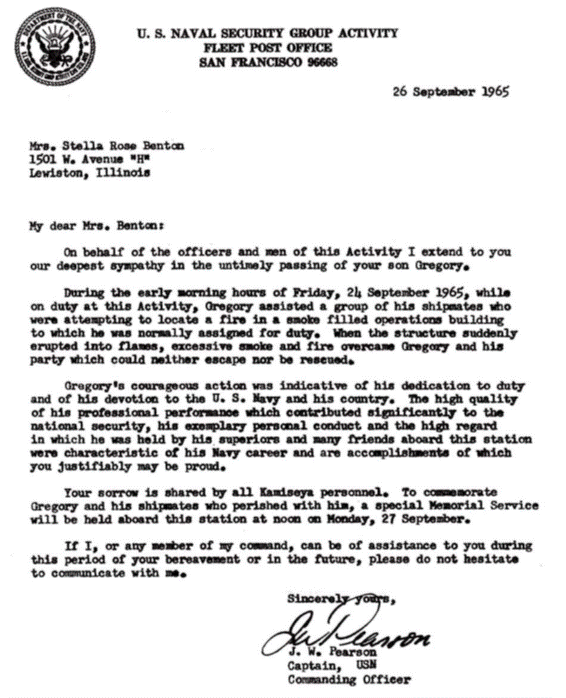

Source: US NCVA Special Publication, Kamiseya 40th Anniversary Fire Memorial
 Station HYPO
19 September 2025 at 10:11
The sad part is, they had all gotten out safely and a Lt decided to take a group back in to fight the fire.
LikeLike