

By Phil Hogan
There was a disastrous fire in the Operations Complex on the night of 23-24 September 1965. The Fifth Division (Fleet Support) spaces were located on the second floor directly above the source of the fire. They occupied a large section of the second deck of the building and maintained a 24-hour watch posture. I believe this deck was shared with the Fourth Division (Processing and Reporting), a section of “T” branchers, and others.
Fifth Division personnel saved and secured as much classified material as possible. They then exited the burning building via an outside stairway at the end of the building. Everyone from the Operations Complex was evacuated unharmed. The Japanese fire department arrived on the scene but were not allowed access to the building for security reasons. A makeshift fire team was assembled from the evacuated on watch personnel. Sailors manned the hoses, entered the burning building and began fighting the blaze. The second floor {of Building 25} collapsed on them and they were trapped. Twelve young men perished in the accidental fire. Many more were hospitalized. The fire gutted the whole building and damaged the adjacent Quonset huts. When I arrived on the scene, I was very relieved to learn the entire Fifth Division watch section survived.
As I recall, it was first thought the incinerator was the source of the fire. I was concerned because my division had used the incinerator. I understood the actual cause of the fire was later determined to be an electrical problem somewhere on the first deck. I never had the opportunity to read the official report. This version is the way I remember hearing about what took place.
Because of the tragic deaths of so many young Sailors, a team arrived from Washington, D.C. to investigate the fire. Captain Pearson hadn’t been the Commanding Officer for very long but, as I recall, he received a Letter of Reprimand. I cannot remember any fire drills or firefighting exercises being conducted since I reported onboard back in May of 1964. Many of us thought the previous Commanding Officer should have received the reprimand.
In May of 1967, I left Kami Seya bound for Headquarters on Nebraska Ave., Washington, D.C.
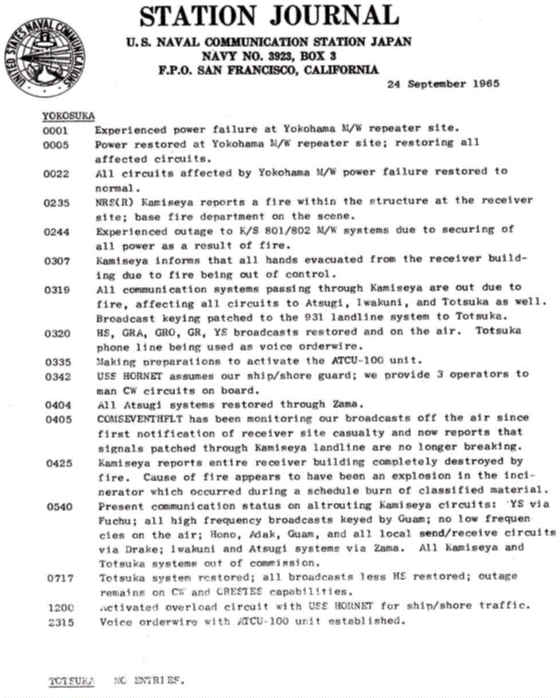
Source: US NCVA Special Publication, Kamiseya 40th Anniversary Fire Memorial
 Station HYPO
Leave a comment