

By Norman Klar
I was ordered to Taiwan as the Officer-in-Charge of the U.S. Naval Security Group Activity. I had additional duty (ADDU) as the Cryptologic Advisor to USTDC (Taiwan Defense Command) and technical advisor to, as well as a member of, the J2( Intelligence) Staff Indications Center. I received four separate unclassified Fitness Reports throughout the tour with duties listed as follows: 1) USTDC-To help in combined and/or joint operations to assist U.S. and GRC forces defend Taiwan and the Penghus, and if directed assisting in defending the GRC held offshore islands. 2) Headquarters Support Activity (HSA) – Our administrative command. 3) CINCPACFLT -To perform Naval Security Group functions as directed by CNO and by CINCPACFLT 4) DIRNAVSECGU – For performing NavSecGru functions.
When we arrived at Sungshan Airport in Taipei and were checking in, we noticed photographs on the wall of venomous snakes and warnings about the danger they posed. Under the picture of each snake was a description and the type poison each spewed out. The number of minutes or hours left in your life if bitten was also listed. Among them was the Taiwanese cobra and the scariest – the ‘Hundred Pace Snake’ (Agkistrodon Acutus). If bitten, you couldn’t walk more than 100 steps before you bought the farm. It kind of deflated our marshmallow view of the fairy tale existence we wished to experience.
In June I was still a LT and at least one grade junior to my counterparts. It would be another month until I would make LCDR. I reported in to USTDC and paid my respects. I was introduced to all the “J’s, (J1, J2, etc), and met with my NSGA admin staff in Taipei. The Activity consisted of me, my AOIC, administrative staff and ‘Interpretive Unit’ (part of the J2 Indications Center) in the TDC building in Taipei, and the Operations people up the mountain at the ShuLinKou Air Station. There were ((number of)) Officers and about ((number of)) enlisted (including ((number of )) CPOs). The Army and Navy had detachments at the USAF Security Service Base at ShuLinKou. We were both tenants and the Air Force was the host. While I was being toured at USTDC, my family was being whisked around town by Wives Club members.
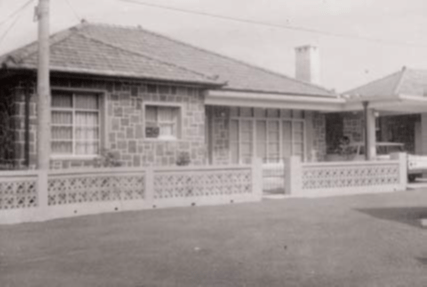
We got housing in T’ien Mou (a suburb of Taipei) at 108-9 Lan Ya Li. It was a very nice brick house with a ‘wanna-be’ protective fence around it. The house was one of many in a compound almost completely inhabited by U.S. service personnel and their families. It was a ten minute drive to central Taipei. Each family hired their own security guards, since crime was rampant. We hired a very professional guard. He had a guard dog and stayed in our carport all night every night. It was a common occurrence to wake up in the morning, go outside and see a pile
of feces on the welcome mat by our front door. That meant that a break-in attempt by thieves was unsuccessful and, to show their contempt for you, they defecated in front of your house. One night, they poisoned our guard and his dog. The dog died and our guard was taken to the hospital with food poisoning. To his credit, he remained on the job until morning. He lived, but couldn’t work for a long time. We got a replacement the next night and the next morning there was the by now expected ration of feces on our welcome mat.
We also had a maid, a gardener, and a teen-aged companion for my son Jim (aged 1 year) named Yokechan. She spoke almost no English. When an airplane flew overhead, Yokechan would say: “Rookie, Dzim, YAPRIN”. It took us a while to comprehend what they was saying in general, but finally understood “Yaprin” when Jim would point to a plane in the sky. Jim spoke Chinese before he spoke English and would stand up and sing the Chinese Nationalist National Anthem whenever he heard it being played. Daughters Kathy and Cindi were Brownie Scouts and wife Renee was den mother. Occasionally, when we had a rare family day together, we would wander the streets of
Taipei and take in Chinese operas performed on the street free of charge for any and all who cared to watch.
Our house parties and birthday parties for the kids most often were ‘Mongolian Barbecue’ parties. We all loved Mongolian barbecue parties. The entire entourage of barbecue cookers and all their accoutrements were brought to our house. Many kinds of raw meat (lamb, beef, pork, goat), vegetables (green peppers shredded cabbage, carrots, onions, peppercorns, garlic, ginger root, scallions or leeks and bean sprouts), sauces, peanut oil and garnishes were displayed and guests selected as much of each as they desired. It was then cooked in their presence with a flourish of meat and stuff flipped into the air with chopsticks on the grill. It was great fun, very tasty, and quite inexpensive. Many years later, whenever my daughter Cindi went to Taiwan on business, she would seek out Mongolian restaurants and “pig out” on the barbecue.
One of my wife’s main thrills was going shopping in “Haggler’s Alley”. Most foreigners went there to bargain hunt.
It was expected that the prospective buyer would haggle with the seller. That was the game you played. Renee knew a few words in Mandarin Chinese, such as “yes” “no” “how much” and numbers 1 through 10 and by tens to 100. Once when I accompanied her, she haggled in Chinese to impress me. The conversation went something like this:
Renee: How much?
Seller: 50 Chinese dollars.
Renee: No. 60 Chinese dollars.
Seller (startled): No. 50
Renee: No. 70.
Seller (seeing the light): No.80.
Renee: No. 90.
I asked if I could intercede before she gave away the children’s inheritance. No, she insisted, I can handle this myself. When the price got to 200 Chinese dollars, I did intercede and told them both to recommence negotiations in English. I repeated that in Chinese to the seller who decided it was better to haggle once from 40 to 50, while my wife said 60 and it was all overas was her using her nascent Chinese language skills in haggling.
The three Officers-in-Charge at ShuLinKou were AF LtCol. Fitzgerald, Army Major Stan Koslowski (I think he later became a Brigadier General) and me. My AOIC was Chapman Lam. He had been in Kami Seya with us six years earlier. He spent almost all his time at USTDC. When he retired from the Navy in Hawaii years later, I am told that he became a TV personality.
I spent at least half a day at ShuLinKou. It was about a one hour ride up the mountain to get there and was a couple of miles past a Chinese army base in the mountains. My operations officer, Lt. John Dickey, was an exceptional briefer. He used to “wow” visitors with his presentations and have NSGA come off looking really good with cleared dignitaries who heard his briefings.
We had Visitor’s Guide Booklets printed for all visitors. The Title was: “Welcome to Taiwan and The Naval Security Group Activity, Taipei. VISITOR’S GUIDE” The booklet contained transportation information, key phone numbers, instructions on telephone usage, O Club, Navy Exchange, Embassy Shop, Hospital, MAAG theatre, Church Services, and useful Chinese words. Among the items of interest in the booklet was:
“Local water is not fit to drink or for use in brushing teeth. Drinking the local water usually results in stomach cramps, mouth sores and diarrhea. Hotels provide small containers of distilled water for drinking and brushing teeth. Potable water is available at USOOMT (US Officer’s Open Mess Taiwan) and in the military compounds.”
I had a budget but no DKs (Disbursing Clerks) assigned and no supply officer. My AOIC and one of the CT “A” branchers handled the budget for the activity. I almost got in trouble sometime in 1964 for unwittingly trying to use funds from one grouping for other expenditures, and requested assistance from the CO at Kami Seya. He sent me his DK on TAD to help straighten things out. The DK explained how it should be done and how to requisition things and helped make out our annual budget.
1963 was not a particularly good year. In July, Typhoon Gloria hit Taiwan. It was the most devastating typhoon to have ever hit Taiwan up to that time. We were expecting a typhoon and took our normal precautions, boarding up all the windows, keeping furniture away from windows, being especially careful of the backlash after the eye had passed-because the backlash yielded much damage. What we got was totally unexpected. Downtown Taipei was deluged. It was under water for days. The Officer’s Club was totally immersed. Personnel working at the club were rescued from the rooftop of the USOOMT building. The Commissary was all but wiped out. All food was contaminated and fresh food had to be airlifted in to Taipei. We had people aboard ship on TAD and tried to check up on their wives and families (four) who lived in Taipei. Tien Mou was on high ground, but once you approached the outskirts of Taipei, all you saw was water. Chapman Lam and I were given tetanus shots and took a canoe and paddled through the streets of Taipei until we visited all four wives and their families. It was a harrowing experience, seeing our dependents in their horrible predicament. We immediately wired their husbands aboard ship that their families were fine. Chiang Kai Shek ordered Emergency conditions, and I believe some of his engineers eventually opened water/canal locks to help the water ebb.
When the water receded and food was arriving, wives waited in line for hours in the mud at the by now putrid commissary grounds for bread, milk, eggs and other necessities. Renee and a number of other wives fainted from the heat and slime and were taken to waiting ambulances to be ministered to. It was a terrible disaster and it took weeks to resume normal activity in Taipei.

The most tragic event was the assassination of President Kennedy. Memorial Services were held on 30 November 1963. We wore our Dress Uniforms and wives and many dignitaries both Chinese and American attended the services. The eulogy was delivered by The Honorable Jerauld Wright, U.S. Ambassador to Taiwan.
Renee and other wives of SI (Special Intelligence) personnel were able to travel off island to places like Hong Kong and the disputed offshore Chinese Nationalist held islands of Quemoy and Matsu. SI cleared personnel were not permitted (due to fear of capture, interrogation, and possible divulging of sensitive intelligence under duress). The wives could visit Quemoy and Matsu every other day of the week. The Chinese nationalists and Chinese Communists shelled each other on alternating days. Communists would shell the islands one day and Nationalists would shell the mainland the next day. Wives visited on nationalist shelling days and watched the shelling of the mainland through binoculars provided by the military officers.
My wife went to Quemoy with other Wives Club members on 26 May 1965. The “Itinerary” provided by the Kinmen (Quemoy) Defense Command included an 0940 welcome at the airfield, briefings, visiting the Psychological Warfare Center and the gun positions There was Lunch and a tour of the “high grounds”, Kinmen City and Ku-Kang Lake. They flew back to Taipei at 1430. That part of the Chinese nationalist/communist ‘war’ was very civilized/scripted.
All the Clubs booked great talent. We had the Ink Spots (we got up at 5AM to wait in line in front of the O Club for tickets), the Mills Brothers, and many other well-known entertainers. One of the favorites in Taipei was Joe Wolverton, who performed very often. He played the guitar and wrote a song he called “Wolverton Mountain.” The song became our official ‘line dance’ and he would conclude all his performances with that rendition. Later, on a flight to Japan on Navy business, I found myself sitting next to Joe Wolverton. I expressed my admiration for his music, and he explained that he island hopped, performing at “O”, “NCO” and “EM” clubs throughout the Far East on a rotating basis.
The traffic in Taiwan is chaotic and intimidating at best and dangerous at worst. Drivers operating motorcycles and scooters make the situation doubly dangerous. Taiwan has one of the highest road death rates in the world. The road system is not well marked and obviously most road signs are written in Chinese, so foreigners with no knowledge of the language are at a serious disadvantage. The traffic lights were humorously referred to as:
Green-Go
Yellow-Go even faster
Red: Proceed with caution but keep going.
A terrible story told to us American military as part of indoctrination when we first arrived was that it was cheaper for a Taiwanese driver to kill someone than to pay medical bills for the injured person. One tale was that a gravel truck once hit a pregnant lady. She was badly injured. The driver, knowing he would have to pay her medical costs, backed over and killed her. He then had only one death payment to make rather than continuing medical bills.
I was called into the Headquarters Support Activity (HSA) Hospital about 0100 hours one morning by the head nurse and told that one of our CT1’s had been in a serious automobile accident. I got to the hospital and joined the doctors and nurses who indicated they had to amputate his left arm. He had been drinking and driving along a highway with his left arm hanging out the window. A truck with no headlights was coming from the other direction and partially severed his arm as it sped by. I stayed in the hospital all night while they operated and during his post-operative period. I saw him wake up that morning and when he saw me sitting there, he realized what had happened. Consoling someone after a shock like that is quite difficult. I asked the nurse to call a chaplain to be with him after I had to leave later that afternoon.
One of the many bad habits of Taiwanese drivers (especially truck and taxi drivers) is to drive at night without headlights. They think they’re saving on batteries or something, but they tear along the highways at high speeds and you can’t see them. Unless you have your windows open you can’t even hear them coming. One night after my wife and I hosted a party at the USOOMT, we were driving home. We stopped at a red light about halfway to Tien Mou. When the light changed, and I drove into the intersection, the driver’s side (my door) was smashed into by a lightless speeding taxi. My car spun around a few times and smashed into a power pole causing power outages in much of the area. Renee leaped out of the car screaming. I had to crawl out on her side. The car was totaled, and, as was the case then, was later towed to the Headquarters Support Activity (HSA) compound and put on display with other recently totaled automobiles over a sign that read “Don’t let this happen to you.”
In Taiwan, the law is this: If you (a foreigner) are involved in an automobile accident, you are automatically 50% at fault before the hearing/trial ever begins. The reasoning is that if you were not in their country there would not have been any accident. Since you are in their country you bear at least ½ the blame in a 2-car accident and usually closer to 100%. Up until my accident, USTDC policy was to use Chinese lawyers to represent the US military person (who did not even appear in court) and pay whatever fine was assessed. For some reason, the Legal Officer talked the Admiral into letting me (a Chinese speaker) appear in court with a Chinese lawyer who worked for USTDC. It was a first.
As expected, the cab driver vilified me, and American drivers in general, for thinking we owned the road. He swore he honked his horn to warn me, but that I disregarded his horn tooting and sped ahead, causing the accident. My lawyer cross examined, but couldn’t get him to change his story. When it came time for the panel of judges (three, I think) to ask my lawyer if I wished to speak, I stood up and said in my most honorific Chinese something like:
“Begging your honorable pardons, but that person is lying. He did not use his horn. My wife still is not doing well in her mind since the accident. My three children are saddened by what happened. I hesitate telling you again, but he (pointing my finger at the taxi driver) is not speaking the truth. I speak the truth. Thank you and pardon my poor attempt at your beautiful language.”
The taxi driver was shouting that I was lying. One of the judges said: “You lie. American speaks the truth. You are guilty. The American is innocent.” What an experience! The military at USTDC and HSA were all thrilled that an American was finally found not guilty in an automobile accident case.
As an OIC I was invited to the very private and secretive Chief’s Initiations, when one of our CT1s was promoted to CTC. I went to some pretty raunchy initiations. The funny thing is that the CPOs said they were on their best behavior because I was there. They must have really held wild parties when there was no officer present.
Others of my administrative duties were having promotion ceremonies for any of my sailors, holding inspections weekly, and holding “Captain’s Mast”( Article 15) for any alleged violators of UCMJ. In that vein, I received an e-mail from one of my sailors almost forty years later reminding me of one of my Article 15 sessions, as follows:
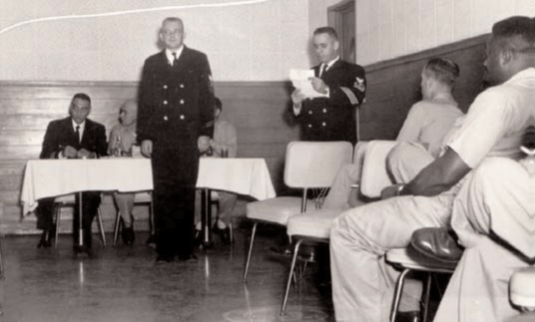
Chief’s Initiation
“Commander:
I’m sure you won’t even recognize my name, but I saw your posting on the subject web page and was prompted to drop you this note. Back around 1964, as a very young 2nd class R brancher at ShuLinKou, I managed to get myself into some trouble while on liberty one night. I had to come before you for Captain’s Mast. Your actions at that time played a major role in the direction my life eventually took. You gave me a suspended bust…..could have been much worse. Had made up my youthful mind that if I received severe punishment, I would simply get out after my first enlistment, go back to West Virginia and do who knows what for the remainder of my life. The suspension was a firm warning, but it gave me a break. It was the wake-up call I needed at that particular time in my life. I eventually reenlisted, made my way to CWO2 and retired in 1981. Had a wonderful, fulfilling and productive Navy career.
Thanks for that bit of help. Sincerely, One of the big events for NSG Taipei was the visit of the Director Naval Security Group. He was a brilliant man who was also rather taciturn. He smoked a pipe and rarely said much at social events. My wife and I hosted a party for him at our house and invited some bigwigs plus my officers and the ASA and AFSS heads. Throughout the evening, he stood by the fireplace smoking his pipe, with a drink in one hand and monosyllabically answered all questions put to him. The next day, after courtesy visits with USTDC and all the” Js” we went up the mountain to ShuLinKou where he received the standard tri –service briefing. When it was over and we sat in my office to discuss NSGA Taipei, I asked if he had any suggestions for improvement. He cleared his throat (not a good sign) and proceeded to discuss the VD rate in the US Naval Security Group. “Know who has the highest VD rate in the NavSecGru, Klar?” “No Sir” I said, sensing what he was about to say. “You do. Fix it.” With those words, he stood up indicating that the conversation was over.
Almost all my sailors and officers spoke Chinese, and when they went to a nightclub or lounge, they were the ones who got the girls (and apparently the girls’ diseases). I tried to do something about it after his departure, and while the rates of VD declined, I still imagined my legacy in the NAVSECGRU ledgers to be “Klar* – * Look under VD.”
In January 1964, the much feared Doctor ((…)) arrived with an entourage including his wife and other wives, NSA’s head of B group-who later became Deputy DIRNSA, the Director of PROD at NSA, and others. Dr. ((…)) was the Assistant Secretary of Defense for Electronic Intelligence and a very powerful figure who believed that NSA was directing its resources improperly and wastefully. He and his group were touring various SIGINT locations. Agroup of high-ranking officials (Chinese and American) and their wives met the aircraft late one afternoon. The host for the visit (since it was NSA sponsored) was NSA Pacific Taiwan (NSAPAC Taiwan), Paul Kosatka. He and his wife hosted all the events. The ShuLinKou OICs and their wives were included in all events. Dr.((…)) was very short and spoke with a thick foreign accent. He was also very opinionated in his official capacity, but comparatively nice in a social atmosphere.
I had my Ops officer lined up to give the NSGA portion of the tri-service briefing at ShuLinKou. Since we were the smallest tenant on the base we went last. AFSS led off and their briefer was constantly interrupted by Dr.((…)) and belittled for not knowing the answer to minor questions such as how much a certain part for an antenna we were using cost? When the briefer said he would find out and have the answer in five minutes, Dr. ((…)) exploded and opined that if he didn’t know the answers he should not be briefing. One of the accompanying NSA muckymucks tried to intercede and was bluntly told: “Shut Up. I wasn’t talking to you.” Next came the ASA briefing and their Ops officer fared no better. He was similarly belittled. My Ops Officer then stood up and dazzled the good doctor. He knew the answer to every question, and if the question dealt with C/A or T/A, devolved to me. At the conclusion of the briefing, Dr.((…)) nodded approvingly to our briefer. “Now that’s the kind of briefing I expected from all of you. Nice Job young man.”
On 1 May 1964, my wife and I (in my dress whites) along with all dignitaries in Taiwan attended President and Madame Chiang’s Annual Tea Party. We had received written instructions in the mail as to how we were to act. A portion of the detailed instructions read:
“1. Ceremony:
a. Guests will form prior to 1600 hours at the entrance to the National War College Auditorium, Yangminshan (Grass Mountain). Guests will pass through the first reception line composed of the Presidential Secretary General and other GRC officials from 1600-1630 hours.
b. After passing through the first reception line, the guests will immediately proceed to the auditorium, line up according to rank, and move upstairs at 1630 hours to meet the President and Madame Chiang and the Vice President and Madame Chen.
c. After passing through the second reception line, guests will move into the garden for refreshments. The President will grant audience to a selected group of personnel in the garden at 1700 (or, in the auditorium in the event of inclement weather). All guests are requested to remain until the President and Madame Chiang depart at about 1730 hours.”
The biggest, most grandiose, event in Taiwan is SHIH SHIH (10 10 ). This is a holiday celebrating Independence on the 10th day of the 10th month (October). The CHINATS impressively display their military might with daylong parades, fly-bys, marches and banquets for honored guests. The US military officials wear their dress uniforms, wives are all dolled up, and a good time is had by all.
On 13-14 December 1964, LtGen. Gordon Blake, DIRNSA, and his wife visited the island. Again, NSAPAC Taiwan hosted his visit. His party included eight other military and civilian personages. We had dinner at the Grand Hotel on the evening of the 13th. On the 14th, we all accompanied DIRNSA on his courtesy visits to USTDC and I helped give him the J2 Intelligence briefing. DIRNSA then paid courtesy calls at MND (Ministry of National Defense), meeting with Chinese Generals, and the US embassy. They were briefed by us at ShuKLinKou, had lunch, and then went to another Air Force briefing and their party departed for Okinawa at 1800. It was a very hectic schedule during a one and a half day visit.
I received orders in Sept 1965. My replacement and his family arrived in September. We had our required turnover and a slew of welcoming parties for him and family. On 22 September, I took off for Travis AFB, California aboard a MATS flight. Once again, I was headed to NSA for duty.
Source: CRYPTOLOG, Winter 2005
 Station HYPO
18 August 2025 at 18:09
Remember fondly a trip to Taipei in 1962/1963 while attending Kubasaki High School on Okinawa. Dad (CTRC Dick Sansom) was assigned initially to Futema Naval Radio Station and then to Hanza after the first Wulley was built. Our basketball team would fly over to Taipei for a game or two with local DOD Schools and then spend a day or so traveling around the city. Boy do I remember the Mongolian BBQ’s! As a young teenager with two hallow legs, I really chowed down. Also recall the book store where you could get super deals on all sorts of books because they didn’t observe copyright laws. Fun times, fond memories.
LikeLike