
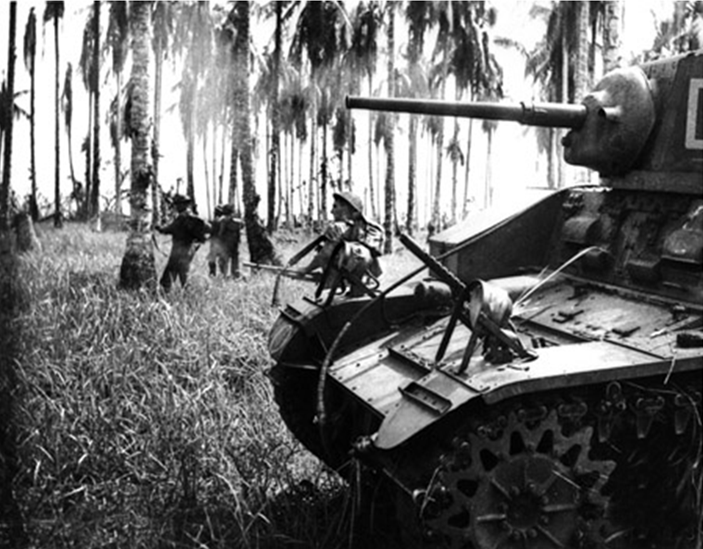
The use of high-quality Communications Intelligence (COMINT) was crucial in aiding the decision making process for military operations in New Guinea in July 10, 1944. New Guinea was a critical battleground in the Pacific Theater of World War II and the outcome of the conflict there would greatly impact the overall war effort.
COMINT was a term used to describe the interception and analysis of enemy communications in order to gain valuable insights into their activities, intentions, and capabilities. The intelligence obtained through COMINT was essential in providing the Allied forces with a significant advantage on the battlefield.
In New Guinea, the US Army’s Signal Intelligence Service (SIS) was tasked with providing COMINT support to the military. The SIS had a well-established network of listening posts and monitoring stations throughout the region, which allowed them to intercept and analyze a large volume of enemy communications. This information was then translated, evaluated and disseminated to the relevant military commands.
One of the major benefits of COMINT was that it provided the Allies with real-time information on enemy movements and deployments. This allowed them to better anticipate and respond to Japanese tactics, and also to better plan their own operations. The information gathered from COMINT also allowed the Allies to confirm or deny their own suspicions about enemy activities, which was crucial in making informed decisions about military strategy.
Another advantage of COMINT was that it allowed the Allies to assess the effectiveness of their own operations. By monitoring Japanese communications, the SIS was able to determine the impact of their bombing and sabotage operations on enemy facilities and troops. This information was then used to make adjustments to the Allied strategy and tactics to maximize the effectiveness of their operations.
One particularly important example of the impact of COMINT on the outcome of the conflict in New Guinea was the Battle of Buna-Gona. In this battle, the Allies were able to successfully encircle and isolate the Japanese forces due in part to the intelligence provided by COMINT. The Allies were able to determine the strength and composition of the enemy forces and their logistical support, which allowed them to plan their operations accordingly. The outcome of the battle was a decisive victory for the Allies and marked a turning point in the conflict in New Guinea.
Overall, the use of high-quality COMINT was vital to the decision making process for military operations in New Guinea in July 10, 1944. The intelligence provided by the SIS allowed the Allies to make informed decisions about military strategy, respond to enemy tactics, and assess the effectiveness of their own operations. The impact of COMINT on the outcome of the conflict in New Guinea highlights the importance of investing in intelligence gathering and analysis in times of war.
In conclusion, the use of high-quality COMINT played a significant role in the Allied victory in New Guinea in July 10, 1944. The information gathered and analyzed by the SIS was essential in providing the military with a significant advantage on the battlefield and in helping to make informed decisions about military strategy. The success of COMINT in New Guinea serves as a testament to the importance of intelligence gathering and analysis in modern warfare.
Multiple Sources
 Station HYPO
Leave a comment