
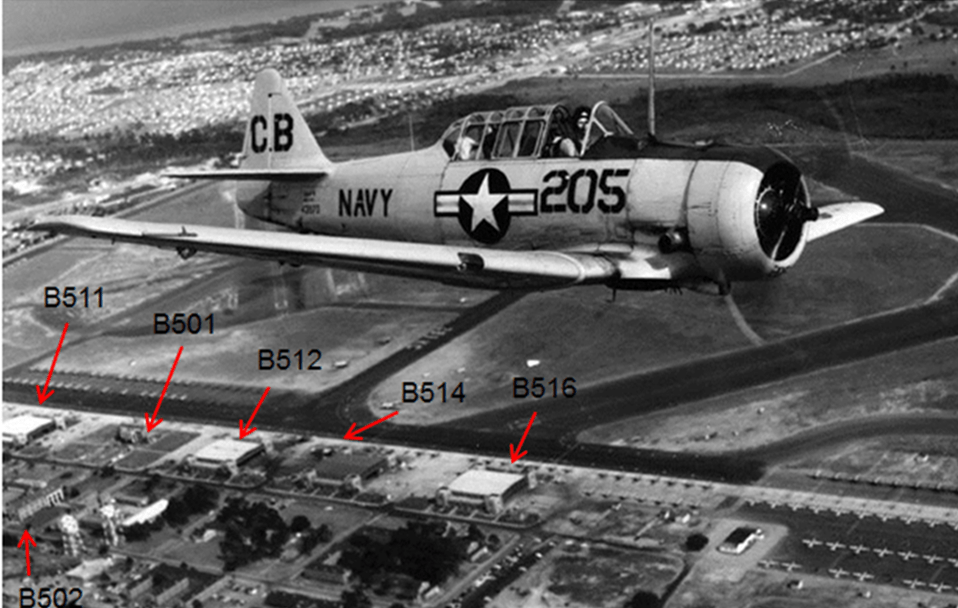
The Battle of Midway, fought in June 1942, marked a turning point in the Pacific War. It was won through a combination of daring young pilots and the invaluable advantage of codebreaking. These pilots, trained at Naval Air Station Pensacola and its nearby outlying fields like NAS Corry Field, brought courage and skill to the fight that would shape the outcome of the war.
Average Age: The Youth in the Cockpit
Most of the U.S. Navy and Marine Corps pilots who flew at Midway were astonishingly young:
- U.S. Navy pilots: Usually 22 to 24 years old, having completed their training quickly as America rushed to meet the demands of war.
- U.S. Marine Corps pilots: Typically 23 to 25 years old, though a few pre-war veterans were in their late 20s or early 30s.
For example:
- Ensign George Gay, sole survivor of Torpedo Squadron 8, was 25 years old.
- Lieutenant Commander John C. Waldron, who led Torpedo Squadron 8 into the heart of the Japanese fleet, was 41—a rare older pilot among the predominantly youthful aviators.
Overall, the average pilot’s age was around 23–24 years, reflecting a generation of young Americans called to the cockpit in defense of their country.
Training at NAS Pensacola and NAS Corry Field: The Foundation of Naval Aviation
Every pilot at Midway began their journey at Naval Air Station Pensacola, established in 1914 and known as the “Annapolis of the Air.” NAS Pensacola provided the rigorous instruction that forged cadets into combat-ready aviators:
Training Sequence:
- Pre-Flight School: Ground school in aerodynamics, navigation, meteorology, and aircraft systems, alongside military discipline and physical conditioning.
- Primary Flight Training: Using aircraft like the N3N Canary and Stearman N2S “Yellow Peril”, cadets mastered takeoffs, landings, and basic maneuvers.
- Advanced Training: In aircraft like the SNJ Texan, pilots learned combat skills, instrument flying, formation flying, gunnery, and crucial carrier landings.
- Operational Assignment: Graduates were assigned to carrier air groups or Marine squadrons, training on combat aircraft like the TBD Devastator, SBD Dauntless, and F4F Wildcat before entering combat.
Corry Field: An Outlying Airfield with a Lasting Legacy
Just a few miles north of NAS Pensacola lay Corry Field—one of several outlying fields that supported the explosive growth of naval aviation during the war. Originally commissioned in 1923, Corry Field served as a primary and intermediate flight training site, where many Navy and Marine Corps pilots who fought at Midway learned their fundamental flying skills.
While today NAS Corry Station (as it is now known) is home to the Navy’s cryptology training, in 1942 it was a bustling airfield echoing with the roar of training aircraft and the determination of young aviators preparing to defend the Pacific.
Cryptology and Naval Aviation: Twin Pillars of Victory
Though Midway’s victory is rightly attributed to the valor of these pilots, it was also enabled by the brilliant work of Navy cryptologists who cracked the Japanese Navy’s JN-25 code. This intelligence allowed Admiral Nimitz to anticipate the Japanese attack and set a trap that turned the tide of the war.
Today, NAS Corry Station stands as a testament to this cryptologic triumph, training the Navy’s cyber and cryptologic warriors who continue to secure America’s advantage in the information domain.
The Enduring Legacy of NAS Pensacola and Corry Field
The story of the Battle of Midway is inseparable from the legacy of NAS Pensacola and Corry Field. At Pensacola, young men were forged into naval aviators who carried their nation’s hopes into battle. At Corry Field, they refined their skills on aircraft that would later challenge the might of the Japanese fleet. Today, Corry Field—transformed into NAS Corry Station—continues to serve the Navy, training the cryptologists who safeguard our secrets and secure our freedom.
Thus, from the dogfights of Midway to the digital frontiers of today, the intertwined legacy of Pensacola and Corry Field lives on—an enduring testament to the courage, skill, and innovation that define the U.S. Navy and Marine Corps.
 Station HYPO
5 June 2025 at 14:03
01T June 1961…first class of T-birds to graduate from Corry….Five of us….
LikeLike
6 June 2025 at 04:30
Glad to see the old photo of Corry Station, brings back memories.
I worked in Bldg 512 for two years, 1969-71.
Good Times…
// Dennis Skiffington, Hammond LA
//
LikeLike