
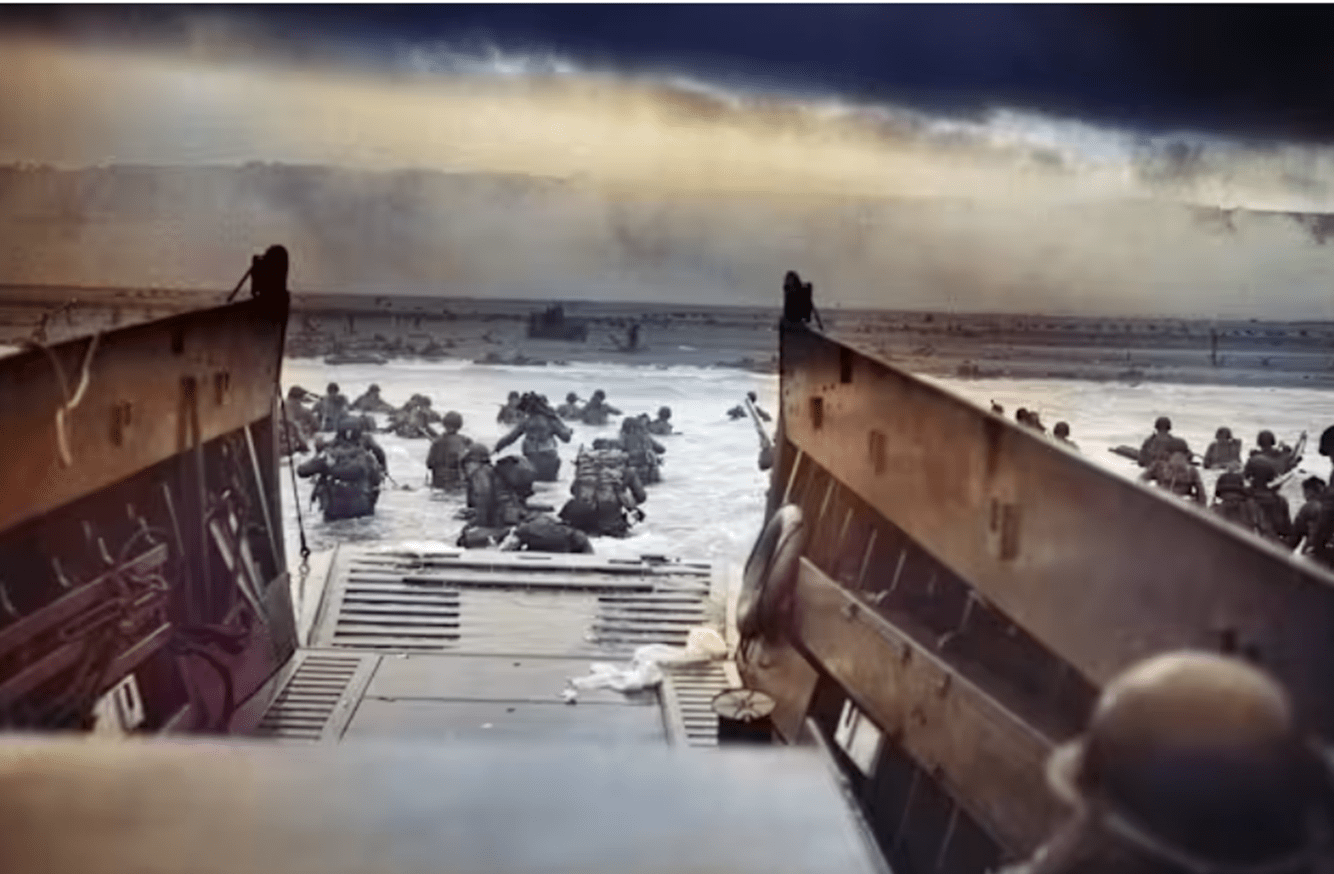
The military deception operation prior to the D-Day invasion in 1944 was known as Operation Fortitude. This elaborate plan was part of a larger strategy called Operation Bodyguard, designed to mislead the Germans about the exact location and timing of the Allied invasion of Western Europe. The deception was critical in ensuring the success of the actual landings in Normandy on June 6, 1944, by convincing the Germans that the main invasion would occur at Pas de Calais, the narrowest point between Britain and France, rather than in Normandy. Here are the key elements of the deception, including physical and communication techniques:
Physical Deceptive Techniques
Dummy Equipment and Infrastructure:
The Allies created dummy tanks, aircraft, and landing craft, which were placed in southeastern England to simulate the presence of a large invasion force preparing to cross the English Channel at Pas de Calais. These decoys were made from inflatable rubber and wood, and they were designed to appear real from aerial reconnaissance.
Fake Military Camps and Installations:
Fake camps, complete with tents, vehicles, and other military paraphernalia, were established to give the impression of a massive buildup of forces. These installations included fake oil depots and ammunition dumps, as well as dummy landing craft and other equipment.
Operation Quicksilver:
Part of Operation Fortitude South, this sub-operation involved creating a fictitious First United States Army Group (FUSAG), supposedly commanded by General George Patton. Patton was highly regarded by both the Allies and the Germans, and his association with this phantom army lent credibility to the deception. The Allies even created fake insignias, stationery, and organizational charts for this fictitious army group.
Communication Deceptive Techniques
Radio Deception (Wireless Traffic):
The Allies generated a large volume of fake radio traffic to simulate the communications of a massive invasion force. These messages were designed to be intercepted by German intelligence and included false orders, requests for supplies, and other routine military communications. The radio traffic was carefully crafted to match the patterns and styles of genuine military communications, further convincing the Germans of its authenticity.
Double Agents:
The Allies used double agents, most notably those in the Double Cross System, to feed the Germans false information. Agents like Juan Pujol García (codenamed “Garbo”) and others provided detailed, credible intelligence reports that supported the idea of an invasion at Pas de Calais. These agents had gained the trust of German intelligence over time, making their reports highly believable.
False Leaks and Controlled Leaks:
The Allies strategically leaked false information through controlled channels. This included planting misleading stories in the press and allowing certain information to be “discovered” by German spies in Britain. These controlled leaks were designed to reinforce the illusion of an impending invasion at Pas de Calais.
Outcome and Impact
The deception efforts were highly successful. The Germans, convinced that the main invasion would occur at Pas de Calais, kept a significant portion of their forces, including their best divisions, in that region even after the Normandy landings had begun. This strategic misdirection allowed the Allied forces to establish a strong beachhead in Normandy, which was crucial for the subsequent liberation of Western Europe.
References
- Ambrose, S. E. (1994). D-Day: June 6, 1944: The Climactic Battle of World War II. Simon & Schuster.
- Holt, T., & Holt, V. (2009). The Deceivers: Allied Military Deception in the Second World War. Skyhorse Publishing.
- Latimer, J. (2001). Deception in War. Overlook Press.
- Macintyre, B. (2012). Double Cross: The True Story of the D-Day Spies. Crown.
These references provide detailed accounts and analyses of the deception operations that played a crucial role in the success of the D-Day invasion.
 Station HYPO
5 June 2025 at 12:13
My Dad was in the 35th Infantry Division which went into Omaha Beach as part of Patton’s Third Army on July 6. Up until a few days before that they were still being trained for an opposed amphibious landing. I’ve never seen it discussed but I’ve speculated thatt an additional part of the deception was keeping the lower ranks at least, thinking that they were going to invade somewhere else.
LikeLike