
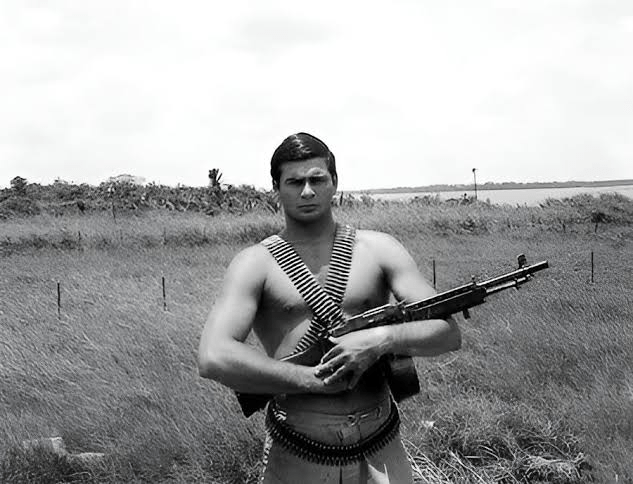
An Admiral at the Pentagon did not like the relaxed grooming standards enjoyed by SEALs. He told Marcinko he was coming down for a personal inspection. Marcinko directed his men to wear their dress uniforms with medals. Mike Thornton was the first man in line. He was wearing the Medal of Honor. At that time, Thornton was a Petty Officer. Years later, he retired as a Lieutenant. As soon as he entered, the O-8 saw Thornton. The Admiral saluted the Petty Officer. Flag Officers are smart. He knew immediately he had been set up. He called Marcinko aside and said: You are one clever SOB! The Admiral returned to the Pentagon. Grooming standards at SEAL Team 6 remained unchanged.
Citation
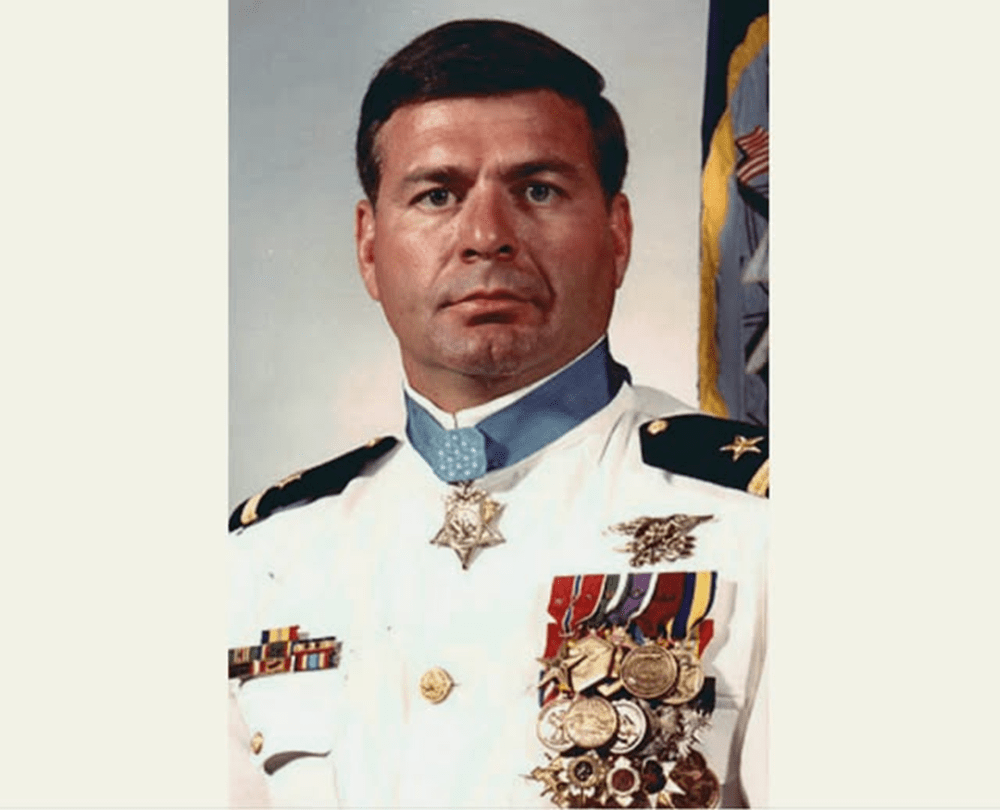
In the dense, humid jungles of Vietnam on October 31, 1972, Petty Officer Michael E. Thornton, a Navy SEAL, moved silently with his five-man patrol near the Cua Viet River Base. The mission was to gather intelligence and capture enemy personnel, but the team soon realized they had landed too far north—in North Vietnam.
As dawn broke, they were ambushed by a force of over 50 North Vietnamese soldiers. Thornton, alongside Lieutenant Thomas Norris and three South Vietnamese commandos, engaged in a fierce firefight, their training and resolve tested under relentless enemy fire.When word came that Norris had been shot in the head and was presumed dead, Thornton refused to abandon his leader.
Ignoring the hail of bullets, he charged 500 yards across open terrain to Norris’s position, dispatching two enemy soldiers poised to overrun the wounded lieutenant. Finding Norris barely alive, Thornton hoisted him onto his shoulder, despite his own wounds from grenade shrapnel. With enemy fire intensifying, he carried Norris to the beach, dragging a wounded South Vietnamese commando as well, and swam them through treacherous waters for two hours until they were rescued by a support craft.
Thornton’s extraordinary courage earned him the Medal of Honor, presented by President Richard Nixon on October 15, 1973. He became the first recipient in over a century to be honored for saving the life of another Medal of Honor recipient—Norris, who survived and received his own medal in 1976 for a prior rescue mission.
Thornton, a South Carolina native who enlisted in 1967, saw the award as a tribute not to himself but to all who served. “This medal belongs to every man and woman who gives us the freedom today,” he said, embodying the humility and brotherhood of the SEALs.After Vietnam, Thornton’s service continued to inspire. He became a BUD/S instructor, a founding member of SEAL Team Six, and retired as a lieutenant in 1992 after 25 years of service, with additional honors including a Silver Star and two Purple Hearts.
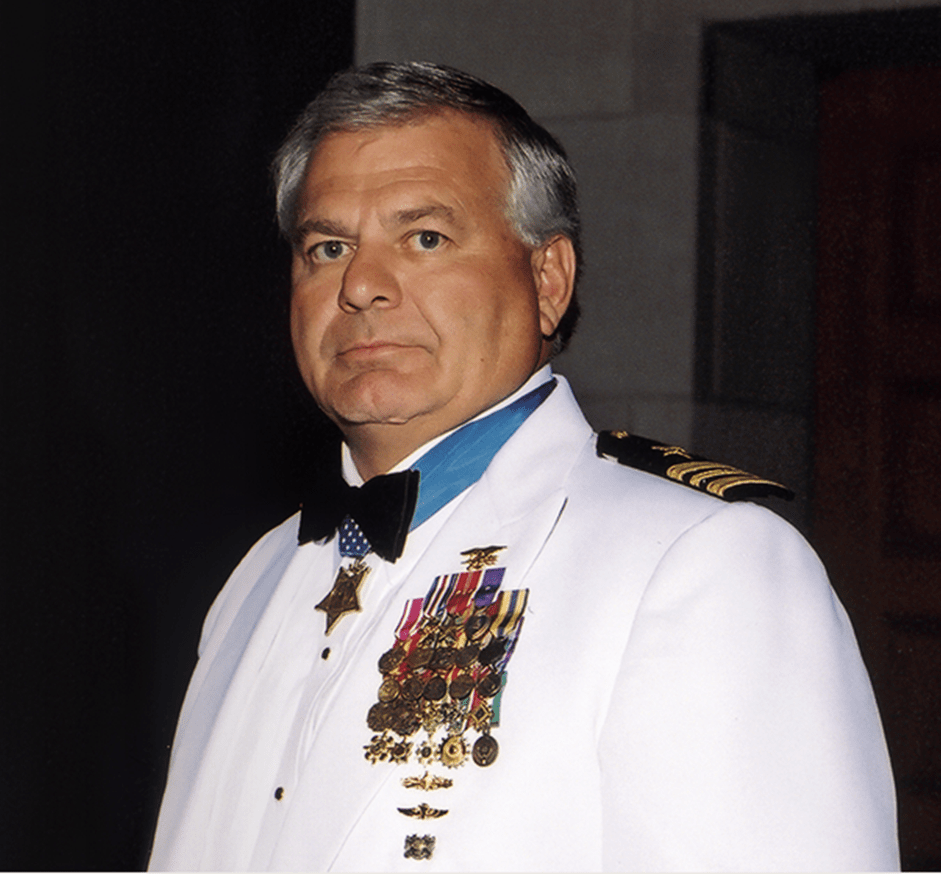
His story, detailed in the book “Giant Killers, War Heroes and Special Forces Legends” remains a testament to valor and loyalty. Thornton’s actions that day in 1972 showed that true heroism is not just in facing danger, but in refusing to leave a comrade behind, no matter the cost.
 Station HYPO
1 June 2025 at 21:37
What the individual views as extraordinarily valuable…another individual’s life…politicians seem to disregard…i.e. USS Pueblo, USS Liberty, Bengazi and others…lest we forget what are our real values are, beware of subtle trends meant to devalue such.
LikeLike