

The National Cash Register (NCR) Company, based in Dayton, Ohio, is often remembered as the pioneer in developing the modern cash register and revolutionizing retail technology. However, its legacy extends far beyond business machines. During World War II, NCR played a vital role in the Allied cryptographic effort, contributing to the breaking of both the German Enigma and the Japanese JN-25 codes, crucial in securing Allied victories. Its involvement in these operations, especially the development of the Bombe machine and the Additive Recovery Machine Model CXDG-CNN-10 ADW (known as “The Fruit Machine”), remains an often-overlooked chapter in both NCR’s and cryptographic history.
The Origins of NCR and Its Technological Prowess
Founded in 1884 by John Henry Patterson, NCR started as a small enterprise that developed the first practical cash register. Patterson’s innovation transformed business operations by automating sales transactions, introducing detailed record-keeping, and significantly reducing the opportunities for employee theft. By the early 20th century, NCR had grown into a global leader in business technology, known for its pioneering work in mechanical accounting machines, adding machines, and calculators.
The company’s rapid expansion and cutting-edge work in the mechanical and electrical engineering fields set the stage for NCR to play a key role in emerging technological efforts, including cryptography and codebreaking during World War II.
The Bombe: A Pivotal Contribution to Breaking the Enigma Code
As the war intensified, the German military relied heavily on the Enigma machine to encrypt its communications. The Enigma’s encryption was thought to be unbreakable, but in 1939, Polish cryptanalysts, working with the French and British, had managed to make significant breakthroughs. Alan Turing and his team at Britain’s Bletchley Park further refined the process, designing the Bombe, an electromechanical machine capable of decoding Enigma-encrypted messages.
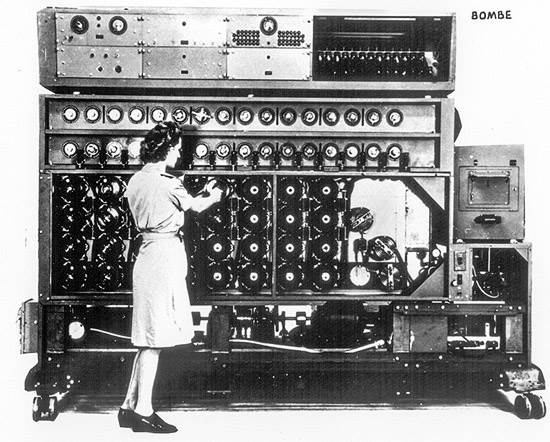
While the Bombe was initially a British invention, the need to scale up codebreaking efforts to meet the demands of the Allied war machine led to the involvement of American companies like NCR. With its advanced engineering capabilities, NCR was selected to build Bombe machines for the U.S. Navy.
In 1942, the U.S. Navy established the Naval Computing Machine Laboratory (NCML) in Dayton, Ohio, at the NCR facility. Here, NCR engineers and cryptanalysts worked on producing American-made Bombe machines. These machines were designed to automate the process of testing possible Enigma settings, a task that was necessary to break the Nazi military’s encrypted messages quickly and efficiently.
The collaboration between American engineers and British cryptanalysts proved successful, and the Bombe machines built in Dayton contributed significantly to the Allied efforts to intercept and decrypt German communications, thus turning the tide of the war in critical battles, especially the Battle of the Atlantic.
The Additive Recovery Machine: Breaking the Japanese JN-25 Code
While the Bombe was critical to breaking the German Enigma cipher, NCR’s contributions didn’t stop there. The company also played an essential role in the cryptographic efforts aimed at cracking the Japanese JN-25 superenciphered code. This code was used by the Imperial Japanese Navy for secure communication and was notably used during the attack on Pearl Harbor and throughout the Pacific theater.
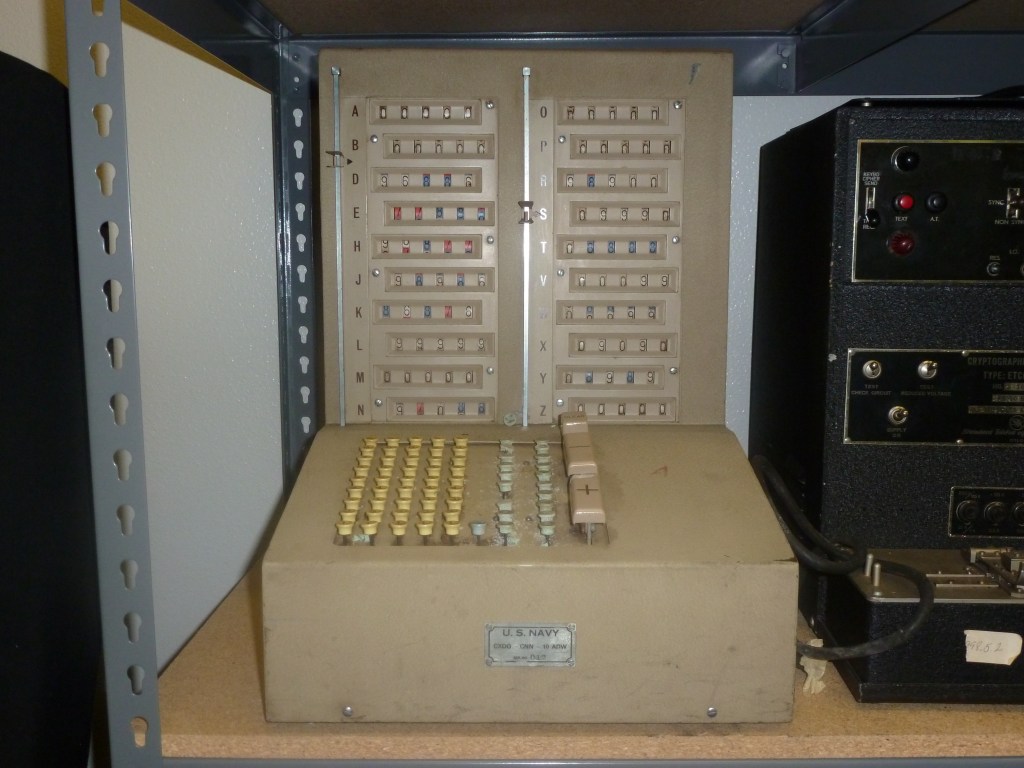
To combat this, NCR developed the Additive Recovery Machine Model CXDG-CNN-10 ADW, also known as “The Fruit Machine.” The JN-25 cipher used a complex method of encryption that involved multiple layers of superencryption, making it particularly difficult to break. The Fruit Machine, designed by NCR engineers, was an electromechanical device that could perform rapid analysis of large volumes of encrypted data, allowing cryptanalysts to work more efficiently in breaking the JN-25 code.
The Fruit Machine utilized advanced techniques of frequency analysis and statistical comparison, making it possible to identify patterns in the cipher. This machine enabled the U.S. Navy and Allied codebreakers to gain critical intelligence on Japanese operations in the Pacific, such as the plans for the Battle of Midway. The intelligence gleaned from these decrypted messages gave the Allies a strategic advantage, allowing them to intercept Japanese plans and secure a decisive victory.
Alan Turing’s Visit to NCR and the NCML
One of the most fascinating and lesser-known aspects of NCR’s wartime efforts came in December 1942 when Alan Turing, the renowned British cryptanalyst and mathematician, visited the United States as a liaison between Bletchley Park and American codebreakers. Turing’s visit to Dayton was part of his mission to exchange knowledge and assess the progress of American cryptanalytic efforts.
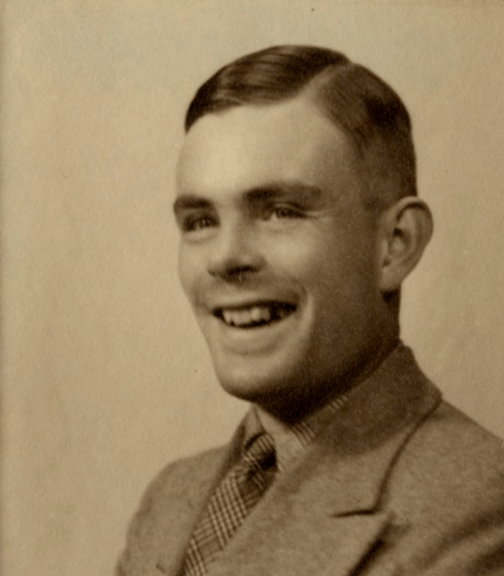
During his visit, Turing toured the Naval Computing Machine Laboratory (NCML) at NCR, where the Bombe machines were being assembled and operated. Turing was keen to observe how American engineers were applying the techniques that had been developed at Bletchley Park, especially in relation to the Bombe machines. It was during this visit that Turing inspected a crucial piece of equipment—a subtractor machine—that was used to assist in deciphering encrypted messages.
In his report to Bletchley Park, Turing made the following observations:
“At Dayton we also saw a machine for aiding one in the recovery of subtractor groups when messages have been set in depth. It enables one to set up all the cipher groups in a column of material, and to add subtractor groups to them all simultaneously. By having the digits colored white, red, or blue according to the remainders they leave on division by 3, it is possible to check quickly whether the resulting book groups have digits adding up to a multiple of 3 as they should with the cipher to which they apply it most.”
This subtractor machine was a key component of the work being done at the NCML, and Turing’s observations underscored the importance of NCR’s contributions to the overall effort. Turing acknowledged the success of NCR’s adaptations of earlier cryptographic technologies and noted the potential of the subtractor machine for making significant breakthroughs in codebreaking.
The Legacy of NCR’s War Contributions
NCR’s involvement in World War II, particularly in the fields of cryptography and machine design, is a testament to the company’s technological ingenuity and adaptability. The Bombe machines and the Additive Recovery Machine (Fruit Machine) played an instrumental role in breaking Axis codes, including the Enigma and JN-25 ciphers. These contributions helped shape the course of the war and had a lasting impact on the development of electronic computing and cryptography.
After the war, NCR returned to its traditional role as a leader in business machines, but its wartime contributions continued to influence technological advancements. The techniques and machines developed by NCR engineers during the war laid the groundwork for future innovations in computing.
Today, NCR’s legacy is remembered not only for its role in transforming business technology but also for its critical contributions to wartime cryptography. The work done in Dayton during World War II—particularly the collaboration with British cryptanalysts and the development of key cryptographic machines—remains a proud chapter in both the company’s and America’s technological history.
References:
Smith, M. (2000). The Codebreakers: The Comprehensive History of Secret Communication from Ancient Times to the Internet. New York: Macmillan.
Welchman, G. (1982). The Hut Six Story: Breaking the Enigma Codes. New York: Harper & Row.
Leventhal, M. (2015). The National Cash Register Company and Its Role in World War II Cryptography. Dayton Historical Review, 15(2), 112-130.
 Station HYPO
23 May 2025 at 08:23
A fascinating book I have read is “The Secret in Building 26” by Jim DeBrosse and Colin Burke It is the story of the WAVES assigned to NCR in 1942 to build the the components of the bombes and later assigned to the Navy Security Station on Nebraska Ave to operate the bombes.
Kerry Sandstrom
LikeLike
23 May 2025 at 11:59
“While the Bombe was initially a British invention, the need to scale up codebreaking efforts to meet the demands of the Allied war machine led to the involvement of American companies like NCR. With its advanced engineering capabilities, NCR was selected to build Bombe machines for the U.S. Navy.”
The British BOMBE attacked the German’s 3-rotor ENIGMA. When the German Navy adopted the 4-rotor ENIGMA, the US Navy engaged NCR to create and build some 120 BOMBEs to attack the 4-rotor ENIGMA.
LikeLiked by 1 person