
Yes!
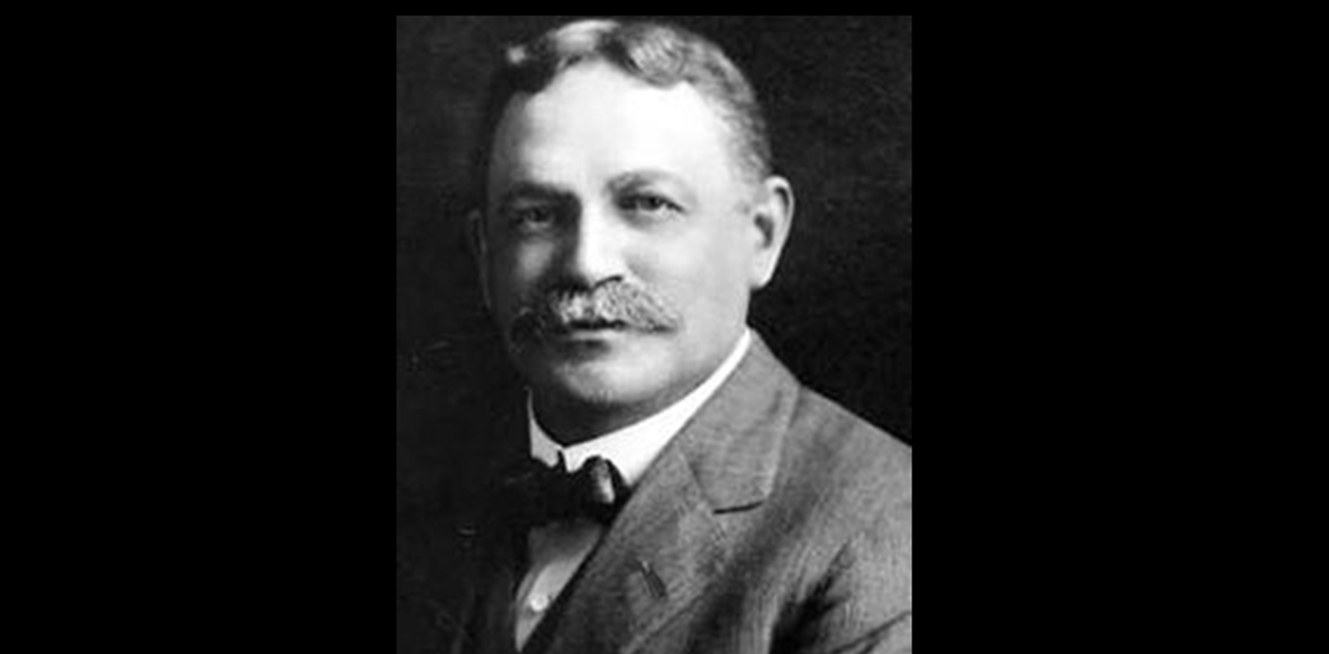
“Colonel” George Fabyan (1867 – 1936) was a millionaire businessman who founded a private research laboratory. Fabyan’s laboratory pioneered modern cryptography, though its initial findings, supporting Fabyan’s belief that Francis Bacon wrote Shakespeare’s plays, were later disproven by the cryptographers who trained there.
Born in Boston to George and Isabella Fabyan, the second child and eldest son of five children, he left home at age 17. Eventually ending up in Chicago, he ran the Chicago office of his tycoon-father’s textile business Bliss, Fabyan & Co. from 1895 on. Inheritance from Bliss, Fabyan & Co. provided the financial foundation from which he and his wife, Nelle, established their legacy.
Illinois Governor Richard Yates appointed George Fabyan to his military guard in 1901, giving him the honorary title of Colonel, by which he was generally later known.
In May 1909 Fabyan was awarded the Order of the Rising Sun by the Japanese government for his service to same. Fabyan had spent some time in Japan before 1905, developing relations with Japanese government and business representatives. He also was appointed as a liaison to General Kuroki Tamemoto during the Russo-Japanese peace negotiations (Treaty of Portsmouth) held in Maine in 1905. Between 1907 and 1910, he served as a host for General Kuroki, Baron Komura, and Prince Fushimi during their visits to Chicago.
Fabyan supported the Baconian theory, which was popular at the time, that Shakespeare’s plays were written by Francis Bacon. He established a cryptologic research group to study alleged ciphers in Shakespeare’s work. Known as Riverbank Laboratories, it was the first privately owned research facility in the United States.
In 1916 William Nicholas Selig, a film producer, sued Fabyan on the grounds that profits from forthcoming films of Shakespeare’s works, along with a film on the life of Shakespeare, would be damaged by Fabyan’s claims that Bacon was the author. On 9 March 1916, he obtained a temporary injunction stopping the publication of a book by Fabyan on the subject. Selig was intending to capitalize on the celebrations organized for the upcoming 300th anniversary of Shakespeare’s death, which occurred in April 1616. A Cook Country Circuit Court judge, Richard Tuthill, found against Shakespeare’s authorship – he determined that the bi-literal ciphers identified by Fabyan’s analyst Elizabeth Wells Gallup were authentic and that Francis Bacon was therefore the author of the works. Damages of $5,000 were awarded to Fabyan for the interference with the publication of the book. In the ensuing uproar, Tuthill rescinded his decision on 2 May 1916, and another judge, Frederick A. Smith, dismissed the ruling on 21 July 1916. It was later suggested by the press that the case was concocted by both parties for publicity, since Selig and Fabyan were known to be old friends.
Elizebeth Smith (later Elizebeth Friedman), a Shakespearean scholar, was employed by Fabyan to work with Gallup. Later, a geneticist employed by Fabyan, William Friedman, joined the effort, initially as a photographer, and then later drawn into the cryptography effort, such that he eventually became the head of the Codes & Ciphers department in Friedman’s lab. Both Elizebeth and William went on to have significant careers in cryptanalysis (a term coined by William), and their work became the foundation for what later became the NSA. Decades after working for Fabyan, William and Elizebeth collaborated on a study to discredit the ciphers that Gallup claimed to have discovered. This book won the Folger Shakespeare Library Literary Prize of $1000 in 1955 for its definitive study that is considered to have disproven the claims of all researchers that the works of Shakespeare contain hidden ciphers that disclose Bacon’s — or any other candidate’s — secret authorship. The study was condensed and published in 1957 as The Shakespearean Ciphers Examined.
World War One
The Friedmans played a significant role in World War I. Nearly all American military World War I cryptography was done at Fabyan’s laboratories. In particular they uncovered a plot against the British by Indian nationalists supported by the Germans. The National Security Agency has recognized Riverbank Laboratories as the birthplace of U.S. cryptology, and honored Fabyan in 1992 with a plaque reading “To the Memory of George Fabyan From a Grateful Government: In recognition of the voluntary and confidential service rendered by Colonel Fabyan and his Riverbank Laboratories in the sensitive areas of cryptanalysis and cryptologic training during a critical time of national need on the eve of America’s entry into World War I. Source: Wikipedia
 Station HYPO
Leave a comment