
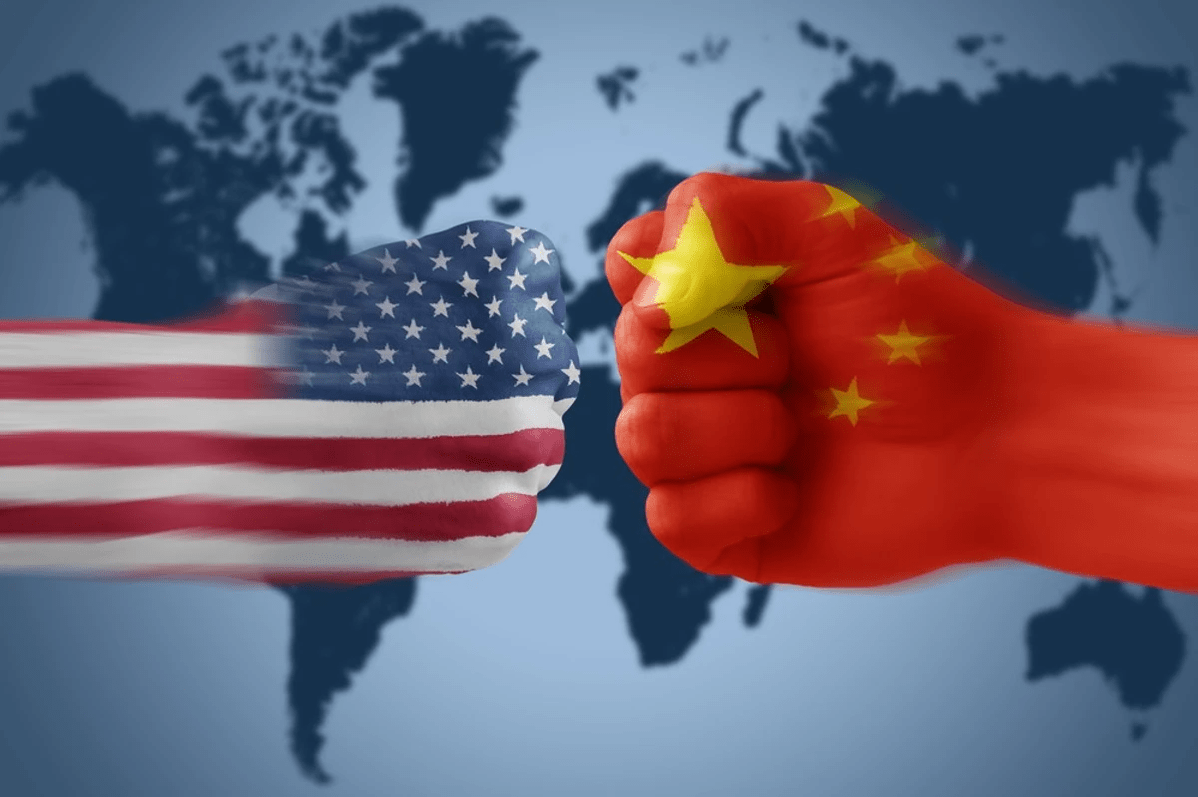
The Millennium Challenge 2002 war game and the growing strategic challenge posed by China’s People’s Liberation Army Navy (PLAN) share critical similarities, particularly in how asymmetric tactics and adaptability can counter the technological and numerical superiority of the U.S. military. Both scenarios reveal the potential vulnerabilities of a U.S. force that relies heavily on centralized command structures, advanced sensor networks, and electronic warfare capabilities, only to be outmaneuvered by a more flexible and unconventional adversary.
Millennium Challenge 2002: An Example of Asymmetric Warfare
In Millennium Challenge 2002, retired U.S. Marine Corps General Paul Van Riper was assigned to command the Red Team, representing a hostile force opposing the U.S. military (the Blue Team) in a massive, high-tech war game simulation. The exercise was designed to test new concepts in network-centric warfare, where information dominance, real-time surveillance, and advanced communications were expected to give the U.S. military an overwhelming advantage.
However, Van Riper defied expectations by rejecting traditional, high-tech communication methods that could be intercepted, jammed, or manipulated. Instead, he employed low-tech, unconventional tactics, including:
- Motorcycle couriers to deliver orders, avoiding electronic detection.
- Light signals and messengers to coordinate attacks without radio transmissions.
- Decentralized command structures, allowing subordinate units to act independently without waiting for top-down approval.
His approach exploited a major blind spot in U.S. planning: an assumption that a technologically inferior opponent would engage in conventional warfare rather than rely on deception, mobility, and asymmetric attacks.
Van Riper’s decisive moment came when his forces launched a surprise attack using small boats and preemptive missile strikes, sinking a significant portion of the Blue Team’s fleet, including aircraft carriers and amphibious ships. This early strike effectively crippled the U.S. forces before they could bring their technological advantages to bear.
The result shocked the exercise controllers, who then reset the scenario and imposed artificial constraints to ensure a U.S. victory—leading Van Riper to criticize the exercise as being scripted rather than a true test of military adaptability.
Comparison to a Conflict with the Chinese PLAN
Much like Van Riper’s Red Team, the Chinese PLAN has developed an asymmetric strategy that does not rely on direct naval confrontation with the U.S. Navy’s superior fleet but instead targets vulnerabilities through unconventional and multi-domain tactics.
1. Avoiding Conventional Confrontation: Asymmetry in Strategy
Van Riper’s forces in Millennium Challenge did not engage in a head-on naval battle with the U.S. fleet but instead used unconventional, fast-moving attacks that circumvented U.S. technological advantages. Similarly, China’s PLAN avoids direct fleet-on-fleet engagements with the U.S. Navy and instead employs:
- Anti-ship ballistic missiles (ASBMs) like the DF-21D “carrier killer”, designed to strike U.S. carriers from long range, denying them access to contested waters.
- Swarming tactics using fast-attack boats, drones, and submarines, much like Van Riper’s use of small, fast-moving vessels.
- Cyber and electronic warfare, aiming to disable or deceive U.S. command and control systems, just as Van Riper avoided U.S. network surveillance in the war game.
By forcing the U.S. to fight on less favorable terms, the PLAN, much like Van Riper’s Red Team, can neutralize technological advantages and impose a warfighting style for which the U.S. is less prepared.
2. Exploiting U.S. Overreliance on Technology
One of Van Riper’s most significant criticisms of Millennium Challenge 2002 was that the U.S. military placed too much faith in networked warfare and real-time intelligence, assuming that better sensors, satellite tracking, and electronic communication would guarantee dominance. His low-tech, offline approach exposed how disrupting or avoiding these systems could neutralize the U.S. military’s advantages.
The PLAN uses the same principle in modern warfare by investing in:
- Electronic warfare (EW) and cyberattacks to jam, spoof, or disable U.S. satellites, radars, and communications.
- Anti-satellite (ASAT) weapons designed to blind U.S. intelligence-gathering capabilities.
- Decentralized operations using AI-driven drone swarms and autonomous systems that can continue attacking even if central command is disrupted.
If the PLAN successfully disrupts U.S. information networks, much like Van Riper’s tactics in Millennium Challenge 2002, U.S. forces could find themselves disoriented, delayed, and unable to coordinate effectively in a Pacific conflict.
3. Swarming Attacks and Preemptive Strikes
Van Riper’s preemptive attack strategy in Millennium Challenge—hitting the U.S. Navy hard before they could react—mirrors China’s first-strike doctrine in a Taiwan or South China Sea conflict. Key comparisons include:
- Van Riper used small boat swarms to overwhelm and disable superior U.S. warships.
- The PLAN could use dozens of fast missile boats, drone swarms, and stealthy submarines to attack U.S. carriers and destroyers before they can deploy air superiority.
- Missile barrages in Millennium Challenge quickly overwhelmed U.S. defenses—China could replicate this with massive salvos of DF-21D and DF-26 missiles to overwhelm U.S. carrier battle groups.
By attacking before the U.S. can bring its full military power to bear, China could replicate the same disruption that Van Riper’s forces caused, creating early chaos and disarray in a potential naval conflict.
4. Scripted Outcomes vs. Real-World Realities
When Van Riper sank much of the Blue Team’s fleet, the game controllers reset the simulation and limited his ability to use asymmetric tactics—effectively ignoring the real lessons of the exercise. Similarly, U.S. military planners have often been reluctant to fully embrace the scale of the PLAN’s growing capabilities, assuming that:
- U.S. aircraft carriers will remain invulnerable, despite new missile threats.
- China’s cyber warfare capabilities won’t significantly disrupt U.S. operations.
- The U.S. fleet can always operate freely in the Indo-Pacific, despite China’s extensive area-denial strategy.
Just as ignoring Van Riper’s success led to missed lessons in 2002, underestimating the PLAN’s asymmetric approach could prove disastrous in a real-world conflict.
Conclusion: Lessons for Future Warfare
The lessons of Millennium Challenge 2002 remain highly relevant in today’s strategic landscape. Just as Van Riper’s adaptive and unconventional tactics exposed blind spots in U.S. military planning, the PLAN’s use of asymmetric warfare, electronic attacks, and preemptive strikes presents a serious challenge to traditional U.S. naval dominance.
To avoid repeating the mistakes of Millennium Challenge, the U.S. must:
- Prepare for unconventional, decentralized warfare instead of assuming superior technology will always prevail.
- Develop countermeasures for electronic and cyber warfare to protect its communication and intelligence networks.
- Train forces to operate in degraded environments, where satellite and network capabilities may be compromised.
- Anticipate and counter swarming tactics and missile barrages rather than relying solely on defensive systems.
If these lessons are ignored, the U.S. military could find itself outmaneuvered in a real-world conflict, just as it was in Millennium Challenge 2002—except this time, the consequences will be far more than just a war game reset!
Mario Vulcano
 Station HYPO
29 March 2025 at 16:51
This is a GREAT post and should be required reading from the POTUS to the bottom of the chain of command. Sadly, unlikely to happen…
LikeLike
30 March 2025 at 21:17
Maybe I’m just not that “smart” in that since I was young…and became interested in history…I realized from the French and Indian War, that European methods of combat…aligned troops in mass, was incredibly stupid. Using available topography and shelter from attack, worked very well against the English. Same went for limited American forces against ’em in the Revolution.
So, why then, didn’t the military adjust to this format by the time the Civil War broke out…then again during WWI.
In short, I realized “tradition” got you killed. If I can figure that out over a short survey of previous battles…why can’t the military generals/Admirals?
Last war concepts work well in “advancement” in rank, but are abysmal solace for grieving parents. War is never a win without at least learning something from it. It appears drones and robots are more in our future if aircraft carriers and present surface vessels continue their vulnerability. With this 2002 challenge decades ago…where is the change in the military mind-set?
LikeLike