
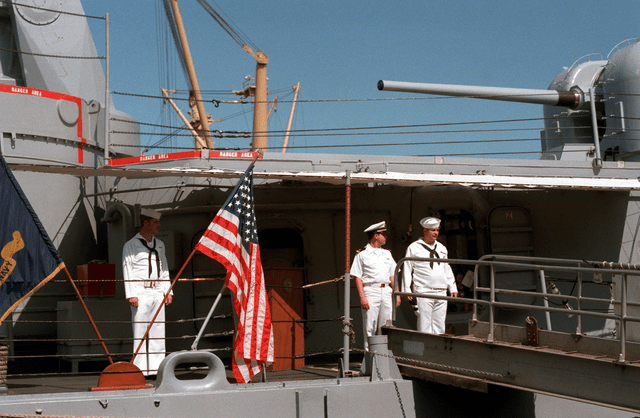
You are a newly qualified ensign standing your first officer of the day watch on the quarterdeck. Only a few days earlier the ship’s executive officer put the word out that all hands leaving the ship must be in proper uniform or civilian attire.
Obediently, you send back several junior crewmembers who try to cross the quarterdeck with improper haircuts and shaves. Several hours later, after all junior crew who are going ashore have left, a highly respected and hardworking chief approaches who is obviously in need of a haircut.
What do you do?
Several members of the crew are working on deck and all eyes are on you. You realize the chief is leaving late on liberty, having been helping one of the new personnel learn their assignment. The chief would have been within rights to simply leave earlier, but helping new people is one of any strengths of this senior petty officer.
Haircuts are a minor part of the ship’s mission, and since liberty hours will soon be over, you consider talking to the chief, explain you are carrying out the XO’s orders. While you are letting him go this time, you “trust that appearance stands will be met in the future.”
What happened?
This is one of the many times an officer is faced with making the easy wrong decision over the more difficult right one. It would certainly be easier to defer to the senior status of the chief and not embarrass the senior enlisted before juniors. It must be remembered, however, that the chief knew what the rules were, and the decision to appear before the OOD and other enlisted was not that of the ODD, but rather the chief.
All of us in the armed forces want to trust and have confidence in our seniors, yet the loyalty can be broken if juniors see seniors obeying a different stand than that which is prescribed for all personnel.
The chief does, in fact, have certain privileges not enjoyed by those more junior, but they do not include failing to meet ship’s appearance stands. The JO should advise the chief to get a haircut in as discreet a manner as possible, so as not to undercut the future authority of the chief with the crew.
If the chief is a professional, the order will be carried out without comment. If not, the officer has to insist. The OOD is the direct represented for the commander and will ensure that all orders are obeyed and enforced as if issued by the commander.
In the final analysis, the OOD’s upholding the ship’s policy for all hands prevented establishment of a double standard on the vessel. Another test of ethical conduct met by a junior officer.
What is shown by example, men think they may justly do
Marcus Tillius Cicero,
Epistoloe ad Atticum, book 4, episode 3
Source: Ethics for the Junior Officer, Naval Institute Press
 Station HYPO
Leave a comment