
For more than a decade, American defense and foreign policy leaders have declared China the top long-term competitor — what the Pentagon refers to as the “pacing threat” — and the Indo-Pacific the priority theater. From the Obama-era “Pivot to Asia” to the Trump and Biden administrations’ strategic guidance, the message has been consistent: the future of U.S. power projection, deterrence, and economic competition hinges on our presence in the Pacific. But each time the Middle East ignites, that focus slips — and China quietly gains ground.
Continue reading “Losing the Long Game: China Advances As U.S. Refocuses on the Middle East”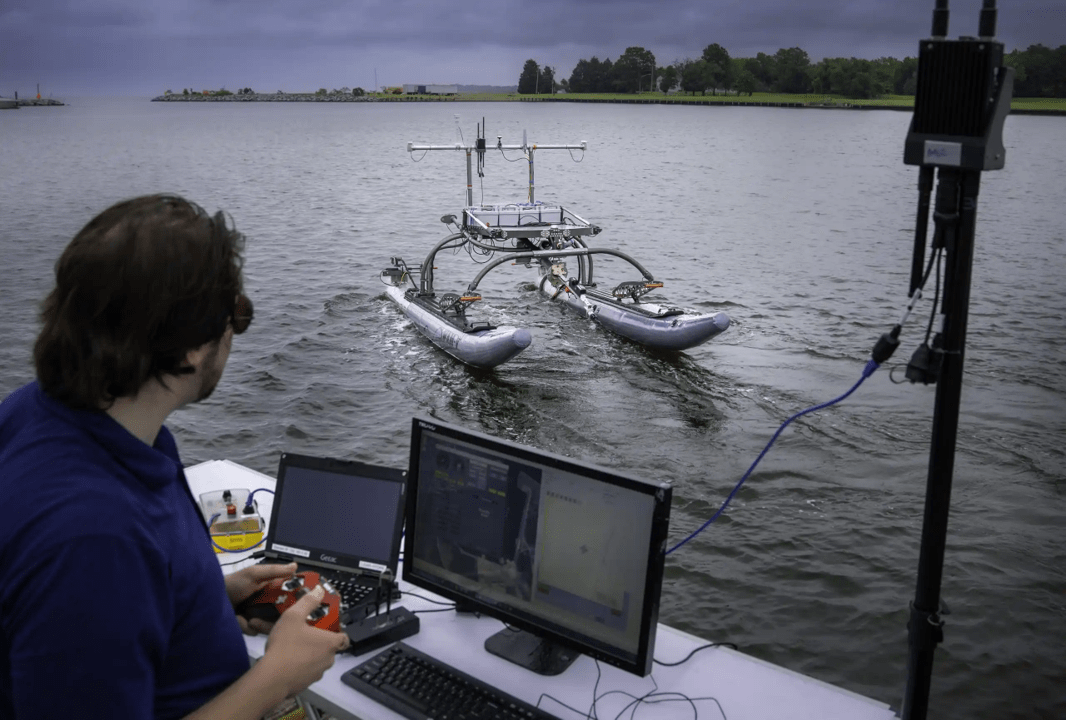
The US Navy’s new AI tool runs thousands of simulations to find the best drone, sensor, and swarm setup for each mission.
The US Navy has demonstrated an AI-powered planning tool designed to speed up and simplify how it prepares unmanned missions across air, surface, and subsurface domains.
Continue reading “US Navy Turns to AI to Plan Drone Swarm Missions”
Congratulations to all selected. Message follows:
Continue reading “FY-26 Navy Reserve Commander Line Promotion Selection Results”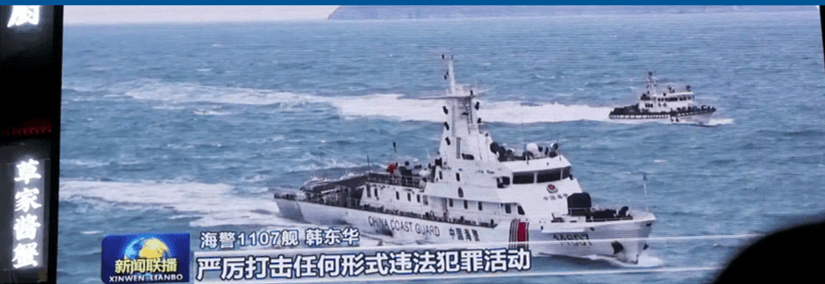
In a recent speech at the 2025 Shangri-la Dialogue, US Secretary of Defense, Pete Hegseth, told the audience that China’s attempt to conquer Taiwan by force “could be imminent.” The possibility of such a rapid escalation stems from China’s increased military activity around Taiwan, which has made distinguishing exercises from true military action nearly impossible. According to Admiral Samuel Paparo, the commander of US Indo-Pacific Command (INDOPACOM), Chinese military pressure on Taiwan has reached a “rapid boil.” How rapid? In his April testimony before the Congressional Armed Services Committees, Paparo said there has been a 300 percent annual increase in Chinese military pressure against Taiwan. He later noted that the People’s Liberation Army (PLA) is “stretching their legs” to meet President Xi Jinping’s 2027 military readiness goal of being capable of taking Taiwan by force.
Continue reading “China Is Carrying Out ‘Dress Rehearsals’ To Take Taiwan. Here’s How The U.S. Should Respond.”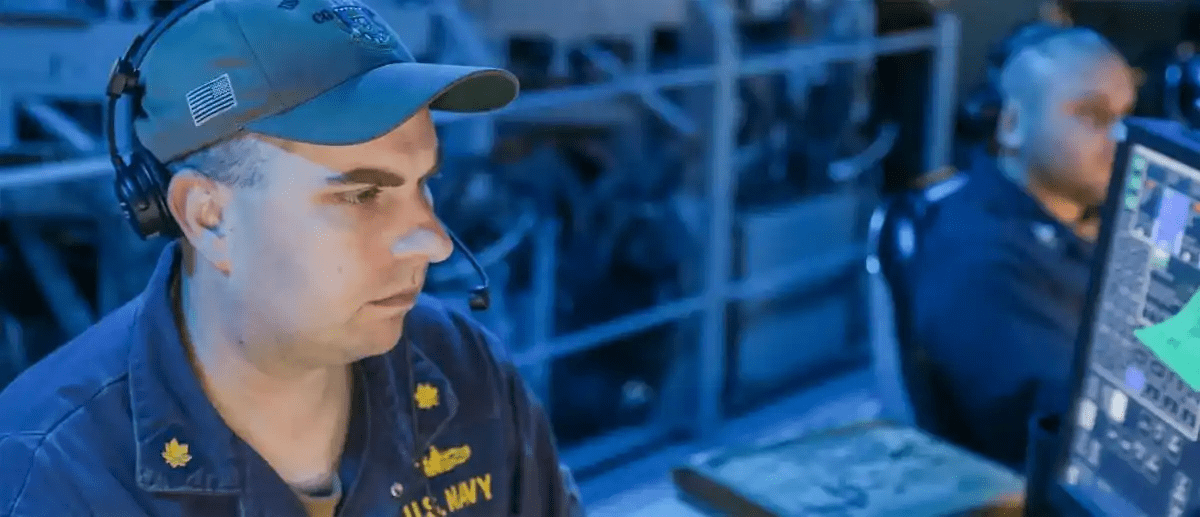
Proceedings, June 2025… by Rear Admiral Sean Bailey, Captain Brian Evans, and Commander Matthew Timmerman, U.S. Navy
After more than 24 hours of careful movement to evade detection, the strike group remains more than 18 hours from its designated position to launch strikes. The screen is distributed to the maximum extent feasible, optimizing sensor employment while attempting to complicate adversary targeting. The tactical situation (TACSIT) assessment from the information warfare commander (IWC) holds all units within ordered mission go/no-go criteria. Determining that adversary positioning and sensor capabilities provide a period of simplified maneuver and decreased detection risk, the strike group commander and information warfare commander retire for a couple hours of sleep before the operation’s next phase.
Continue reading “Tactical Action Officers: Information Warfare’s Next Evolution”
- America’s conflict with the Houthis gave the US Navy a taste of high-tempo air defense operations.
- The Navy is using the conflict to inform planning for future maritime wars, like a clash with China.
- One warship captain said a fight in the Pacific would be vastly different from the Red Sea battle.
The US Navy’s exhausting shootout with the Iran-backed Houthis has given American military planners a clearer view into the complexities of high-tempo air defense operations.
Continue reading “A US Navy warship captain said the Red Sea conflict was a ‘knife fight in a phone booth.’ China would be way more challenging.” Station HYPO