

The landmark meeting between U.S. President Donald Trump and Chinese leader Xi Jinping in October brought a respite to the trade war and led to some reciprocal deals. But it did not suggest any breakthrough in addressing the problems that have fueled tensions between the two countries in recent years. Instead, the meeting confirmed the curious direction of U.S. China policy in Trump’s second term. The president has not only broken with the policy of the Biden administration but also seems to have forsaken the strategic direction of his own first term.
Continue reading “America’s Self-Defeating China Strategy – A Policy That Confuses Strength and Weakness”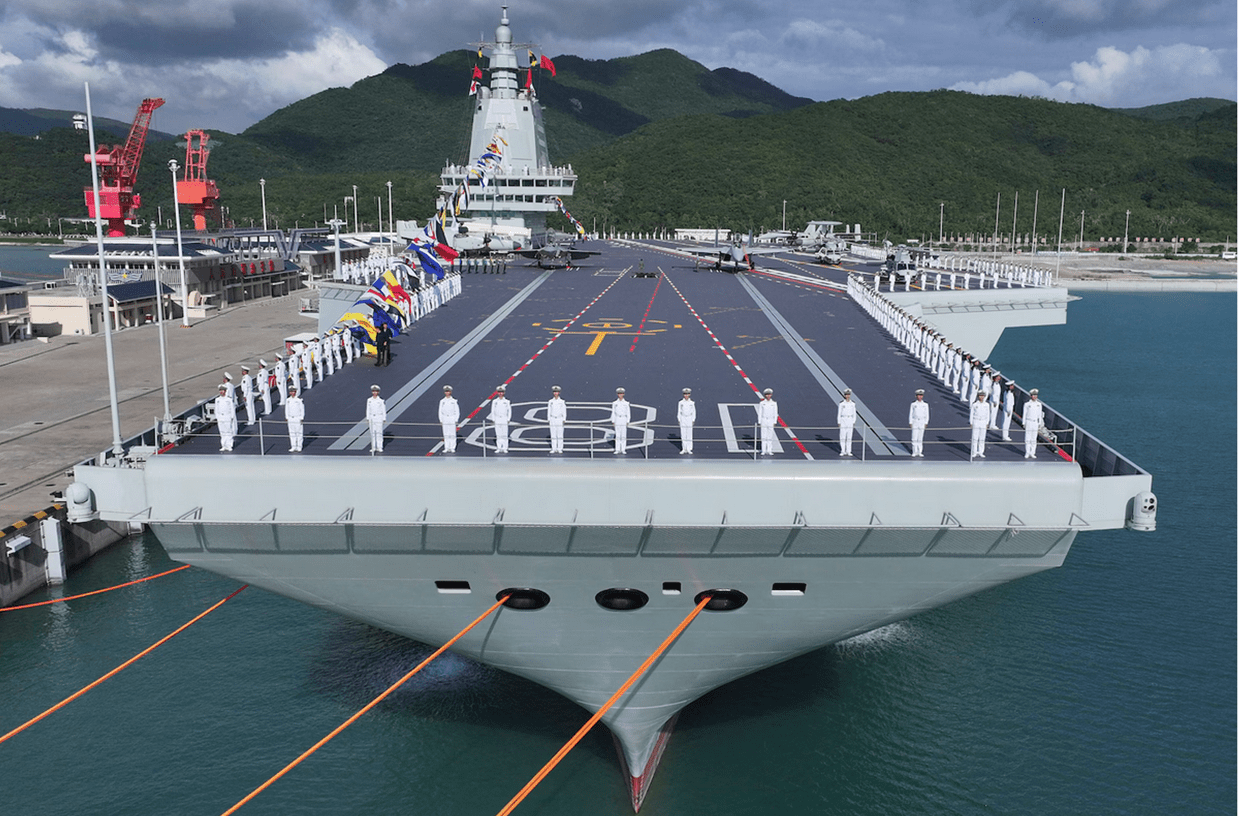
The Fujian and its strike group represent a strategic game changer that will bring Beijing closer to its goal of eroding U.S. maritime primacy in its backyard.
China’s efforts to blunt American maritime power in the Pacific, a region the United States has long considered its domain, received a major boost this month with the official launch of its third — and most advanced by far — aircraft carrier, the Fujian.
Continue reading “China’s new aircraft supercarrier challenges U.S. dominance in Pacific”MOC Intelligence Professionals Enable Decision Advantage for the High-End Fight
NIP Readbook, Fall/Winter 2025… by Lieutenant Bryan Smith, U.S. Navy
The Chief of Naval Operations’ “Fight from the Maritime Operations Center (MOC)” strategic priority represents a fundamental rethinking of how the Navy executes at the operational level of war. The MOC is no longer just a coordination hub—it must operate as the fleet commander’s primary warfighting platform. In a future “high end” fight, our adversaries will benefit from the significant recent investments they have made in intelligence, surveillance, and reconnaissance (ISR), as well as increasingly accurate long-range fires. Decisions made at the MOCs are integral to the U.S. Navy’s ability to conduct long-range fires while maneuvering to reduce unit vulnerability and proactively driving fleet replenishment to sustain combat operations.

by Lieutenant Colonel Pete Brown, USMC (Ret)
The beginnings of the Marine Support Battalion can be traced to mid-1954. In an exchange of correspondence amongst the Chief of Naval Operations (CNO), the Commandant of the Marine Corps (CMC) and the Director, National Security Agency (DirNSA), it was determined that the U.S. Marine Corps would furnish some 19 officers and 39 enlisted Marines for duty at the NSA (then located at the Naval Security Station (NSS), Washington, DC, and Arlington Hall Station (AHS), Arlington, Virginia) as the Marine Corps’ contribution to the Department of the Navy supporting the NSA.
Continue reading “The History Marine Support Battalion”
The history and heritage of Navy Information Operations Command Pacific, with an extended span from the Outback to the Rockies, draws from the rich heritage of cryptologic operations within the Pacific theater. Today’s Navy Information Operations Command (NIOC) Pacific is vast and consolidates many historic commands within the Pacific theater, and others that support Pacific operations.
Continue reading “Today, NIOC Pacific Marks 45 Years of Service”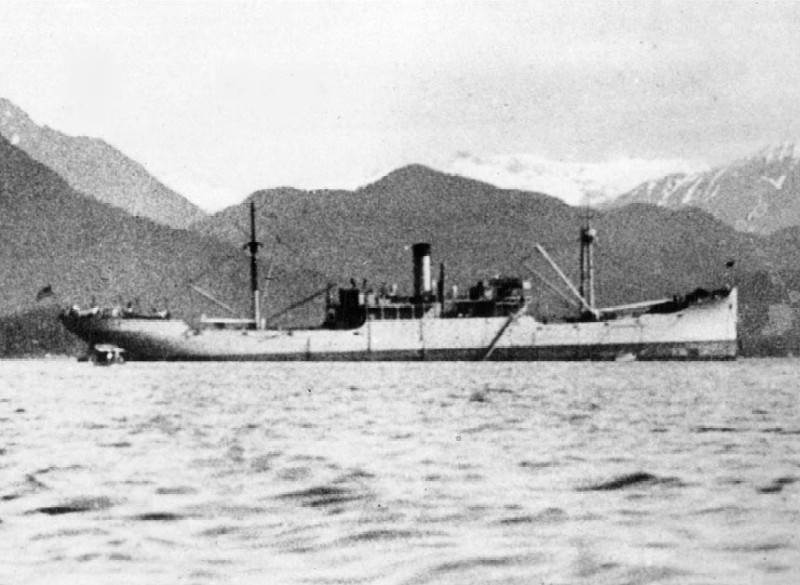
Willie Muse boarded U.S.S. GOLD STAR in Manila in the fall of 1934, for one of the most interesting and productive cruises of his naval career.
Continue reading “The Ship Riders: USS GOLD STAR” Station HYPO