
MOC Intelligence Professionals Enable Decision Advantage for the High-End Fight
NIP Readbook, Fall/Winter 2025… by Lieutenant Bryan Smith, U.S. Navy
The Chief of Naval Operations’ “Fight from the Maritime Operations Center (MOC)” strategic priority represents a fundamental rethinking of how the Navy executes at the operational level of war. The MOC is no longer just a coordination hub—it must operate as the fleet commander’s primary warfighting platform. In a future “high end” fight, our adversaries will benefit from the significant recent investments they have made in intelligence, surveillance, and reconnaissance (ISR), as well as increasingly accurate long-range fires. Decisions made at the MOCs are integral to the U.S. Navy’s ability to conduct long-range fires while maneuvering to reduce unit vulnerability and proactively driving fleet replenishment to sustain combat operations.

by Lieutenant Colonel Pete Brown, USMC (Ret)
The beginnings of the Marine Support Battalion can be traced to mid-1954. In an exchange of correspondence amongst the Chief of Naval Operations (CNO), the Commandant of the Marine Corps (CMC) and the Director, National Security Agency (DirNSA), it was determined that the U.S. Marine Corps would furnish some 19 officers and 39 enlisted Marines for duty at the NSA (then located at the Naval Security Station (NSS), Washington, DC, and Arlington Hall Station (AHS), Arlington, Virginia) as the Marine Corps’ contribution to the Department of the Navy supporting the NSA.
Continue reading “The History Marine Support Battalion”
The history and heritage of Navy Information Operations Command Pacific, with an extended span from the Outback to the Rockies, draws from the rich heritage of cryptologic operations within the Pacific theater. Today’s Navy Information Operations Command (NIOC) Pacific is vast and consolidates many historic commands within the Pacific theater, and others that support Pacific operations.
Continue reading “Today, NIOC Pacific Marks 45 Years of Service”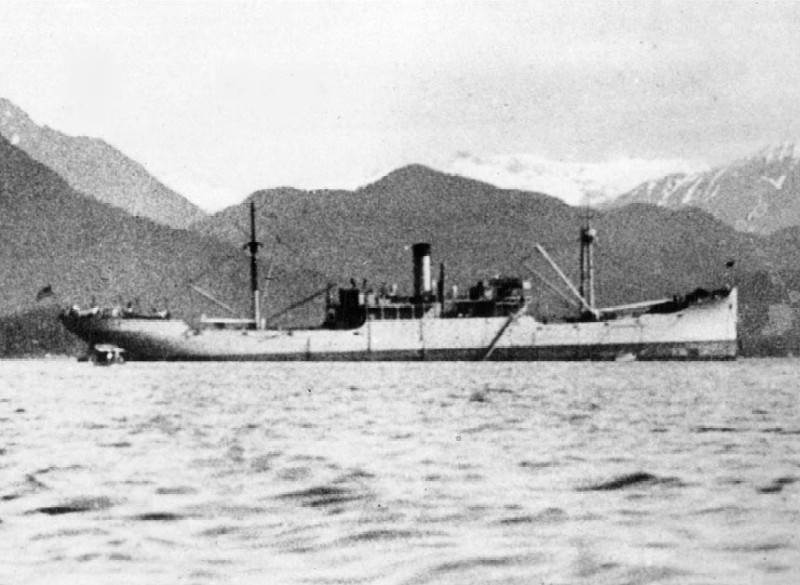
Willie Muse boarded U.S.S. GOLD STAR in Manila in the fall of 1934, for one of the most interesting and productive cruises of his naval career.
Continue reading “The Ship Riders: USS GOLD STAR”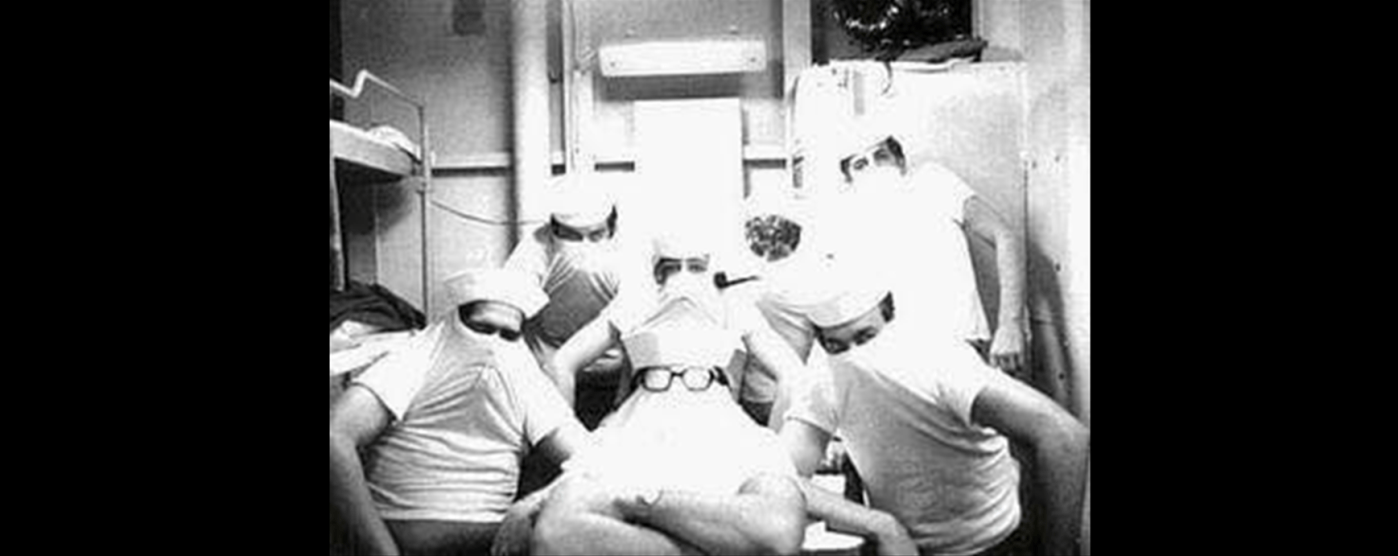
Featured image: “The Spooks” of the USS Fox (DLG–33/CG-33) – Positive Identification Radar Advisory Zone, PIRAZ, Gulf of Tonkin, 1971. Special thanks to Bill Scholz for allowing his picture to be used on this post.
During the Vietnam War and other major conflicts, the U.S. Navy operated a select group of ships known as PIRAZ stations, short for Positive Identification Radar Advisory Zone. These vessels, often referred to by their radio callsign “Red Crown,” formed the backbone of radar coverage and command coordination for friendly aircraft in designated combat zones.
Continue reading “The Navy’s “Red Crown”: Guardians of the Skies – The Role of PIRAZ Stations”
The following timeline highlights key events spanning 110 years of Commander, Naval Security Group Command / Fleet Cyber Command / Commander, TENTH Fleet history. Please note that not all events are included.
Continue reading “CNSG/TENTH Fleet Timeline” Station HYPO