Search

Station HYPO

Celebrating the Past, Present and Future of Navy Cryptology

Exposed Undersea: PLA Navy Officer Reflections on China’s Not-So-Silent Service

By Ryan D. Martinson

While much of the international attention on China’s naval buildup is focused on its rapidly modernizing surface fleet, the People’s Liberation Army Navy (PLAN) is also taking bold steps to field a first-rate submarine force. By the end of this year, the service could have as many as 25 Yuan-class submarines, which are among the world’s most advanced diesel-electric boats. Its small-but-growing fleet of nuclear-powered attack (SSN), guided missile (SSGN), and ballistic missile (SSBN) submarines has achieved major technological upgrades, and with the benefit of a massive production facility in Huludao, may be on the cusp of significant expansion.

Continue reading “Exposed Undersea: PLA Navy Officer Reflections on China’s Not-So-Silent Service” →


CDR Dudley W. Knox, USN, “The Role of Doctrine in Naval Warfare”

The only satisfactory method of ensuring unity of effort lies in due preparation of the minds of the various commanders, both chief and subordinate, before the outbreak of hostilities. Such preparation comprehends not only adequate tactical and strategic study and training, but also a common meeting ground of beliefs as to the manner of applying principles to modern war.

Continue reading “CDR Dudley W. Knox, USN, “The Role of Doctrine in Naval Warfare”” →

From Data to Decisions: Building a Culture of Information Literacy

Nobody Asked Me, But . . .

Students at military academies are learning to lead in a world defined by information warfare. The ability to search for, critically assess, interpret, and use information is a mission-essential skill. While the military has long focused on physical and technical training, information literacy often is an afterthought. Many students receive little formal instruction on how to evaluate information sources, distinguish credible data from misinformation, and use insights effectively. Lacking these vital skills can compromise their decision-making in operational settings. In a time when adversaries can manipulate and twist information to deceive and disrupt, the lack of strong information literacy skills can leave even the best-trained service members vulnerable to misinformation and prone to poor judgment.

Continue reading “From Data to Decisions: Building a Culture of Information Literacy” →

Losing the Long Game: China Advances As U.S. Refocuses on the Middle East

For more than a decade, American defense and foreign policy leaders have declared China the top long-term competitor — what the Pentagon refers to as the “pacing threat” — and the Indo-Pacific the priority theater. From the Obama-era “Pivot to Asia” to the Trump and Biden administrations’ strategic guidance, the message has been consistent: the future of U.S. power projection, deterrence, and economic competition hinges on our presence in the Pacific. But each time the Middle East ignites, that focus slips — and China quietly gains ground.

Continue reading “Losing the Long Game: China Advances As U.S. Refocuses on the Middle East” →

US Navy Turns to AI to Plan Drone Swarm Missions

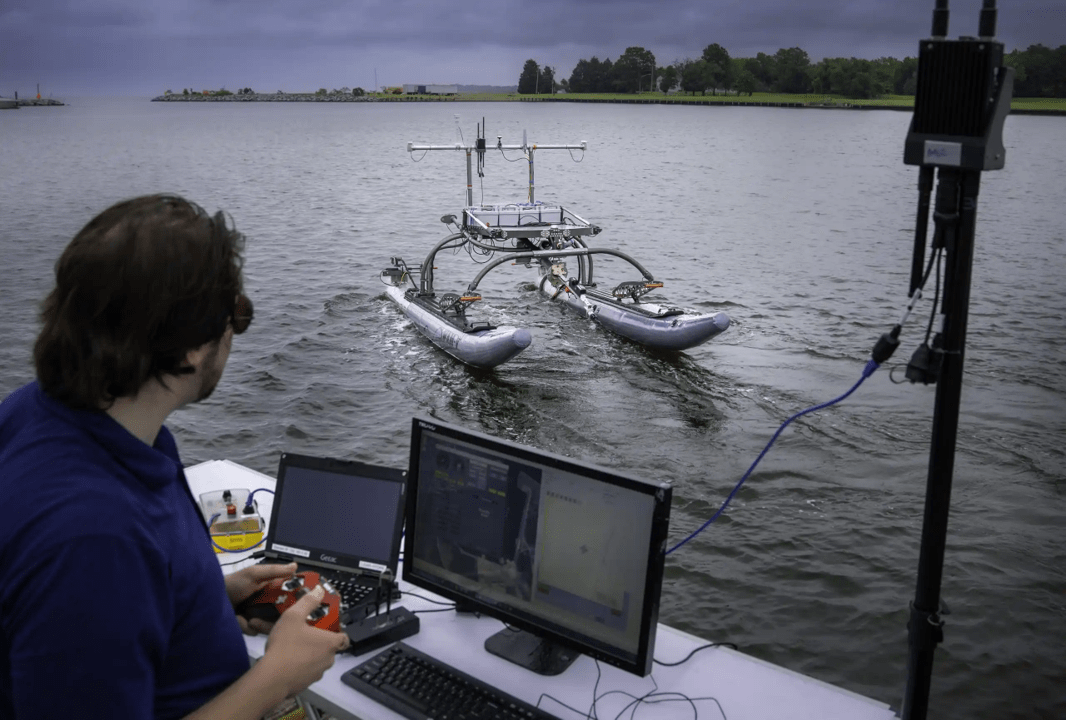
The US Navy’s new AI tool runs thousands of simulations to find the best drone, sensor, and swarm setup for each mission.

The US Navy has demonstrated an AI-powered planning tool designed to speed up and simplify how it prepares unmanned missions across air, surface, and subsurface domains.

Continue reading “US Navy Turns to AI to Plan Drone Swarm Missions” →

NSGA Keflavik, Iceland Decommissioned, June 30, 1994

NSGA Keflavik was decommissioned and closed on June 30, 1994, 31 years ago today. The NSGA was located approximately 8 miles from NAS Keflavik, one mile from the U.S. Air Force 932nd Air Defense Squadron facility, and adjacent to the Naval Computer and Telecommunications Station Keflavik, Rockville Receiver Site. The Rockville Receiver Site was fully remoted on March 14, 1997 and was closed in October, 1999.

Continue reading “NSGA Keflavik, Iceland Decommissioned, June 30, 1994” →

Website Powered by WordPress.com.

Up ↑