
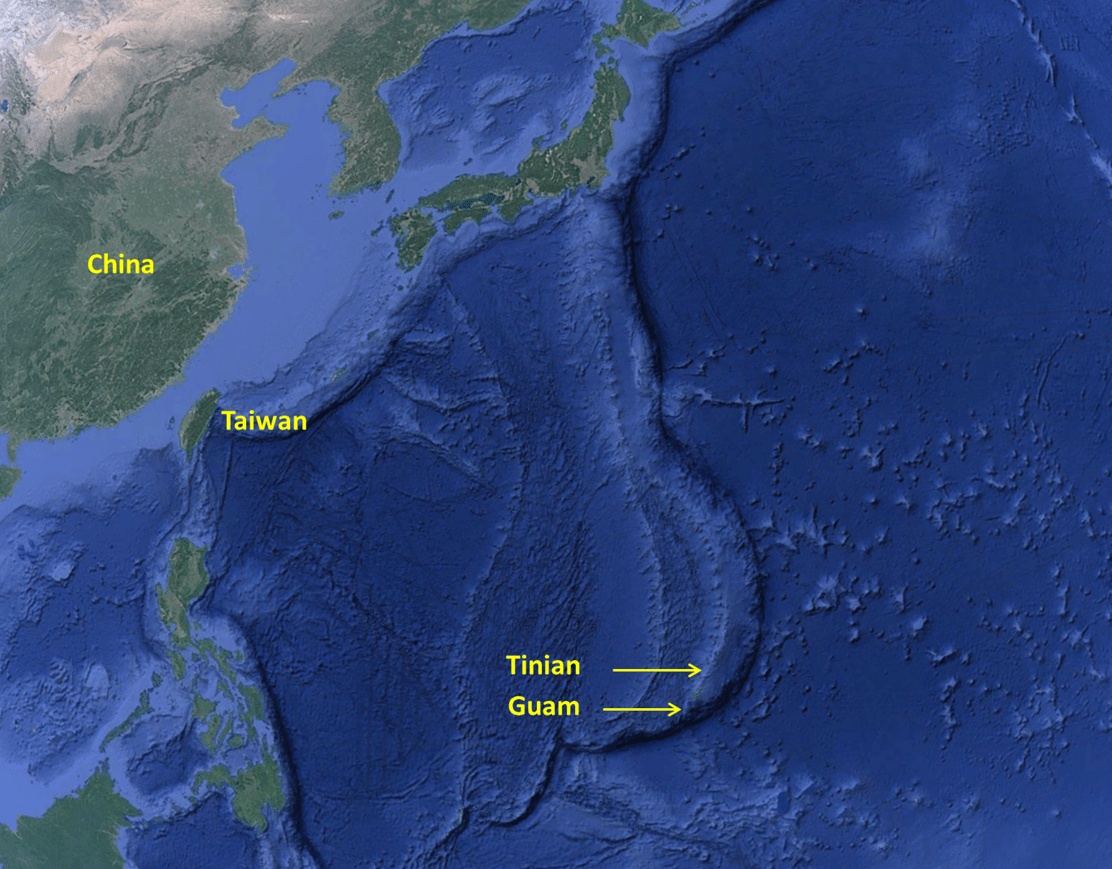
The significant airfield repair and upgrade work might support frontline fighters in the future, as the U.S. develops distributed basing to counter China in the western Pacific.
Continue reading “Revival of WW2-Era Tinian Airfield Picks Up with ‘Rehabilitation’ Work”
The Manchurian Incident
September 18, 1931 was significant in the Peiping station’s history. Now Cpl Lesko was alone on watch when he observed a tremendous increase in message volume on the Japanese diplomatic circuits – all high priority. Lesko informed CRM Max C. Gunn (Chauncey’s relief) that, “Something’s happening out there. They went crazy early this morning, before it was even daylight.” What had happened was the “Manchurian Incident.” Following an explosion of an alleged bomb on the tracks of the Japanese operated Southern Manchurian Railway at Liutiaokou near Mukden, elements of the Kwantoung Army seized the city. Neither the Japanese Foreign Officer nor the Imperial General Staff had knowledge of the “incident” until after it had occurred. Essentially, the Japanese Government was force to accept the accomplished fact and explain it as best it could to the rest of the world. Although the Sino-Japanese conflict was localized at the time, it was a prelude to the holocaust of a decade later.
Continue reading “History of U.S. Marine Corps COMINT Effort (Part 3 of 6)”
First Marine Intercept Operators
In 1931, to improve security, the intercept site was moved to another location near the U.S. Naval Attaché’s residence. Although the site’s installed equipment undoubtedly changed with the passage of time, all positions were equipped with RIP-5 typewriters. Initially, receivers included one Model RE LF receiver; one Model RF IF receiver, one Model RT and one Model RG HF receiver. Due to reception limitations most intercept was accomplished on HF receivers while LF and IF receivers were used to search for new transmissions.
Continue reading “History of U.S. Marine Corps COMINT Effort (Part 2 of 6)”
At the end of September, a Telegram channel known for its network of Russian intelligence sources reported that a Black Sea fleet submarine had run into “serious technical problems” while on a mission off Gibraltar, in the Mediterranean. The Novorossiysk submarine was at risk of exploding, it said, and according to online sleuths, later surfaced, giving away its location. But the question remains, what was a Russian sub even doing there? This is what we know so far.
Continue reading “Fuel leak blows cover for alleged Russian submarine Novorossiysk off Gibraltar”
By Robert “Jake” Bebber
Sophisticated non-kinetic threats, such as Chinese cognitive domain operations (CDO) and Russian active measures operations, define the contemporary global security landscape and pose significant challenges to national security policymakers in the United States. These adversarial capabilities transcend traditional military engagement, targeting the cognitive processes, beliefs, and unit cohesion of an opponent to achieve military objectives, often as a precursor to the onset of hostilities.
Continue reading “Information Inoculation: Preparing US Warfighters for Cognitive War”
The Navy “failed to effectively manage the operational capabilities” of the MQ-4C Triton unmanned aircraft program, declaring Initial Operation Capability (IOC) before undergoing an initial testing phase despite having several important deficiencies, according to a new report from the Department of Defense Office of Inspector General (DOD OIG).
Continue reading “Deficiencies That Could Prevent Mission Success, Says Pentagon Auditor” Station HYPO